Taiwan Semiconductor Manufacturing Company (TSMC) operates as the world’s largest independent semiconductor foundry. This model means TSMC exclusively manufactures chips designed by other companies, rather than designing and selling its own branded semiconductors. This specialization allows TSMC to focus entirely on advanced manufacturing processes, serving a vast array of technology firms globally.
Defining the Foundry Model
The foundry model separates chip design from chip manufacturing. Companies like Nvidia and AMD, known as fabless semiconductor companies, design their integrated circuits but do not own the expensive facilities, or fabs, required to produce them. TSMC provides these manufacturing services, taking client designs and fabricating them into physical chips.
This division of labor enables design companies to concentrate on innovation and intellectual property, while TSMC optimizes the complex, capital-intensive manufacturing process. This symbiotic relationship drives efficiency and specialization within the semiconductor industry.
Market Dominance and Scale
TSMC holds a dominant position in the global foundry market. As of September 2026, TSMC commanded more than 50% of the worldwide foundry market share, solidifying its status as the largest independent chip manufacturer. This market leadership is a testament to its technological prowess and manufacturing capacity.
In 2026, TSMC continued to report strong revenue growth, supported by robust demand for advanced semiconductor manufacturing. The company reported US$35.90 billion in revenue in the first quarter of 2026 and US$40.20 billion in the second quarter. TSMC said that second-quarter revenue was supported by strong demand for its leading-edge process technologies, particularly as demand for AI and high-performance computing continued to grow. These results underscore the company’s significant economic footprint and provide substantial resources for continued investment in research and development and advanced semiconductor technologies.
Core Business Model
TSMC’s business revolves around high-volume, high-precision manufacturing of advanced semiconductors. It serves a diverse client base, including major technology companies that design chips for artificial intelligence (AI), high-performance computing, smartphones, and automotive applications. The company’s ability to produce the most advanced chips, such as those designed by Nvidia and AMD, is a key differentiator.
The demand for computing power, particularly driven by the AI boom, continues to fuel robust demand for TSMC’s advanced semiconductor chips. This sustained demand allows TSMC to maintain high utilization rates for its fabrication facilities.
The Fabrication Process: From Design to Chip
The journey from a digital chip design to a physical semiconductor involves intricate steps within TSMC’s advanced manufacturing facilities. This process demands extreme precision, specialized equipment, and a highly controlled environment.
Client Design and Collaboration
The process begins with a client, such as Nvidia or AMD, providing TSMC with their finalized chip design, often in the form of a GDSII file. TSMC’s engineers then work closely with the client to optimize the design for manufacturability, ensuring it aligns with TSMC’s specific process technologies and capabilities. This collaborative phase is critical for achieving high yields and performance.
TSMC’s role is strictly manufacturing; it does not interfere with the client’s intellectual property or design choices. This neutrality is a cornerstone of the foundry model, fostering trust with a wide range of competitors.
Advanced Manufacturing Nodes
TSMC specializes in producing chips using the most advanced process nodes, which refer to the smallest feature size on a chip, measured in nanometers (nm). Smaller nodes allow for more transistors on a chip, leading to increased performance and power efficiency. TSMC consistently leads the industry in developing and deploying these cutting-edge technologies.
The company’s continuous innovation in process technology enables its clients to create more powerful and efficient devices. This technological edge is a primary reason why companies designing high-margin products choose TSMC.
Wafer Production and Packaging
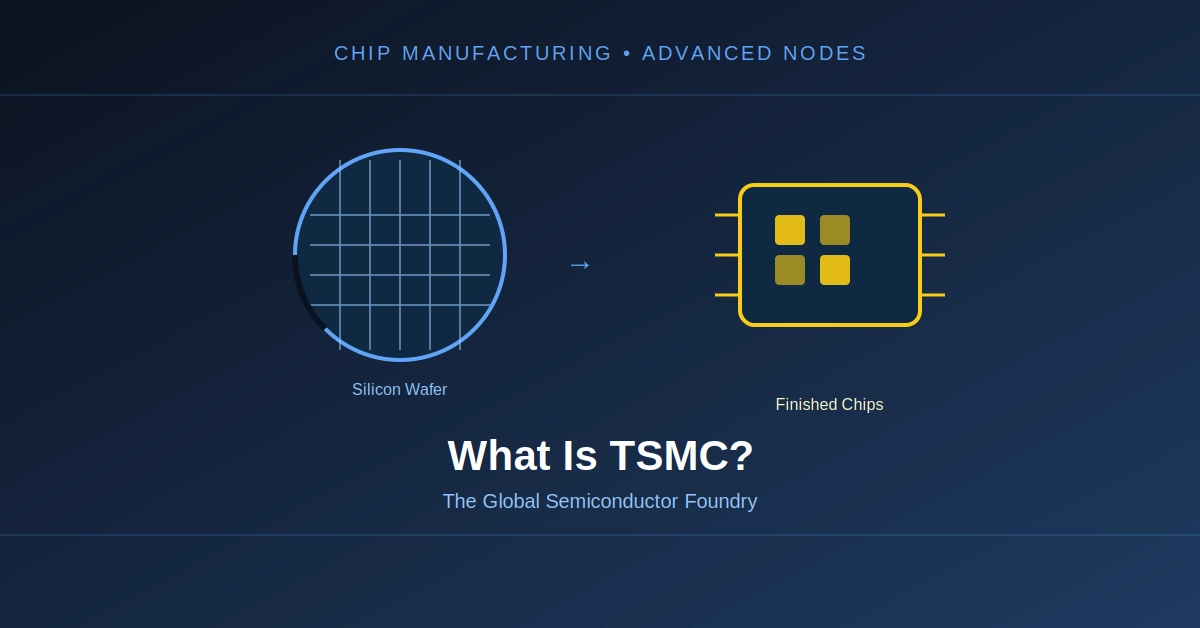
Semiconductor manufacturing involves fabricating thousands of identical chips simultaneously on a single, thin disc of silicon called a wafer. This multi-step process includes photolithography, etching, deposition, and doping, repeated numerous times to build up the complex layers of a chip. After fabrication, the wafer undergoes rigorous testing to identify functional chips.
Functional chips are then cut from the wafer, a process known as dicing, and individually packaged. Packaging protects the delicate chip and provides electrical connections to external components. TSMC offers various packaging solutions, further integrating its services into the overall chip production pipeline.

Photo by Mikhail Nilov on Pexels
Strategic Importance and Global Impact
TSMC’s position as the world’s leading chipmaker extends beyond its financial success, making it a pivotal player in global technology, economics, and geopolitics.
Supply Chain Centrality
TSMC is a critical bottleneck in the global supply chain for advanced semiconductors. Its ability to produce the most sophisticated chips means that many industries, from consumer electronics to defense, rely heavily on its output. The company is actively striving to keep up with demand to avoid becoming a constraint on global technology production.
Disruptions to TSMC’s operations can have ripple effects across numerous sectors worldwide, highlighting its indispensable role in modern technological infrastructure.
Driving AI Innovation
The current boom in artificial intelligence is significantly driven by TSMC’s manufacturing capabilities. AI applications require immense computing power, which is delivered by advanced processors and accelerators. These specialized chips, designed by companies like Nvidia, are predominantly manufactured by TSMC.
TSMC’s advanced nodes enable the creation of high-performance, energy-efficient AI chips, directly supporting the rapid development and deployment of AI technologies across various industries.
Geopolitical Considerations
TSMC’s concentration of advanced manufacturing in Taiwan has made it a subject of significant geopolitical interest. Governments worldwide recognize the strategic importance of semiconductor independence and supply chain resilience. This has led to initiatives aimed at diversifying chip manufacturing geographically.
TSMC has responded by pledging substantial investments, including an additional $100 billion to expand its US chipmaking capacity. This expansion includes building four additional fabs in Arizona, aiming to mitigate geographical concentration risks and meet global demand.
Operational Dynamics and Future Outlook
TSMC’s operational strategies are shaped by intense demand, rising costs, and a commitment to technological leadership. These factors influence its investment decisions and pricing policies.
Capacity Expansion and Investment
To meet surging demand, particularly from the AI sector, TSMC is undertaking significant capacity expansion. The company’s investment in new fabrication plants, such as those planned for Arizona, reflects this commitment. These expansions are designed to increase output and ensure the company can continue to serve its growing client base.
Such large-scale investments are necessary to maintain TSMC’s technological lead and address the increasing global appetite for advanced semiconductors.
Pricing Strategies
As manufacturing costs increase, TSMC has indicated it does not rule out price rises for its chipmaking services. The company plans to raise chipmaking prices by as much as 10% in 2027. This adjustment reflects the escalating expenses associated with developing and operating cutting-edge fabs, as well as the high demand for its advanced processes.
These price adjustments are a mechanism to sustain profitability and fund future research and development, which are essential for maintaining its technological advantage.
Revenue Growth and Market Position
TSMC projects robust financial performance, forecasting full-year 2026 revenue growth of more than 30% year over year in U.S. dollar terms. The company also projected second-quarter 2026 revenue of $39 billion. This strong growth trajectory is largely attributed to the sustained demand for advanced chips driven by the AI boom.
TSMC’s consistent revenue growth and dominant market share underscore its stable and influential position within the global technology landscape. Its ability to adapt to market demands and technological shifts ensures its continued leadership.
| Metric | Value | Context |
|---|---|---|
| Global Foundry Market Share | >50% | World’s largest independent chip manufacturer |
| Full-Year Revenue (2026) | >$90 billion (estimated) | Based on >30% growth from 2025 revenue of $69.3 billion |
| Q2 Revenue Forecast (2026) | $39 billion | Indicates strong quarterly performance |
| Planned US Fabs | 4 additional in Arizona | Part of $100 billion expansion pledge |
| Price Hike (2027) | Up to 10% | Due to increasing manufacturing costs |
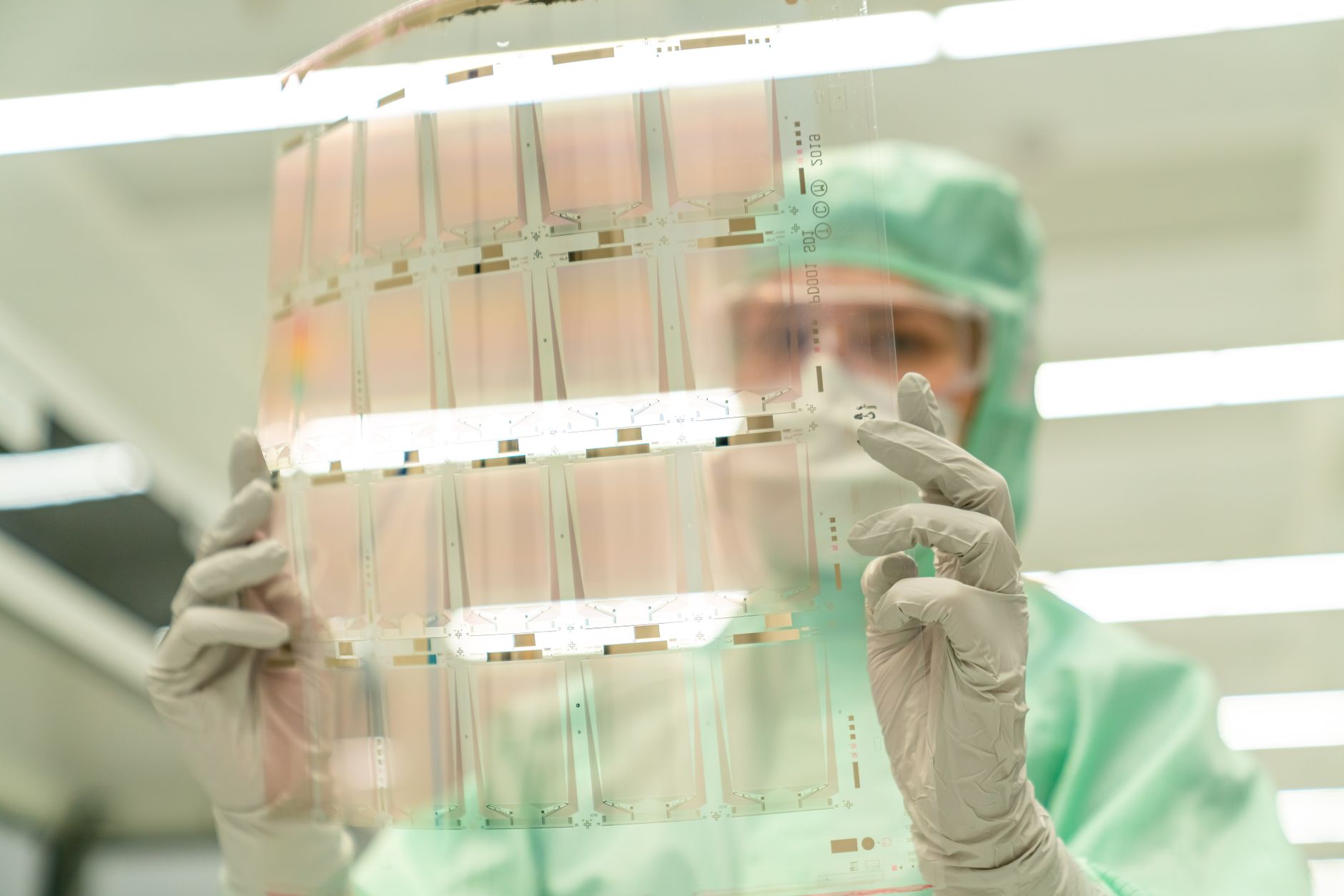
Photo by Российский центр гибкой электроники on Pexels
Real World Example
Consider a company like Nvidia, a leader in graphics processing units (GPUs) and AI accelerators. Nvidia designs highly complex chips, such as its latest generation of AI GPUs, which contain billions of transistors. These designs require the most advanced manufacturing processes available to achieve their intended performance and power efficiency.
Nvidia does not own fabrication plants capable of producing these cutting-edge chips. Instead, it sends its detailed chip designs to TSMC. TSMC then uses its state-of-the-art fabs, employing processes like 3nm or 5nm technology, to manufacture these chips on silicon wafers. After fabrication, testing, and packaging by TSMC, the finished chips are delivered back to Nvidia. Nvidia then integrates these chips into its products, such as AI servers or high-end graphics cards, which are subsequently sold to data centers, enterprises, and consumers. This partnership allows Nvidia to focus on design innovation while relying on TSMC’s manufacturing excellence.
Key Takeaways
- TSMC operates as the world’s largest independent semiconductor foundry, manufacturing chips designed by other companies.
- The company holds over 50% of the global foundry market share, generating $69.3 billion in revenue in 2026.
- TSMC specializes in advanced process nodes, enabling the production of high-performance chips for AI and other demanding applications.
- Its central role in the global supply chain makes TSMC a critical component for numerous technology industries.
- TSMC is expanding its global manufacturing capacity, including four new fabs in Arizona, and anticipates raising prices by up to 10% in 2027 due to rising costs.
TSMC’s unique foundry model allows it to serve competing clients simultaneously, fostering innovation across the entire semiconductor ecosystem without engaging in direct product competition.
Frequently Asked Questions
What is a semiconductor foundry?
A semiconductor foundry is a factory that manufactures integrated circuits designed by other companies. TSMC is the largest independent foundry, meaning it does not design its own chips but focuses solely on fabrication for clients like Nvidia and AMD.
Why is TSMC so important to the global economy?
TSMC manufactures the most advanced chips essential for virtually all modern technology, including AI, smartphones, and data centers. Its dominant market share and technological leadership make it a critical bottleneck in the global supply chain, impacting numerous industries worldwide.
What are “process nodes” in chip manufacturing?
Process nodes refer to the smallest feature size that can be reliably manufactured on a semiconductor chip, typically measured in nanometers (nm). Smaller nodes allow for more transistors to be packed onto a chip, leading to increased performance, greater efficiency, and smaller chip sizes.
Is TSMC expanding its manufacturing outside of Taiwan?
Yes, TSMC is actively expanding its manufacturing footprint globally. The company has pledged an additional $100 billion to build four new fabrication plants (fabs) in Arizona, USA, as part of an effort to diversify its production capacity and address geopolitical considerations.

SiliconeUpdate.com is a technology news platform that publishes updates and informational content related to silicon technology, software, artificial intelligence, and emerging technologies.
All articles published on this platform are attributed to SiliconeUpdate.com instead of individual authors. Content is presented in a neutral, informational format without personal opinions.
—
Content Publishing
SiliconeUpdate.com publishes news and updates based on publicly available information, official announcements, and industry developments. The focus is on clarity, relevance, and timely reporting.
—
Editorial Control
All editorial decisions, updates, and content management are handled at the platform level. No individual human or AI identity is presented as the author of articles.
—
Contact
For editorial communication or general queries, contact:
Email: neemasharma@gmail.com