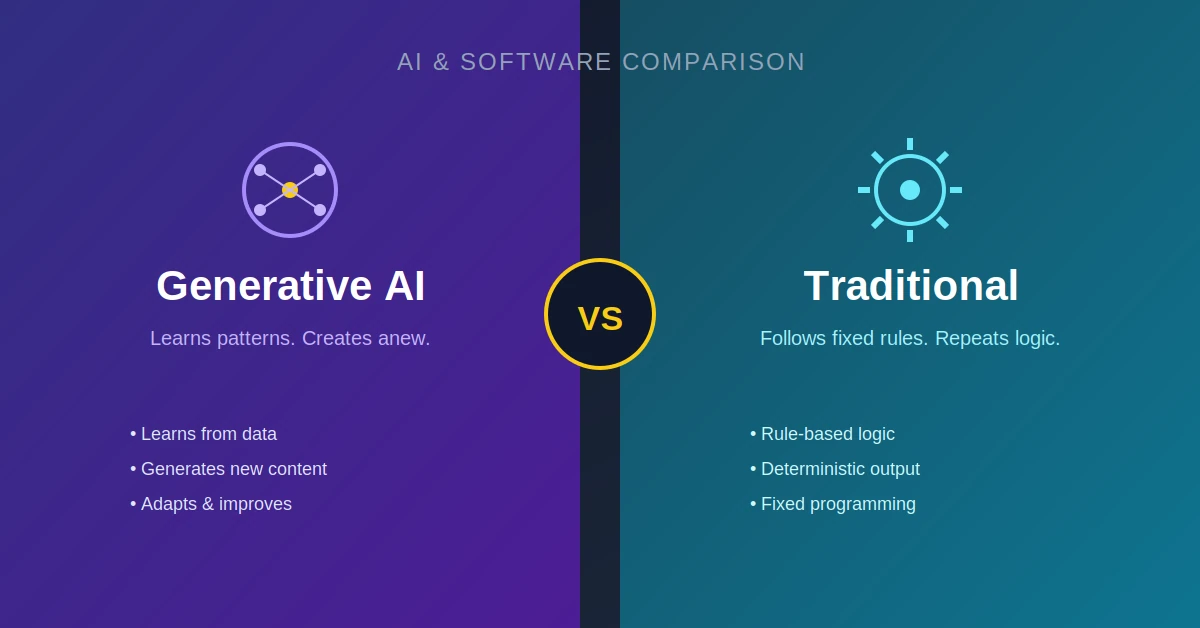
AI model training involves exposing an artificial intelligence model to examples, enabling it to learn how to process similar, previously unseen data. This process refines the model’s internal parameters, allowing it to identify patterns, make predictions, or generate outputs based on its learned experience.
Defining AI Model Training
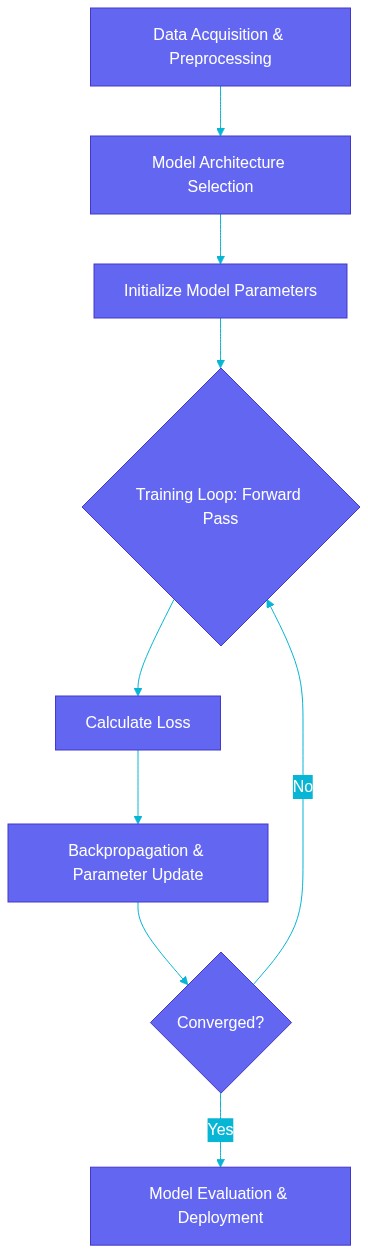
Training an AI model means providing it with a vast array of input data and corresponding expected outputs. The model iteratively adjusts its internal weights and biases to minimize the discrepancy between its predictions and the actual outputs. This iterative adjustment allows the model to generalize its understanding to new data.
The Iterative Learning Process
The learning process begins with an initial model configuration. During training, the model processes batches of data, calculates an error (loss) based on its performance, and then uses optimization algorithms to update its parameters. This cycle repeats over many epochs until the model achieves a satisfactory level of accuracy or performance on a validation dataset.
Data: The Foundation of Learning
High-quality, relevant data is indispensable for effective AI model training. The characteristics and volume of the training data directly impact the model’s ability to learn and generalize.
Data Acquisition and Preparation
Acquiring diverse and representative datasets is the initial step. This data often requires extensive preprocessing, including cleaning, normalization, and augmentation, to ensure consistency and suitability for the model. Data quality is paramount; poor data leads to poor model performance.
Dataset Characteristics for AI
AI workloads in 2026 demand significant data volumes. Training large foundation models, for instance, requires enormous datasets to achieve their broad capabilities. The type of data—whether text, images, audio, or numerical—also dictates the appropriate model architecture and training strategies.

Photo by Google DeepMind on Pexels
GPUs: The Engine of Parallelism
Graphics Processing Units (GPUs) are fundamental to modern AI model training due due to their architecture optimized for parallel computation. They significantly accelerate the computationally intensive processes involved in learning from large datasets.
Why GPUs for AI Training
GPUs excel at executing thousands of identical operations simultaneously across large datasets. This parallel processing capability makes them ideal for the matrix multiplications and tensor operations common in neural networks. Unlike CPUs, which are designed for sequential task execution, GPUs efficiently handle the massive parallelism inherent in AI training algorithms.
GPU Selection and VRAM Considerations
Choosing the right GPU for AI workloads in 2026 involves calculating VRAM needs and matching the GPU to the specific workload. High-performance GPUs, such as the H100 and B200 8-GPU systems, are frequently used for demanding AI training sessions. Adequate VRAM is essential to store the model parameters, activations, and gradients during training, especially for large models.
GPU Clusters and Scalability
Training large foundation models prioritizes massive parallelism, often requiring clusters of GPUs. These clusters are optimized for processing enormous datasets and enable distributed training, where the workload is spread across multiple GPUs. This setup is critical for handling the scale and complexity of contemporary AI models.
Optimization Techniques and Algorithms
Optimization techniques guide the AI model’s learning process, enabling it to converge towards an optimal set of parameters that minimize errors.
Loss Functions and Backpropagation
A loss function quantifies the error between the model’s predictions and the actual target values. Backpropagation is the algorithm used to calculate the gradients of this loss with respect to each of the model’s parameters. These gradients indicate the direction and magnitude by which parameters should be adjusted to reduce the loss.
Hyperparameter Tuning
Hyperparameters are configuration settings external to the model that are not learned from the data. Examples include the learning rate, batch size, and the number of layers in a neural network. Tuning these hyperparameters involves experimenting with different values to find the combination that yields the best model performance, often through systematic search strategies.

Photo by Markus Spiske on Pexels
Infrastructure for AI Training
The physical infrastructure supporting AI training workloads must meet stringent requirements for compute power, cooling, storage, and networking to ensure efficient and reliable operation.
High-Density Colocation and Cooling
AI workloads in 2026 require high-density colocation environments in data centers. The intense computational demands of GPUs generate significant heat, necessitating advanced cooling solutions like liquid cooling. This specialized cooling prevents hardware overheating and maintains optimal performance.
Low-Latency Storage and Networking
Efficient AI training relies on low-latency storage to quickly feed vast datasets to the GPUs. High-bandwidth, low-latency networking is also essential for rapid communication between GPUs within a cluster and for accessing distributed storage. This ensures that data bottlenecks do not impede the training process.
| Characteristic | Description | Impact on Training |
|---|---|---|
| Parallel Processing Cores | Thousands of specialized cores for simultaneous operations. | Accelerates matrix operations and tensor computations, reducing training time. |
| VRAM (Video RAM) | High-speed memory directly accessible by the GPU. | Determines the maximum model size and batch size that can be trained efficiently. |
| Interconnect Bandwidth | Speed of data transfer between GPUs (e.g., NVLink). | Enables efficient distributed training across multiple GPUs in a cluster. |
| Power Consumption | Electrical power required for operation. | Influences data center infrastructure needs, including cooling and power delivery. |
Key Takeaways
- AI model training involves exposing models to examples to learn patterns and generalize to new data.
- High-quality, diverse, and voluminous datasets are the foundational requirement for effective AI training.
- GPUs are essential for AI training due to their parallel processing capabilities, accelerating complex computations.
- Optimization techniques like loss functions and backpropagation guide the model’s iterative learning process.
- Specialized infrastructure, including high-density colocation, liquid cooling, and low-latency storage/networking, supports demanding AI workloads.
The sheer scale of data and computational power required for training state-of-the-art AI models often necessitates specialized data center environments, moving beyond conventional server setups. This shift highlights the unique infrastructure demands of modern AI.
Real World Example
Consider a technology company aiming to train a large language model (LLM) for specialized medical transcription. The process begins with curating an enormous dataset of medical texts, patient records (anonymized), and transcribed doctor-patient interactions. This data undergoes rigorous cleaning and labeling to ensure accuracy and consistency, removing personally identifiable information and correcting transcription errors.
The company then selects a transformer-based LLM architecture and deploys it on a cluster of high-performance GPUs, such as NVIDIA H100 systems, housed in a data center with liquid cooling. During training, the model processes billions of tokens, iteratively adjusting its parameters to predict the next word in a sequence, minimizing a perplexity loss function. Hyperparameters like the learning rate and batch size are carefully tuned over weeks or months. The trained model can then accurately transcribe complex medical terminology, significantly improving efficiency in healthcare documentation.
Frequently Asked Questions
What is the primary purpose of AI model training?
The primary purpose of AI model training is to enable a model to learn patterns and relationships from example data. This learning allows the model to perform specific tasks, such as making predictions or generating content, on new, unseen data.
Why are GPUs preferred over CPUs for AI training?
GPUs are preferred for AI training because their architecture is optimized for parallel processing. They can execute thousands of identical operations simultaneously, which is highly efficient for the matrix multiplications and tensor operations common in neural networks, significantly accelerating training times.
What role does data quality play in AI model training?
Data quality is paramount in AI model training. High-quality, diverse, and representative data ensures the model learns accurate patterns, leading to robust and reliable performance. Poor data quality can result in biased, inaccurate, or poorly generalizing models.
What infrastructure considerations are important for AI training?
Key infrastructure considerations for AI training include high-density colocation, advanced cooling solutions like liquid cooling, low-latency storage for rapid data access, and high-bandwidth, low-latency networking for efficient inter-GPU communication within clusters.
SiliconeUpdate.com is a technology news platform that publishes updates and informational content related to silicon technology, software, artificial intelligence, and emerging technologies.
All articles published on this platform are attributed to SiliconeUpdate.com instead of individual authors. Content is presented in a neutral, informational format without personal opinions.
—
Content Publishing
SiliconeUpdate.com publishes news and updates based on publicly available information, official announcements, and industry developments. The focus is on clarity, relevance, and timely reporting.
—
Editorial Control
All editorial decisions, updates, and content management are handled at the platform level. No individual human or AI identity is presented as the author of articles.
—
Contact
For editorial communication or general queries, contact:
Email: neemasharma@gmail.com