Artificial intelligence (AI) workloads are fundamentally reshaping the operational demands of modern data centers, primarily by driving a substantial increase in power consumption. This surge is not merely an incremental growth but a systemic shift driven by the intrinsic computational requirements of AI algorithms and the specialized hardware designed to execute them.
The proliferation of AI applications, from large language models (LLMs) to complex image recognition systems, necessitates an unprecedented level of parallel processing and data throughput. This computational intensity directly translates into higher electrical power draw at every layer of the data center infrastructure.
Computational Intensity of AI Workloads
AI models, particularly deep neural networks, require vast numbers of floating-point operations per second (FLOPS) during both their training and inference phases. Training large models can involve trillions of operations, often repeated over many iterations and across massive datasets. This iterative process demands sustained, high-power computation for extended periods.
Even after training, deploying these models for real-world inference, especially at scale across millions of users, still requires significant computational resources. While inference is generally less demanding than training, its widespread deployment across numerous concurrent requests accumulates substantial power usage.
The Imperative for Specialized Hardware
Traditional central processing units (CPUs) are not optimized for the highly parallelizable matrix multiplication operations central to AI. This limitation has led to the widespread adoption of specialized hardware accelerators. These accelerators, while significantly boosting performance, also exhibit higher power envelopes compared to general-purpose CPUs.
The architectural design of these accelerators prioritizes raw computational throughput, often at the expense of power efficiency per unit of work compared to less intensive tasks. This trade-off is a primary driver of increased power demand within AI-centric data centers.
Hardware Architectures Driving Consumption
The core of AI’s power demand lies in the specific hardware architectures deployed. These components are engineered for maximum parallel processing, leading to higher thermal design power (TDP) ratings and denser power requirements per rack.
Graphics Processing Units (GPUs) and AI Accelerators
Graphics Processing Units (GPUs) have become the de facto standard for AI acceleration due to their massively parallel architectures. Modern AI-specific GPUs can have TDPs ranging from 300W to over 1000W per chip. Deploying hundreds or thousands of these units within a single cluster creates an immense power draw.
Beyond GPUs, custom AI accelerators, such as Google’s Tensor Processing Units (TPUs) or NVIDIA’s Grace Hopper Superchip, are designed for even greater efficiency in specific AI tasks. While offering performance benefits, these specialized chips still operate at high power levels to deliver their intended computational density.
Memory Subsystems and Interconnect Overhead
High-performance AI models require rapid access to large amounts of data and model parameters. This necessitates advanced memory technologies like High Bandwidth Memory (HBM), which consumes more power than conventional DDR memory. The memory controllers and associated circuitry contribute significantly to the overall power budget of an accelerator.
Furthermore, the high-speed interconnects (e.g., NVLink, InfiniBand, Ethernet) that link multiple GPUs and accelerators within a server and across racks also consume considerable power. These interconnects are essential for data transfer between computational units, preventing bottlenecks that would otherwise negate the benefits of powerful accelerators.
Increased Power Density and Rack Design
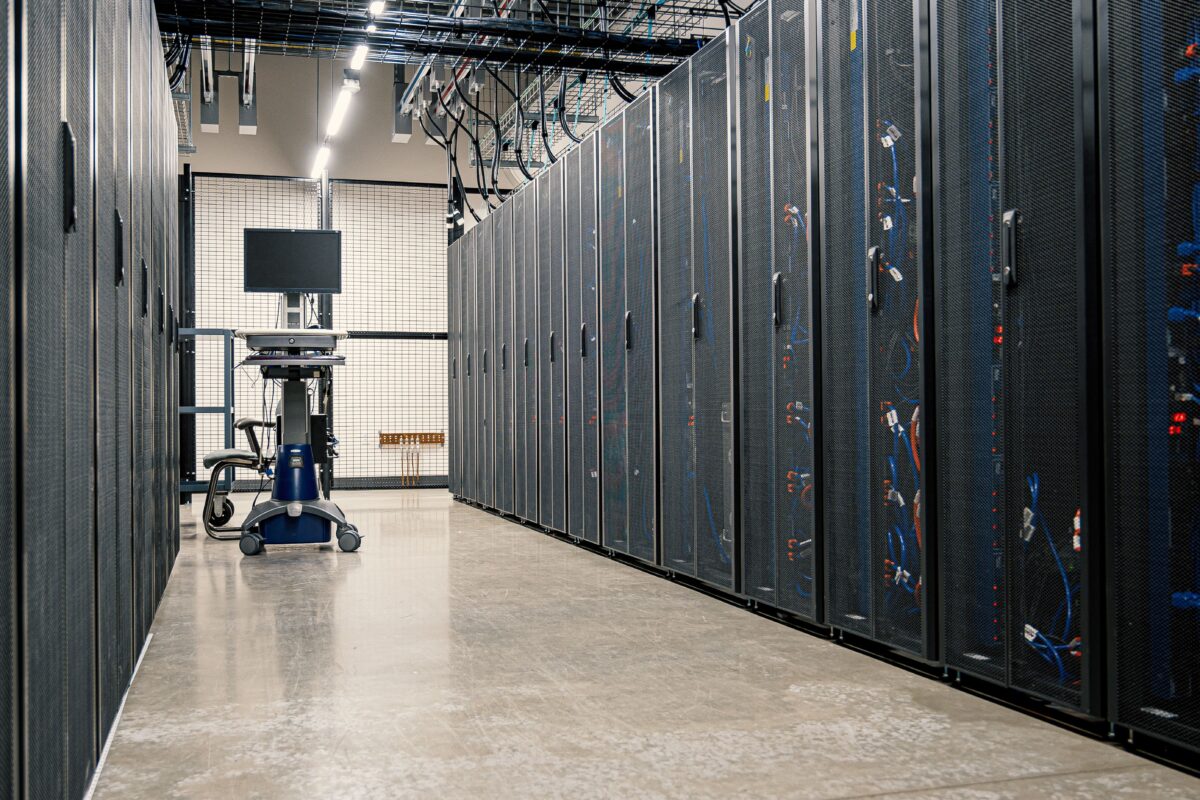
The concentration of high-TDP components like GPUs within servers leads to significantly increased power density per rack. A single rack housing multiple AI servers can easily exceed 50 kW, with some specialized racks approaching 100 kW or more. This contrasts sharply with traditional enterprise racks, which might average 5-15 kW.
This higher density necessitates a complete rethinking of data center power distribution and cooling infrastructure. Existing facilities often lack the electrical capacity or thermal management capabilities to support such concentrated loads without extensive upgrades.
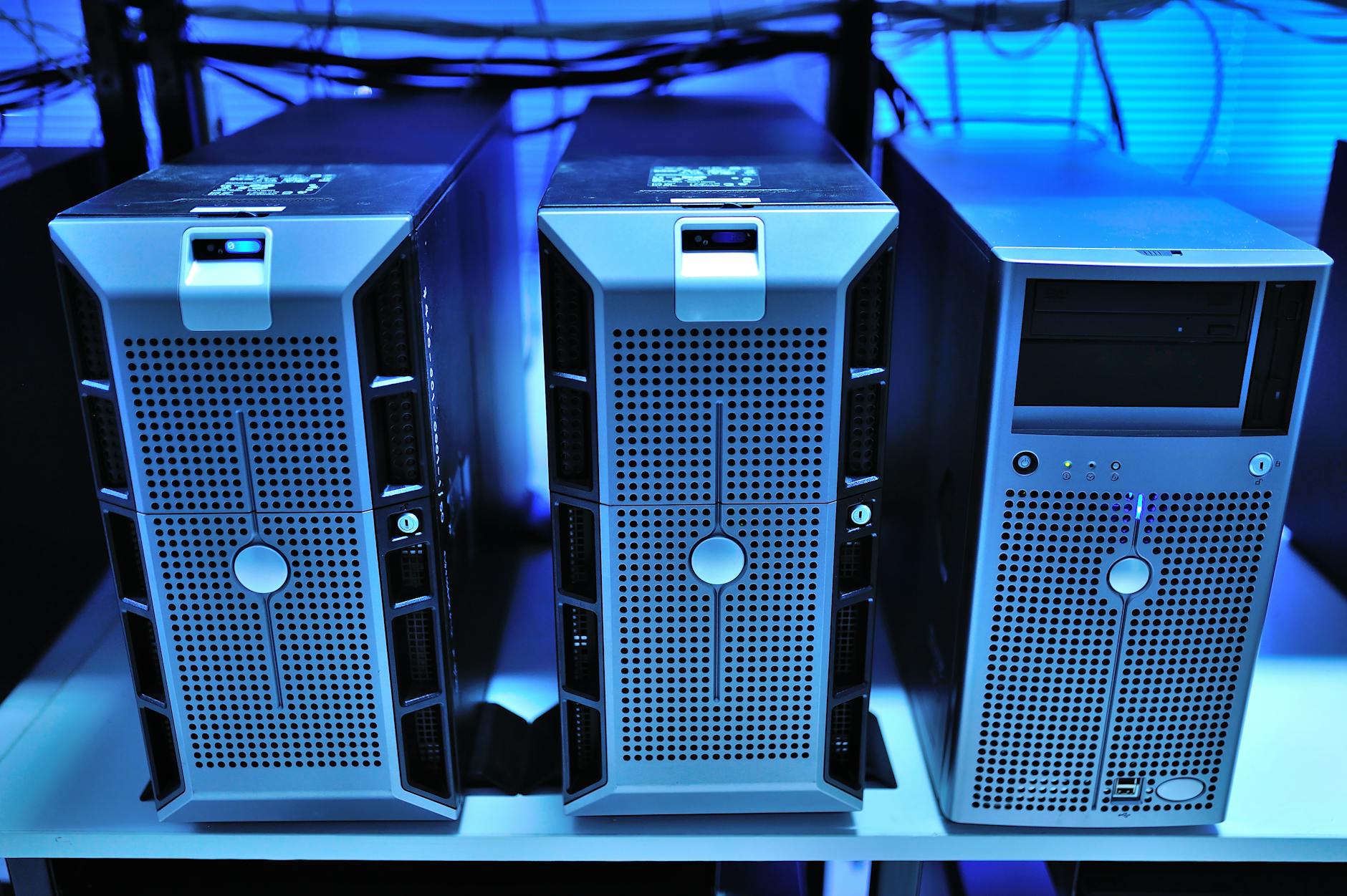
Photo by panumas nikhomkhai on Pexels
Training Versus Inference: Distinct Power Profiles
The power demands of AI vary significantly depending on whether a model is being trained or used for inference, each presenting unique challenges for data center operators.
Energy Demands of Large Model Training
AI model training is an extremely energy-intensive process. It involves iteratively feeding vast datasets through complex neural networks, adjusting millions or billions of parameters. This process can run for days, weeks, or even months, requiring sustained peak power consumption from hundreds or thousands of accelerators.
The computational scale of modern foundation models means that training a single large language model can consume energy equivalent to that of small towns over its training duration. This makes training a primary driver of the overall increase in data center power demand.
Optimizing Power for AI Inference at Scale
While less power-intensive per operation than training, AI inference still contributes substantially to data center power demand due to its sheer scale. Inference involves deploying trained models to make predictions or generate content in real-time for millions of users or applications.
Optimizations like model quantization, pruning, and specialized inference engines aim to reduce the computational load and thus the power required per inference. However, the cumulative effect of billions of inference requests across global data centers ensures that this phase remains a significant power consumer.
Auxiliary Systems and Thermal Management
Beyond the direct power consumption of AI hardware, the supporting infrastructure, particularly cooling systems, also sees a dramatic increase in energy requirements.
Advanced Cooling Requirements
The high power density of AI hardware generates intense localized heat. Traditional air-cooling methods often become inefficient or insufficient to dissipate this heat effectively. This necessitates the deployment of more advanced and energy-intensive cooling solutions.
Solutions like liquid cooling (e.g., direct-to-chip, immersion cooling) are becoming more prevalent. While more efficient at heat removal, these systems often require additional pumps, heat exchangers, and chillers, which themselves consume significant electrical power.
Impact on Power Usage Effectiveness (PUE)
Power Usage Effectiveness (PUE) is a metric that measures the ratio of total facility power to IT equipment power. As AI workloads increase IT power, the associated cooling and power delivery infrastructure must scale proportionally, or even disproportionately, to manage the higher heat loads and power densities.
Maintaining a low PUE (closer to 1.0) becomes more challenging with AI deployments. The increased energy required for cooling, power conversion, and distribution to support AI hardware can push PUE values higher, meaning a larger percentage of total data center power is consumed by non-IT overhead.
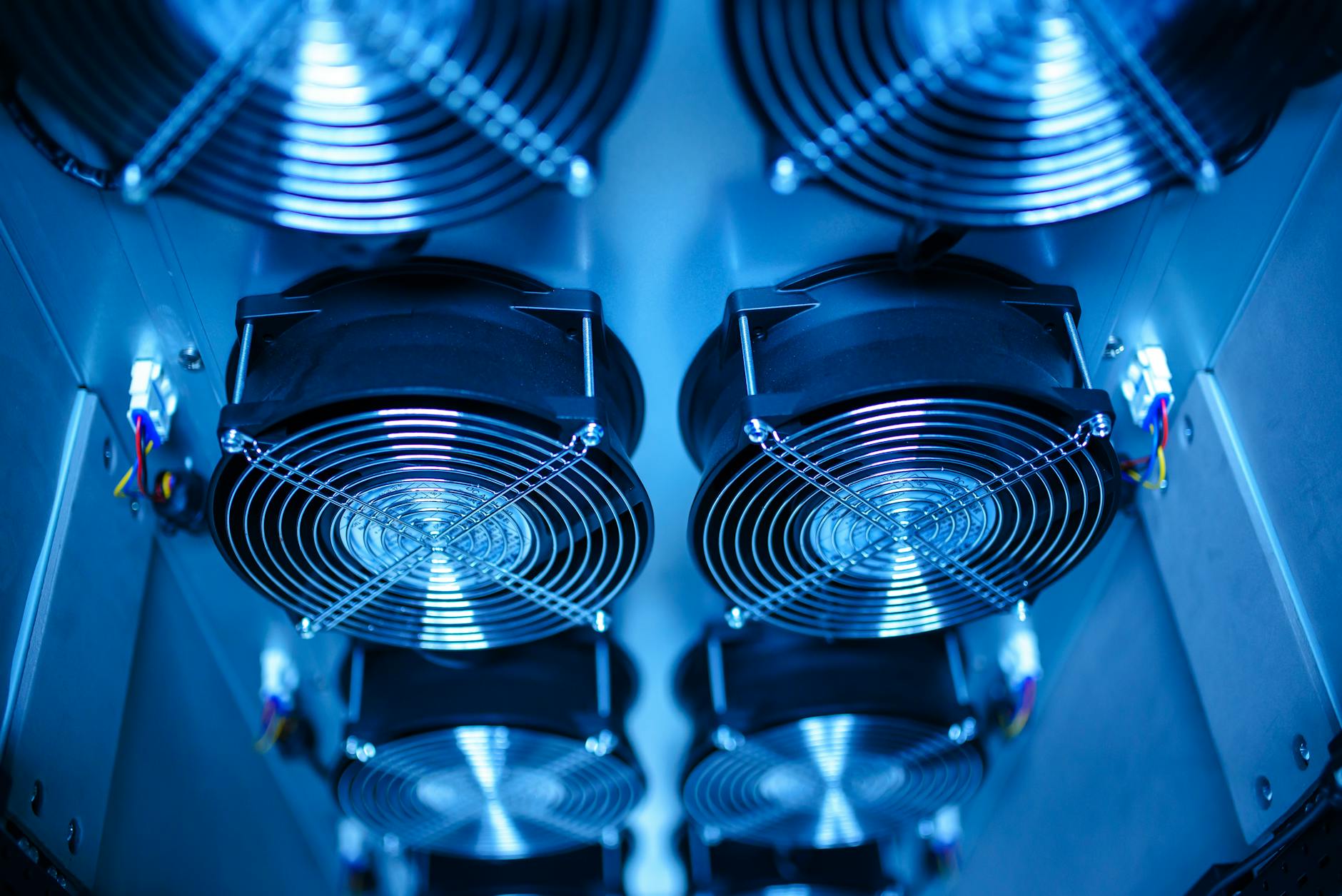
Photo by panumas nikhomkhai on Pexels
Data Center Infrastructure Adaptation
The surge in AI-driven power demand mandates significant upgrades and strategic planning for data center infrastructure, impacting everything from internal power distribution to external grid connections.
High-Voltage Power Distribution
To efficiently deliver the massive amounts of power required by AI clusters, data centers are increasingly adopting high-voltage direct current (HVDC) distribution within the facility. HVDC can reduce conversion losses compared to traditional AC systems, improving overall efficiency.
The sheer scale of power needed also requires robust and redundant power delivery systems, including larger uninterruptible power supplies (UPS), switchgear, and transformers, all designed to handle multi-megawatt loads for individual AI halls or clusters.
Integration with Grid Capacity
The power demands of new AI data centers are so substantial that they can strain local electrical grids. Planning for new facilities now involves extensive collaboration with utility providers to ensure sufficient generation and transmission capacity. Some AI data centers are exploring direct connections to renewable energy sources or even developing their own on-site generation capabilities to mitigate grid impact and ensure power availability.
| Hardware Component | Typical TDP Range (Watts) | Role in AI Workloads |
|---|---|---|
| High-End AI GPU (e.g., NVIDIA H100) | 700W – 1000W | Primary accelerator for training and inference |
| AI Accelerator (e.g., Google TPU v5e) | 200W – 450W | Specialized accelerator for specific AI tasks |
| High-Performance CPU (e.g., Intel Xeon) | 200W – 350W | General-purpose computing, data pre-processing |
| HBM Memory Module | 20W – 50W (per stack) | High-bandwidth data access for accelerators |
| High-Speed Network Interface Card (NIC) | 25W – 100W | Data transfer between servers and accelerators |
Real World Example
Consider a hyperscale cloud provider planning a new AI supercluster in 2025 to support the development and deployment of next-generation large language models. This cluster is projected to house 10,000 high-end AI GPUs, each with a TDP of 700W. The direct IT power consumption for just these GPUs would be 7 megawatts (10,000 GPUs * 700W/GPU).
Factoring in the power for CPUs, HBM memory, high-speed interconnects, and storage, the total IT load for this cluster could easily reach 10-12 megawatts. With a typical PUE of 1.3 for a modern data center, the total facility power demand, including cooling and power delivery overhead, would then be approximately 13-15.6 megawatts. This single cluster represents a significant load, requiring robust utility connections and advanced liquid cooling solutions to manage the intense heat generated within its densely packed racks.
Key Takeaways
- AI workloads demand immense computational power, primarily from specialized hardware like GPUs and AI accelerators.
- These accelerators feature high Thermal Design Power (TDP) ratings, leading to significantly increased power density per rack.
- Both AI model training and inference contribute substantially to power demand, with training being particularly energy-intensive.
- High heat generation from AI hardware necessitates advanced and often more energy-intensive cooling solutions, impacting Power Usage Effectiveness (PUE).
- Data centers require substantial upgrades to power distribution, including high-voltage systems and enhanced grid integration, to support AI growth.
The exponential growth in AI model complexity means that future power demands are not just scaling linearly with hardware deployment but are also driven by the increasing computational intensity per model generation. This creates a compounding challenge for energy infrastructure.
Projected Data Center AI Power Consumption (2025)
AI Training: 15Gigawatts | AI Inference: 10Gigawatts | Other AI Workloads: 5Gigawatts — Source: Industry Estimates 2025
Frequently Asked Questions
What is the primary driver of increased power demand from AI?
The primary driver is the computational intensity of AI algorithms, particularly deep learning, which requires massive parallel processing. This necessitates specialized hardware like GPUs and AI accelerators, which consume significantly more power than general-purpose CPUs.
How do AI accelerators contribute to higher power density?
AI accelerators, such as high-end GPUs, are designed for maximum computational throughput and have high Thermal Design Power (TDP) ratings. Packing multiple such accelerators into a single server and then multiple servers into a rack dramatically increases the power draw and heat generation within a confined space, leading to higher power density.
Is AI training or inference more power-intensive?
AI model training is generally far more power-intensive per model than inference, as it involves iterative computations over vast datasets for extended periods. However, the cumulative power demand from widespread, real-time AI inference across numerous applications also contributes significantly to overall data center power consumption.
What infrastructure changes are needed to support AI power demands?
Data centers require upgrades to their electrical infrastructure, including higher capacity power distribution units, transformers, and potentially high-voltage direct current (HVDC) systems. Advanced cooling solutions, such as liquid cooling, are also essential to manage the intense heat generated by high-density AI hardware.
SiliconeUpdate.com is a technology news platform that publishes updates and informational content related to silicon technology, software, artificial intelligence, and emerging technologies.
All articles published on this platform are attributed to SiliconeUpdate.com instead of individual authors. Content is presented in a neutral, informational format without personal opinions.
—
Content Publishing
SiliconeUpdate.com publishes news and updates based on publicly available information, official announcements, and industry developments. The focus is on clarity, relevance, and timely reporting.
—
Editorial Control
All editorial decisions, updates, and content management are handled at the platform level. No individual human or AI identity is presented as the author of articles.
—
Contact
For editorial communication or general queries, contact:
Email: neemasharma@gmail.com