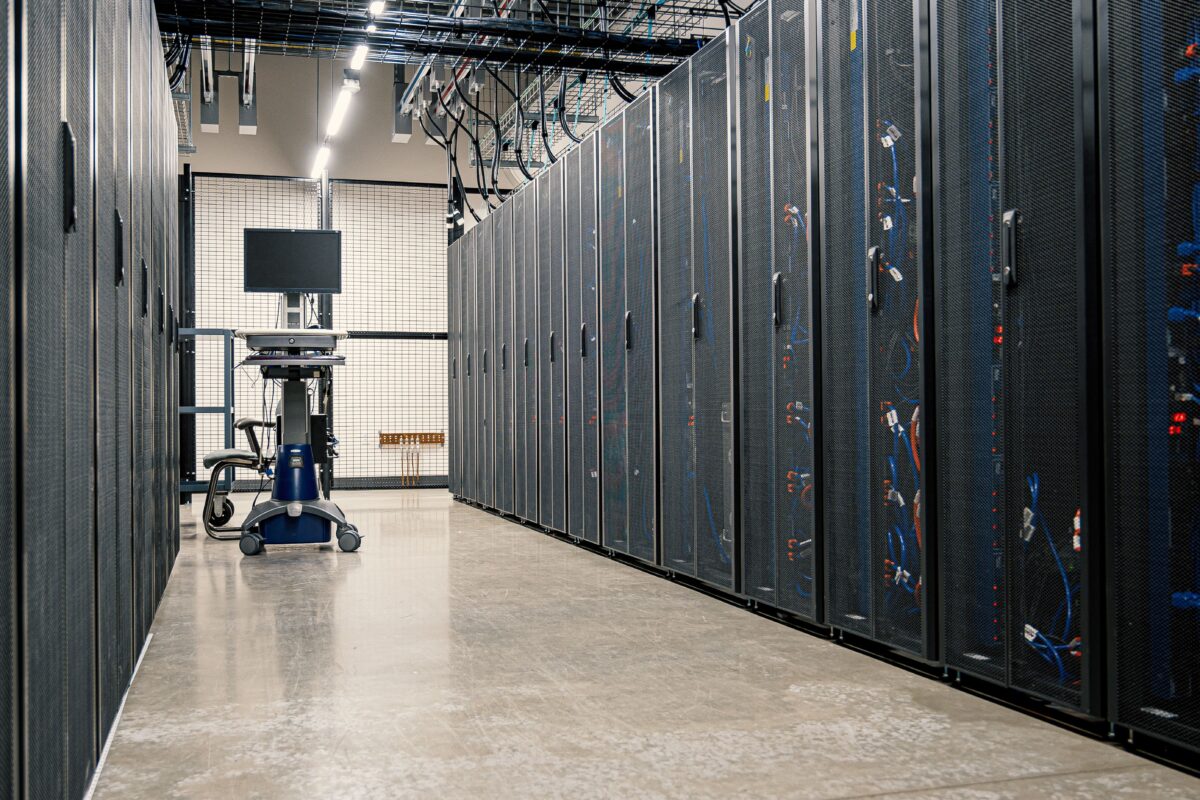
AI data centers represent a specialized evolution of traditional data center infrastructure, engineered to support the intensive computational demands of artificial intelligence workloads. Unlike general-purpose facilities, these centers prioritize specific hardware, power, cooling, and networking paradigms to optimize for tasks such as machine learning training and inference.
The fundamental differences stem from the nature of AI computations, which require massive parallel processing and high-speed data movement. This necessitates a re-evaluation of every component, from the silicon level to the facility’s power grid connection.
Specialized Hardware Architectures
AI data centers are defined by their reliance on accelerated computing hardware, primarily Graphics Processing Units (GPUs). While traditional data centers often use Central Processing Units (CPUs) for general-purpose computing, AI workloads benefit from the parallel processing capabilities of GPUs, which can execute thousands of operations simultaneously.
Beyond GPUs, these centers integrate other specialized accelerators like Tensor Processing Units (TPUs) or Field-Programmable Gate Arrays (FPGAs). These components are designed to handle specific matrix multiplication and tensor operations common in deep learning, offering significant performance gains over CPUs for these tasks.
Extreme Power and Cooling Demands
The high density of GPUs and other accelerators translates directly into significantly increased power consumption per rack. An AI data center rack can consume 50-100 kW, compared to 10-20 kW for a typical traditional data center rack.
This elevated power density generates substantial heat, necessitating advanced cooling solutions. Liquid cooling, including direct-to-chip and immersion cooling, is becoming standard to efficiently dissipate heat and maintain optimal operating temperatures for high-performance components. Traditional air cooling often proves insufficient for these thermal loads.
High-Bandwidth, Low-Latency Networking
AI workloads, especially large-scale model training, require rapid data exchange between thousands of accelerators. This drives the need for ultra-high-bandwidth, low-latency network infrastructure within the data center.
Technologies like InfiniBand or high-speed Ethernet (e.g., 400GbE or 800GbE) are deployed to facilitate efficient communication between GPU clusters. The network fabric must support non-blocking communication to prevent bottlenecks that could starve accelerators of data, directly impacting training times.
Operational Challenges and Economic Impact
The rapid expansion of AI data centers faces significant operational hurdles, particularly concerning power grid integration and construction timelines. Analysts at Sightline Climate estimate that between 30% and 50% of AI data centers planned for deployment in the US in 2026 will be delayed or canceled.
These delays are primarily attributed to power grid interconnection queues and construction bottlenecks. The sheer scale of power required by these facilities strains existing electrical infrastructure, demanding substantial upgrades and longer lead times for new connections.
Infrastructure Strain and Delays
The projected doubling of total data center power consumption by 2028, driven primarily by AI workloads, highlights the immense strain on energy resources. Securing adequate and reliable power is a primary concern for new AI data center developments.
Construction of these specialized facilities also presents challenges, requiring specific expertise in high-density power distribution and advanced cooling systems. These complexities contribute to extended build times and increased capital expenditure.
Public and Political Scrutiny
The growth of AI data centers has attracted significant public and political opposition. Concerns over electricity consumption and environmental impact have led to protests and bipartisan rallying cries in several states.
This backlash contributes to the complex landscape surrounding AI data center development, adding regulatory and social pressures to the technical and economic challenges. The “AI data center bubble” discussion in 2026 reflects a capital-intensive transformation with macroeconomic risks, not purely speculative growth.

Photo by Fernando Narvaez on Pexels
Comparison: AI vs. Traditional Data Centers
The table below highlights key differences in design and operational priorities between AI-centric and traditional data centers.
| Feature | Traditional Data Center | AI Data Center |
|---|---|---|
| Primary Workload | General-purpose computing, web hosting, enterprise applications | AI model training, inference, scientific simulations |
| Primary Compute Units | CPUs (Central Processing Units) | GPUs (Graphics Processing Units), TPUs, FPGAs |
| Power Density per Rack | Typically 10-20 kW | Often 50-100 kW, sometimes higher |
| Cooling Methods | Air cooling (CRAC/CRAH units), hot/cold aisle containment | Liquid cooling (direct-to-chip, immersion), advanced air cooling |
| Network Bandwidth | 10GbE, 25GbE, 100GbE for backbone | 200GbE, 400GbE, 800GbE, InfiniBand for clusters |
| Interconnect Topology | Spine-leaf, hierarchical | Fat-tree, optimized for all-to-all communication |
Key Takeaways
- AI data centers prioritize specialized hardware like GPUs and TPUs for parallel processing.
- They exhibit significantly higher power density per rack, demanding advanced liquid cooling solutions.
- Ultra-high-bandwidth, low-latency networking is essential for efficient accelerator communication.
- Development faces substantial delays due to power grid limitations and construction bottlenecks.
- The economic landscape involves high capital investment and faces public scrutiny over resource consumption.
The projected doubling of total data center power consumption by 2028, driven primarily by AI, underscores a profound shift in global energy demand. This rapid increase is a direct consequence of the specialized, power-intensive hardware required for AI workloads.
Projected US AI Data Center Capacity Delays (2026)
Delayed/Canceled: 40% of planned capacity | On Schedule: 60% of planned capacity — Source: Sightline Climate 2026
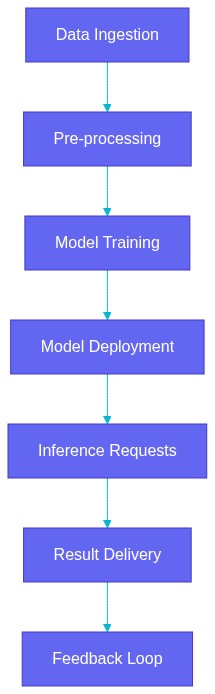

Photo by Google DeepMind on Pexels
Real World Example
Consider a hypothetical AI data center designed to train a large language model (LLM) with trillions of parameters. This facility would house thousands of interconnected GPUs, each consuming hundreds of watts. To manage the heat generated by these accelerators, the data center would employ a direct-to-chip liquid cooling system, circulating coolant directly over the GPU dies.
The networking infrastructure would utilize a high-speed fabric, such as InfiniBand, connecting GPU clusters at 400Gb/s or higher to ensure seamless data flow during distributed training. This setup allows the LLM to be trained efficiently across numerous nodes, completing tasks that would be impossible or prohibitively slow on traditional CPU-based systems.
Frequently Asked Questions
What is the primary hardware difference in AI data centers?
AI data centers primarily utilize Graphics Processing Units (GPUs) and other specialized accelerators like TPUs or FPGAs, rather than general-purpose CPUs, to handle the parallel processing demands of AI workloads.
Why do AI data centers require more power?
The high density of powerful accelerators like GPUs, each consuming significant wattage, leads to substantially higher power consumption per rack compared to traditional data centers. This increased power directly correlates with their computational intensity.
How do AI data centers manage heat?
Due to extreme heat generation from high-density hardware, AI data centers frequently employ advanced liquid cooling solutions, such as direct-to-chip or immersion cooling, which are more efficient at dissipating heat than traditional air cooling methods.
What challenges are AI data centers facing in 2026?
In 2026, AI data centers are facing significant delays and cancellations, with 30-50% of planned US capacity projected to slip. These issues are primarily due to bottlenecks in power grid interconnection and construction timelines.
SiliconeUpdate.com is a technology news platform that publishes updates and informational content related to silicon technology, software, artificial intelligence, and emerging technologies.
All articles published on this platform are attributed to SiliconeUpdate.com instead of individual authors. Content is presented in a neutral, informational format without personal opinions.
—
Content Publishing
SiliconeUpdate.com publishes news and updates based on publicly available information, official announcements, and industry developments. The focus is on clarity, relevance, and timely reporting.
—
Editorial Control
All editorial decisions, updates, and content management are handled at the platform level. No individual human or AI identity is presented as the author of articles.
—
Contact
For editorial communication or general queries, contact:
Email: neemasharma@gmail.com