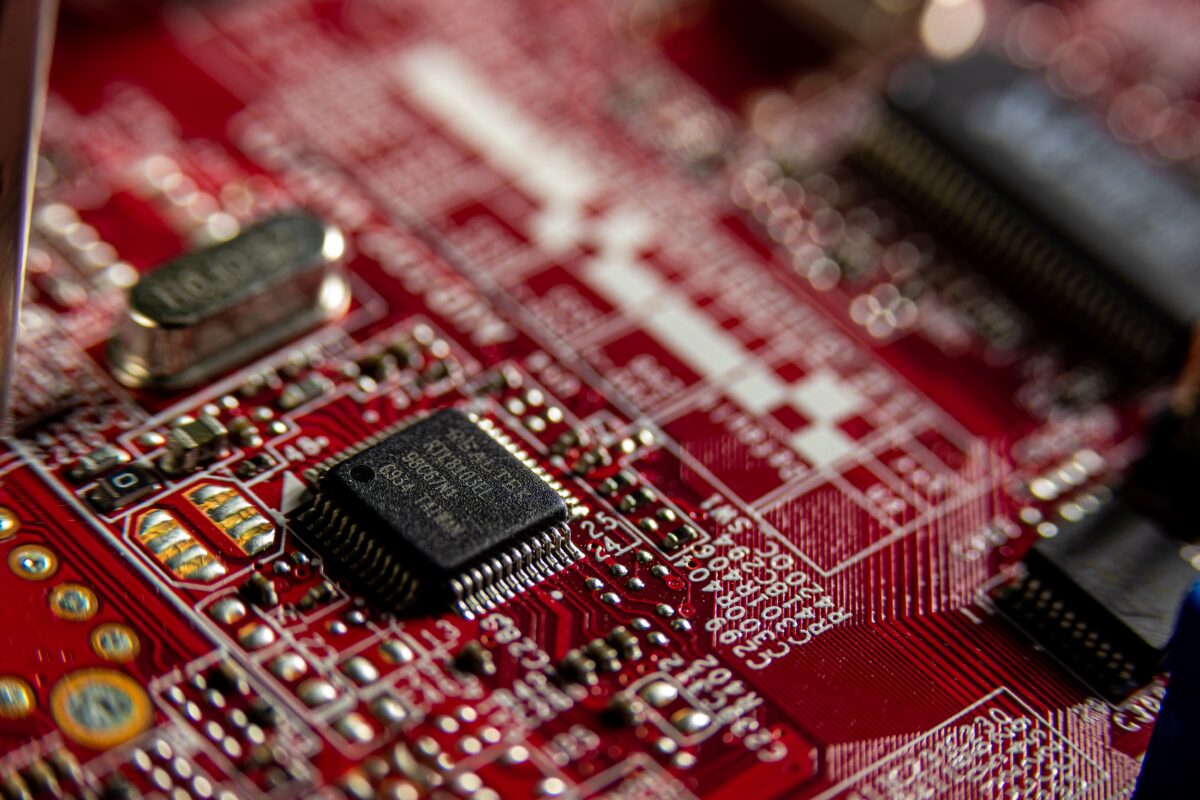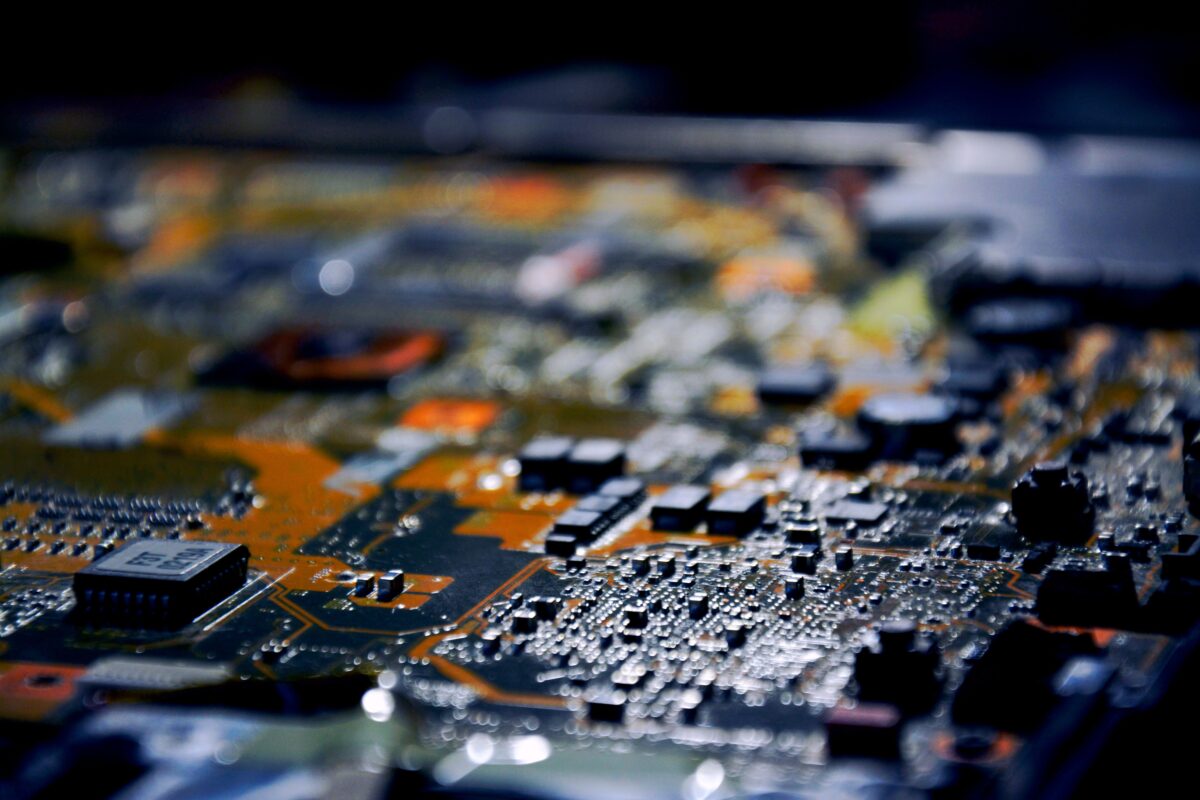
AI headlines focus on models, chatbots, and data centers. But behind every model is a physical supply chain that has to make the chips: a chain with a few narrow points, concentrated in a handful of companies and one small region of the world. Who can build, how fast, and at what cost increasingly depends on that chain, not on software. For ongoing coverage of the industry behind it, see our semiconductor and AI chip news.
An AI chip is more than a chip
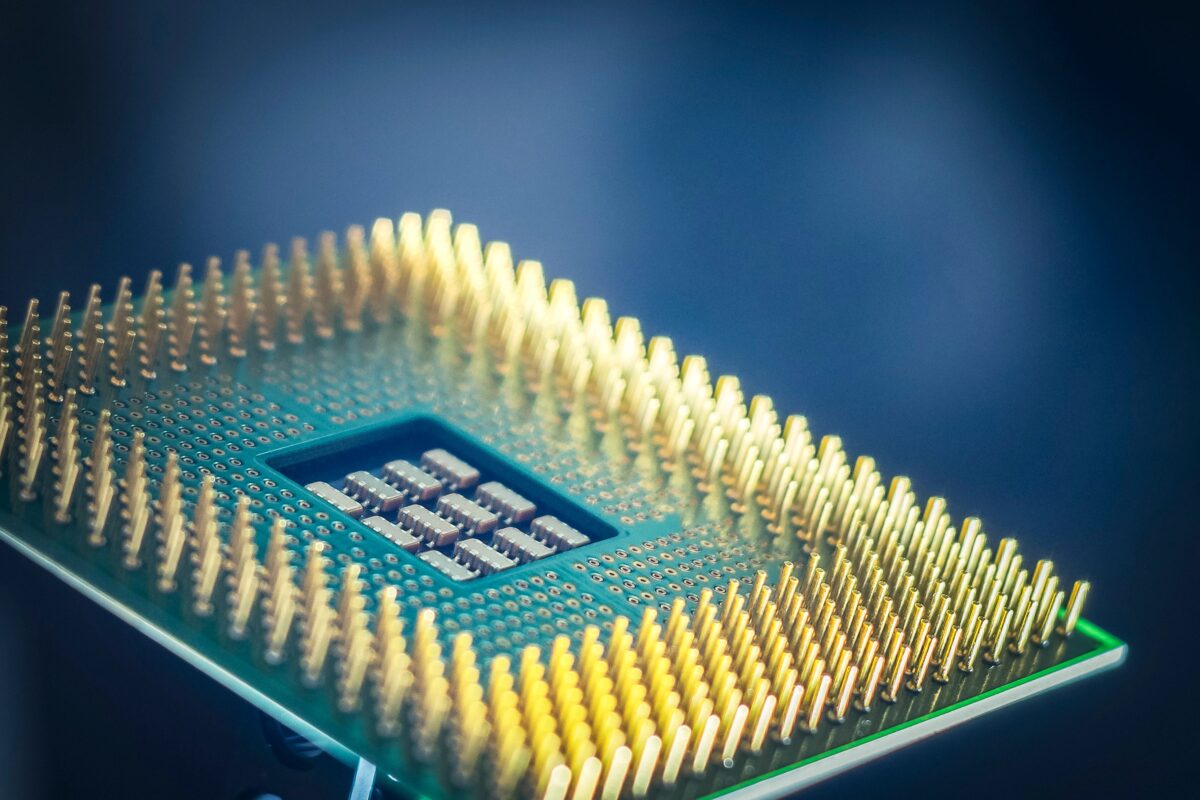
The popular picture of an AI accelerator is a single processor, but the reality is a stack of components made by different companies. A leading AI chip needs advanced logic wafers from a foundry, high-bandwidth memory (HBM) from a memory maker, advanced packaging to join them, and substrates, assembly, and testing around it. One analysis summarizes the shift well: the bottleneck begins at TSMC’s advanced nodes, continues through CoWoS packaging, passes through HBM, substrates, assembly, and testing, and even reaches mature-process factories making auxiliary chips for AI servers.
That is why the “GPU shortage” is an oversimplification. Designers like Nvidia can create new chip designs faster than the industry can build the pieces around them, which is also why Nvidia’s move to sell whole systems, covered in why Nvidia is expanding beyond GPUs, depends so heavily on suppliers.
Bottleneck 1: Leading-edge manufacturing
The most advanced chips are made by one company at scale: TSMC. Broadcom has said that constraints at TSMC would limit its chip supply into 2026, because demand for AI accelerators keeps outpacing manufacturing expansion. TSMC is spending heavily to respond; one industry analysis projects its capex rising to $52 to $56 billion in 2026, from $40.9 billion in 2025.
Lead times show the strain. A foundry allocation report estimates 3nm lead times of roughly 52 to 78 weeks and 2nm lead times of 78 to 156 weeks, with 2nm reportedly booked into 2028. These are analyst estimates rather than TSMC statements, so treat them as indicative.
Bottleneck 2: Advanced packaging
Packaging is the least visible and most important constraint. TSMC’s CoWoS process joins the processor die and its memory stacks into one finished package, and without it, the chip can’t ship. Reports describe CoWoS capacity as sold out through 2026, with TSMC aiming to nearly quadruple output to about 130,000 wafers per month by late 2026. Another analysis says Nvidia has locked in over 70 percent of TSMC’s CoWoS-L capacity, leaving the rest to AMD, Broadcom, Marvell, and others.
This matters for the custom-chip race. When Google, Amazon, and Microsoft design their own accelerators, as we described in how Microsoft, Google and Amazon are competing for AI infrastructure, they still compete for the same packaging slots. Having a better design doesn’t help if you can’t get it built.
Bottleneck 3: Memory
HBM is the other half of the package. A 2026 explainer argues that the constraint has shifted from packaging toward the memory itself, with SK hynix, Samsung, and Micron all raising contract prices because they can’t make enough. TrendForce has reported that DRAM makers are shifting capacity toward HBM and server applications, which tightens supply for conventional memory.
The effects spread beyond data centers. CNBC reported that Microsoft’s 2026 capex projection included $25 billion from higher component prices as AI chip demand eats up memory supply. That helps explain why spending forecasts keep rising, as we covered in why Big Tech companies are building their own data centers. Memory also affects phones and laptops, which is relevant to the on-device AI push in how Apple is bringing more AI processing to its devices.
Geography: concentration is the risk
The supply chain is not just narrow; it is geographically concentrated. One 2026 analysis states that Taiwan produces over 90 percent of the world’s most advanced semiconductors, describing that concentration as a critical vulnerability. Packaging is even more concentrated. CNBC reported in April 2026 that TSMC sends 100 percent of its chips to Taiwan for packaging, including those made at its advanced Phoenix fab.
The tools are concentrated too. TSMC’s Arizona fabs rely on extreme ultraviolet lithography equipment sourced from ASML. A disruption anywhere along this chain, whether a natural disaster, a political crisis, or an export restriction, can ripple across the whole AI industry.
The response: building elsewhere
Governments and companies are trying to spread the risk. TSMC’s own Arizona page says its investment there has grown to $265 billion, with plans for six logic fabs, two advanced packaging facilities, and an R&D center, and that it announced intent in July 2026 to build more 2nm-and-below fabs and packaging sites. A Data Center Dynamics report quotes TSMC saying it intends to build CoWoS and 3D-IC capability in Arizona before 2029.
It isn’t quick or cheap. Wikipedia’s account of the project notes that TSMC said US construction costs run four to five times those in Taiwan, and that US-made chips would cost at least 50 percent more. Skilled workers are also scarce. Amkor is working on its own Arizona packaging plant, targeting production in early 2028, but Taiwan is expected to dominate CoWoS capacity in the near term.
Why this matters beyond chipmakers
Supply chains shape AI in ways that are easy to miss. They decide how fast data centers can fill with accelerators, which in turn affects how quickly the power and cooling we discussed in why AI data centers need much more power get used. They affect prices: scarce packaging and memory lift costs for everyone, from hyperscalers to startups. They help determine who gets access, since large buyers can reserve capacity years ahead while smaller ones wait. And they influence geopolitics, which is why chip supply now features in trade policy and national security debates.
The risks and uncertainties
It would be a mistake to treat today’s bottlenecks as permanent. Capacity is expanding, and shortages in one layer often move to another rather than disappearing. Demand could also cool, in which case new fabs and packaging lines could become a glut. Many figures about lead times and sold-out capacity come from analyst and trade sources instead of company statements, so they can change quickly. Watching TSMC’s capacity updates and the memory makers’ earnings calls is the best way to follow the real situation.
The bigger picture
Semiconductor supply chains matter for AI because they set the speed limit. Models, data, and data centers can all be scaled with money, but the chips that run them depend on a small number of specialized factories, tools, and materials that take years to build. The companies and countries that secure those links gain a lasting advantage, which is why this story ties together everything from custom silicon to data center strategy. Follow our AI hardware coverage as the supply picture develops.
SiliconeUpdate.com is a technology news platform that publishes updates and informational content related to silicon technology, software, artificial intelligence, and emerging technologies.
All articles published on this platform are attributed to SiliconeUpdate.com instead of individual authors. Content is presented in a neutral, informational format without personal opinions.
—
Content Publishing
SiliconeUpdate.com publishes news and updates based on publicly available information, official announcements, and industry developments. The focus is on clarity, relevance, and timely reporting.
—
Editorial Control
All editorial decisions, updates, and content management are handled at the platform level. No individual human or AI identity is presented as the author of articles.
—
Contact
For editorial communication or general queries, contact:
Email: neemasharma@gmail.com