
Ransomware is a type of malicious software designed to block access to a computer system or encrypt an organization’s files until a sum of money, or ransom, is paid. This cyber threat has evolved significantly, moving beyond simple encryption to more complex extortion tactics.
What is Ransomware?
At its core, ransomware functions by either locking users out of their operating systems or, more commonly, encrypting their data. Once encrypted, files become inaccessible without a decryption key, which attackers promise to provide upon payment. The primary goal is financial gain through coercion.
The Evolution of Ransomware Tactics
Ransomware tactics have become more sophisticated. As of 2026, attackers frequently exfiltrate sensitive data before deploying encryption, or they may skip encryption entirely, relying solely on the threat of data exposure. This means that even if an organization can restore its systems from backups, stolen customer records or source code remain compromised, leading to potential regulatory fines and reputational damage.
Initial Access and Infection Vectors
Gaining initial access to a target network is the first critical step for ransomware operators. Attackers employ various methods, from exploiting known vulnerabilities to manipulating individuals.
Exploiting Vulnerabilities
Ransomware groups often leverage unpatched software vulnerabilities or misconfigured systems to breach networks. These weaknesses provide a gateway for attackers to establish a foothold and move laterally within an organization’s infrastructure.
Social Engineering and Gig Platforms
Social engineering, particularly phishing, remains a prevalent method for initial access. Attackers trick employees into clicking malicious links or opening infected attachments, leading to malware deployment. A newer tactic observed in 2026 involves ransomware groups exploiting gig work platforms to carry out attacks when remote methods prove ineffective, using these platforms to gain physical or logical access.
Photo by Pew Nguyen on Pexels
Execution and Impact
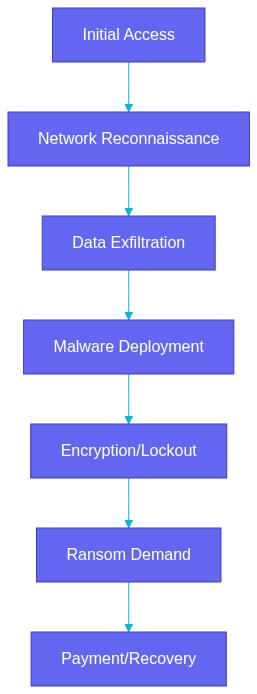
Once inside a network, ransomware attacks proceed through several stages, culminating in the demand for payment.
Data Exfiltration
A significant shift in 2026 is the emphasis on data exfiltration. Before any encryption takes place, attackers identify and steal valuable data, such as customer records, intellectual property, or financial information. This stolen data provides additional leverage for extortion, even if the victim can recover their encrypted files.
Encryption and System Lockout
Following data exfiltration, the ransomware payload executes. This typically involves encrypting files on compromised systems, rendering them unusable. In some cases, the ransomware may also lock users out of their entire operating system, displaying a ransom note directly on the screen.
Ransom Demands
After encryption or data exfiltration, attackers present a ransom note, detailing the payment amount, cryptocurrency wallet address, and instructions for payment. The demand often includes a deadline, threatening permanent data loss or public release of stolen data if payment is not made promptly.
Ransomware-as-a-Service (RaaS) Model
The industrialization of ransomware has been significantly driven by the Ransomware-as-a-Service (RaaS) model, making sophisticated attacks accessible to a wider range of malicious actors.
Industrialization of Attacks
RaaS platforms allow individuals with limited technical skills to launch ransomware attacks by purchasing access to pre-developed ransomware tools and infrastructure. This model includes everything from the malware itself to payment processing and victim support, effectively lowering the barrier to entry for cybercriminals.
Operational Shift
In 2026, ransomware operations are expected to rely more on basic, compiled malware payloads or offensive frameworks. This represents a shift away from more complex Living-off-the-Land (LOTL) techniques, simplifying deployment for RaaS affiliates.

Photo by Tima Miroshnichenko on Pexels
Key Trends in 2026
The landscape of ransomware continues to evolve, with new technologies and methodologies shaping future threats.
AI-Driven Attacks
One alarming trend for 2026 is the emergence of AI-driven attacks. Artificial intelligence can enhance various stages of a ransomware attack, from automating reconnaissance and vulnerability scanning to crafting more convincing phishing emails and adapting to defensive measures.
Shifting Attack Payloads
The focus for 2026 ransomware attacks is predicted to revert to simpler, compiled malware payloads. This approach prioritizes efficiency and ease of deployment, especially within the RaaS ecosystem, over stealthier, more complex techniques.
| Phase | Description | Key Tactics (2026) |
|---|---|---|
| Initial Access | Gaining unauthorized entry into a target network. | Phishing, Vulnerability Exploitation, Gig Platform Exploitation |
| Execution & Persistence | Deploying malware and establishing a foothold. | Compiled Malware Payloads, Offensive Frameworks |
| Data Exfiltration | Stealing sensitive information from the victim’s network. | Identifying and transferring valuable data to attacker-controlled servers |
| Encryption/Lockout | Encrypting files or locking access to systems. | Utilizing strong encryption algorithms to render data inaccessible |
| Ransom Demand | Presenting a ransom note with payment instructions. | Demanding cryptocurrency payment, threatening data leak/destruction |
Key Takeaways
- Ransomware encrypts data or locks systems, demanding payment for restoration.
- Attackers increasingly exfiltrate data before or instead of encryption, adding a data leak threat.
- Ransomware-as-a-Service (RaaS) industrializes attacks, making them more accessible.
- New tactics include exploiting gig work platforms and leveraging AI for enhanced attacks.
- 2026 trends indicate a return to basic, compiled malware payloads for efficiency.
A surprising insight for 2026 is the shift away from complex Living-off-the-Land techniques back to basic, compiled malware payloads, simplifying operations for attackers. This highlights a focus on efficiency and scalability within the RaaS model.
Ransomware Attack Focus Areas (2026 Trends)
RaaS Industrialization: 40Prevalence (Approx.) | AI-Driven Attacks: 30Prevalence (Approx.) | Data Exfiltration: 25Prevalence (Approx.) | Gig Platform Exploits: 5Prevalence (Approx.) — Source: Adaptive Security & VikingCloud 2026 Trends
Real World Example
Consider a mid-sized manufacturing company in early 2026. An employee receives a seemingly legitimate email, a common phishing attempt, which, when clicked, installs a basic malware payload. This malware provides initial access to the company’s network. The attackers then spend days mapping the network, identifying critical servers containing proprietary design schematics and customer databases. Before deploying any encryption, they exfiltrate gigabytes of this sensitive data to their own servers. Only after securing the data do they launch the encryption phase, locking down the company’s production systems and displaying a ransom note. Even if the company restores its systems from backups, the threat of public exposure of their stolen designs and customer information remains, forcing them to consider the ransom payment.
Frequently Asked Questions
What is the primary goal of a ransomware attack?
The primary goal of a ransomware attack is financial gain. Attackers aim to extort money from victims by denying access to their data or systems, or by threatening to leak sensitive information.
How has ransomware evolved in 2026?
In 2026, ransomware has evolved to frequently include data exfiltration before encryption, or even skip encryption entirely, relying on the threat of data exposure. AI-driven attacks and the industrialization of Ransomware-as-a-Service (RaaS) are also prominent trends.
What is Ransomware-as-a-Service (RaaS)?
RaaS is a business model where ransomware developers lease their malicious software and infrastructure to affiliates. This lowers the technical barrier for launching attacks, contributing to the widespread proliferation of ransomware.
Can restoring from backups fully protect against ransomware in 2026?
Restoring from backups is essential for system recovery, but it does not fully protect against modern ransomware attacks in 2026. Attackers often exfiltrate data before encryption, meaning stolen customer records or source code can still be compromised even after a full system restore, leading to potential data leak extortion.
SiliconeUpdate.com is a technology news platform that publishes updates and informational content related to silicon technology, software, artificial intelligence, and emerging technologies.
All articles published on this platform are attributed to SiliconeUpdate.com instead of individual authors. Content is presented in a neutral, informational format without personal opinions.
—
Content Publishing
SiliconeUpdate.com publishes news and updates based on publicly available information, official announcements, and industry developments. The focus is on clarity, relevance, and timely reporting.
—
Editorial Control
All editorial decisions, updates, and content management are handled at the platform level. No individual human or AI identity is presented as the author of articles.
—
Contact
For editorial communication or general queries, contact:
Email: neemasharma@gmail.com