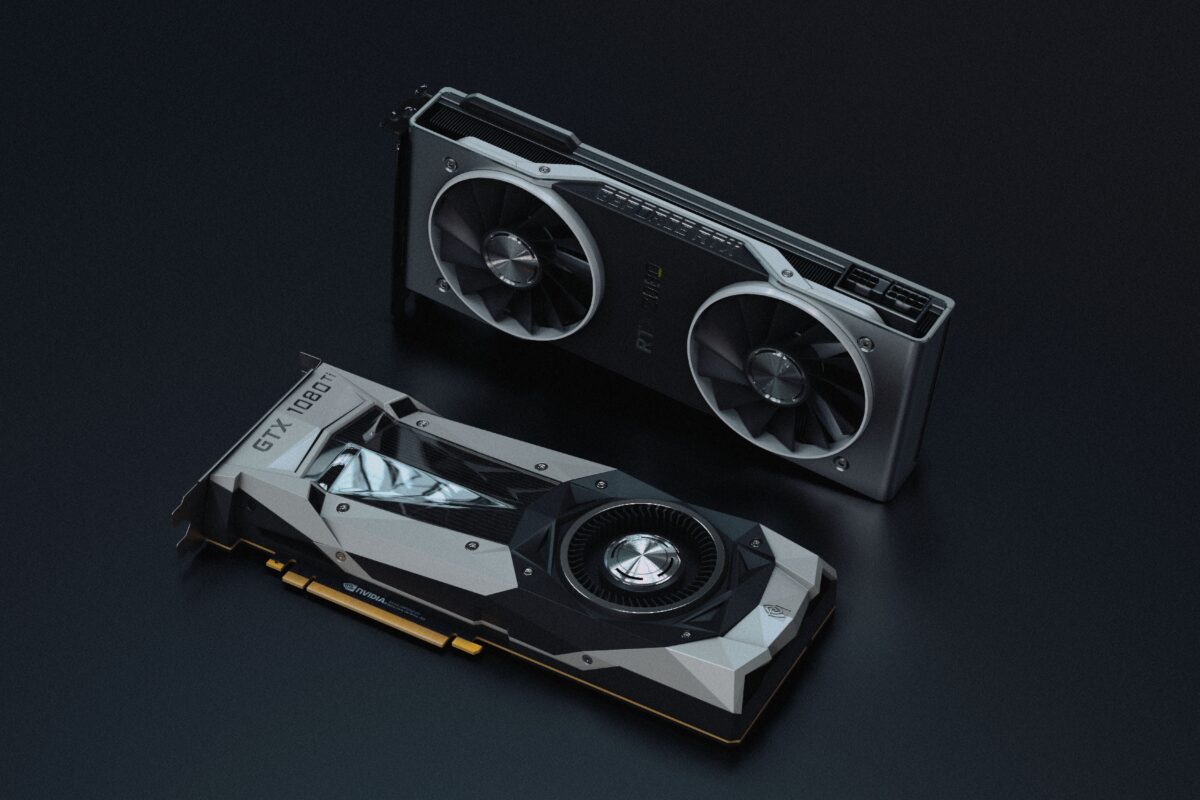
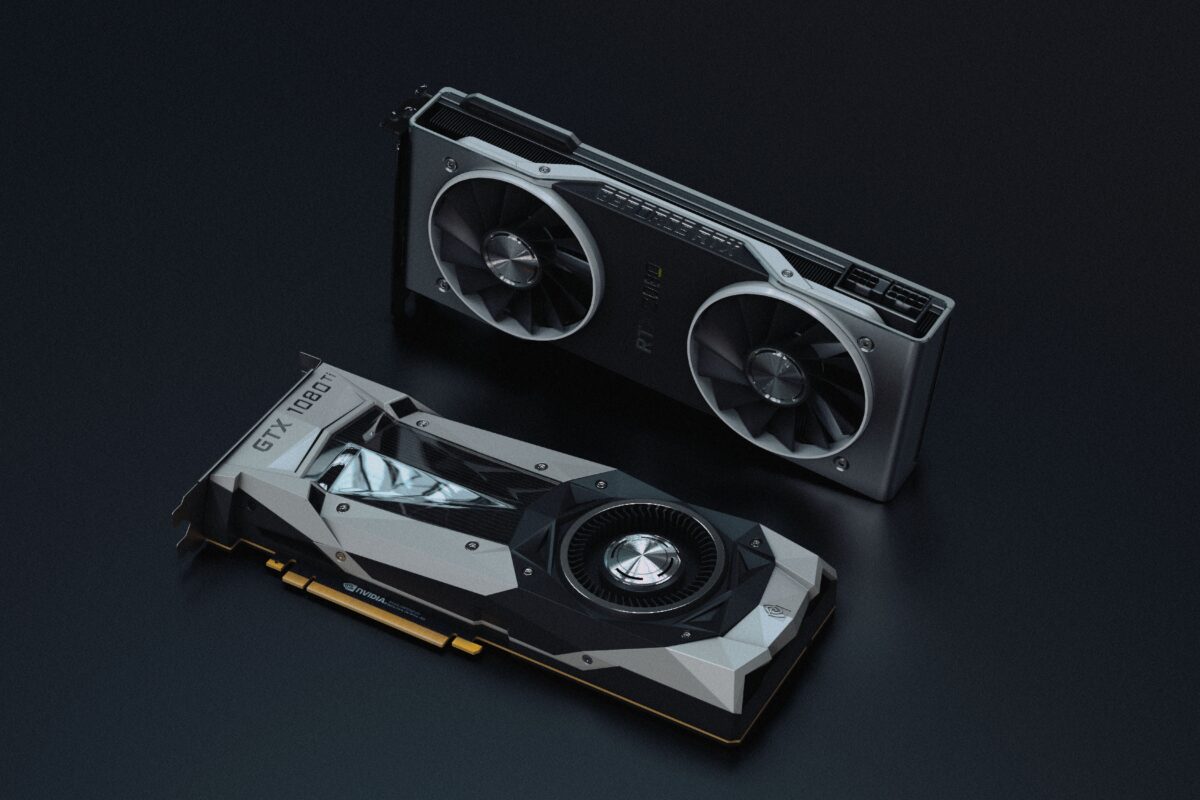
NVIDIA built its fortune on the graphics processing unit. But if you read the company’s own announcements today, GPUs are only one line in a much longer list that includes CPUs, networking chips, data processors, storage platforms, inference accelerators, and open-source software. Jensen Huang’s company is no longer selling chips. It is selling entire AI factories. For ongoing coverage of the chip race, see our AI chip and semiconductor news.
The shift from chip to platform
The clearest statement of the new strategy comes from NVIDIA itself. In its annual report, the company says its edge comes from co-design, where GPUs, CPUs, networking, security, software, power delivery, and cooling are architected together as a single system instead of being optimized in isolation. The same filing says the Vera Rubin platform was built for agentic AI and is designed to deliver up to ten times lower token cost than Blackwell.
The shape of that platform tells the story. According to one platform breakdown, Vera Rubin includes the Rubin GPU and Vera CPU along with NVLink 6 switches, ConnectX-9 SuperNICs, BlueField-4 DPUs, and Spectrum-6 networking, which is why NVIDIA describes it as a platform launch rather than a GPU launch. Converge Digest summarizes the intent: the company is expanding the revenue content of each AI factory across CPUs, GPUs, NVLink fabrics, scale-out networks, DPUs, security, storage processing, inference accelerators, and software.
Networking: the quiet giant
The most important move beyond GPUs may be networking. Training and serving large models means connecting thousands of chips so they act like one machine, and the connections matter as much as the chips. In fiscal 2026, NVIDIA reported that data center networking revenue grew 142 percent, driven by the NVLink compute fabric for Blackwell systems along with Ethernet and InfiniBand. More recently, Converge Digest reports that Spectrum-X Ethernet revenue grew 2.6 times year over year.
This matters because it shows how the competition is changing. As we covered in why AI is changing the design of data centers, the network is now part of the computer. A company that supplies the GPUs and the fabric between them can tune the whole system, and customers who buy both are less likely to swap parts.
CPUs: a new market
NVIDIA began with its Arm-based Grace CPU and is now going further with Vera, which the company calls the world’s first processor purpose-built for agentic AI. The logic is that agentic AI and reinforcement learning rely on large numbers of CPU-based environments to test and validate results from GPU-based models. NVIDIA’s own announcement describes a rack of 256 Vera CPUs built for exactly this job.
The business case is already visible. Converge Digest says Grace CPU revenue exceeded $5 billion over the trailing twelve months, and NVIDIA expects server CPU revenue to more than double in fiscal 2028. It also takes NVIDIA into a market long dominated by Intel and AMD.
Inference: the Groq deal
Training made NVIDIA rich, but inference is where AI is used, and it has different needs. In December 2025, NVIDIA signed a non-exclusive licensing agreement with Groq and later introduced the Groq 3 LPX, an accelerator designed to work alongside Vera Rubin for low-latency, large-context workloads. NVIDIA’s pitch is that combining the two delivers up to 35 times higher inference throughput per megawatt than previous designs.
At GTC 2026, Huang argued that pairing Vera Rubin with Groq racks creates a $300 billion annual revenue opportunity for a hypothetical gigawatt AI factory. That depends on customers actually paying much higher prices per token, a point an analyst quoted in the same report called out as the major dependency.
Storage, DPUs, and software
NVIDIA is also building the layers around the compute. Its BlueField-4 data processor powers a new Inference Context Memory Storage Platform, aimed at the memory-heavy needs of long-running AI agents. On the software side, the company says its open-source Dynamo 1.0 boosts inference on Blackwell GPUs by up to 7 times, and it has launched an Agent Toolkit for building autonomous enterprise agents. Software matters because it keeps developers inside NVIDIA’s ecosystem long after the hardware is installed.
Why now? Customers are building their own chips
This part is analysis rather than something NVIDIA states, but the timing is hard to ignore. Every large customer is designing its own silicon: Google with TPUs, Amazon with Trainium, Microsoft with Maia, and Meta with MTIA. If the GPU alone could be replaced by a custom accelerator, NVIDIA’s advantage would shrink.
Expanding into networking, CPUs, DPUs, storage, and software gives NVIDIA a different kind of moat. Even a customer running its own accelerators may still buy NVIDIA networking or CPUs, and customers who stay on NVIDIA GPUs can buy a complete, pre-integrated system. The strategy also widens the addressable market, which matters when the core business already dominates. In fiscal 2026, revenue rose 65 percent to $215.9 billion, and the first quarter of fiscal 2027 brought record data center revenue of $75.2 billion.
The risks
The strategy has its own risks. Competing with Intel and AMD in CPUs, and with Broadcom, Marvell, and the cloud providers’ own teams in custom silicon and networking, means fighting on more fronts. Customers may resist a single vendor controlling so much of the stack. And the revenue projections depend on AI demand continuing to grow. Even NVIDIA’s own guidance does not assume any data center compute revenue from China, according to its latest outlook.
The bigger picture
NVIDIA is expanding beyond GPUs because the GPU alone is no longer the whole product. AI factories are systems of compute, memory, networking, storage, power, and software, and the company that supplies the most of those pieces, tested together, captures the most value and is hardest to replace. It is the same idea driving Google, Microsoft, Amazon, and Meta in the opposite direction: both sides want to own the full stack. Follow our AI hardware coverage to see how the contest plays out.

SiliconeUpdate.com is a technology news platform that publishes updates and informational content related to silicon technology, software, artificial intelligence, and emerging technologies.
All articles published on this platform are attributed to SiliconeUpdate.com instead of individual authors. Content is presented in a neutral, informational format without personal opinions.
—
Content Publishing
SiliconeUpdate.com publishes news and updates based on publicly available information, official announcements, and industry developments. The focus is on clarity, relevance, and timely reporting.
—
Editorial Control
All editorial decisions, updates, and content management are handled at the platform level. No individual human or AI identity is presented as the author of articles.
—
Contact
For editorial communication or general queries, contact:
Email: neemasharma@gmail.com