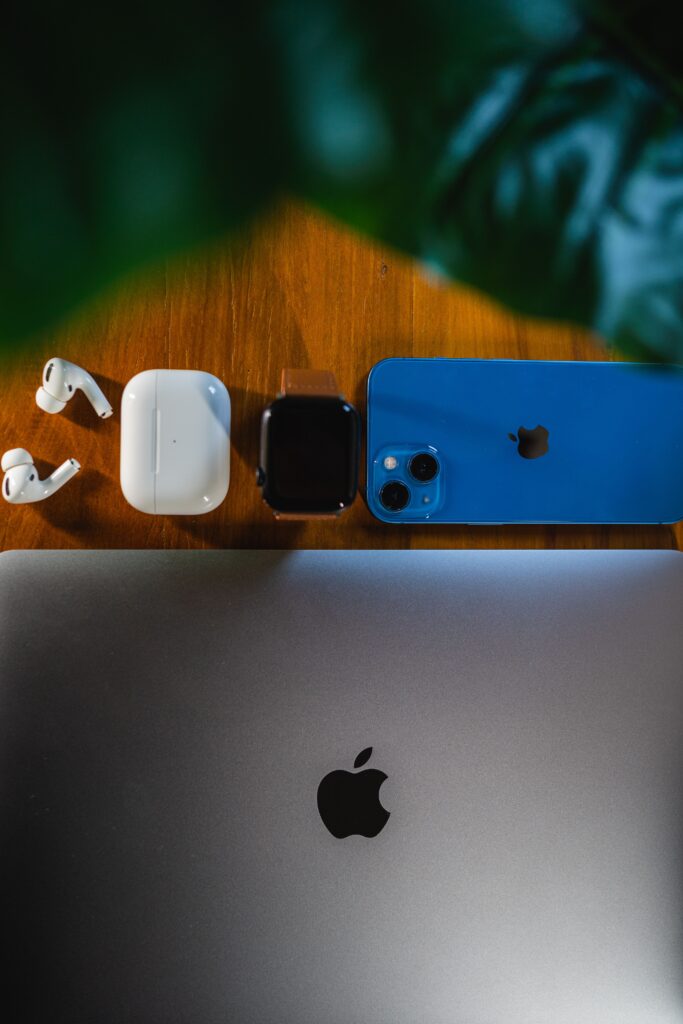
While much of the AI industry races to build bigger data centers, Apple has taken a different path: put as much AI as possible on the device in your hand. Its chips, its software frameworks, and even its privacy promises are all designed around that idea. But the full picture is more nuanced than “on-device only,” and the 2026 announcements show a hybrid approach. For more on the chip race behind all of this, see our AI chip and semiconductor coverage.
The hardware: Neural Engine plus GPU accelerators
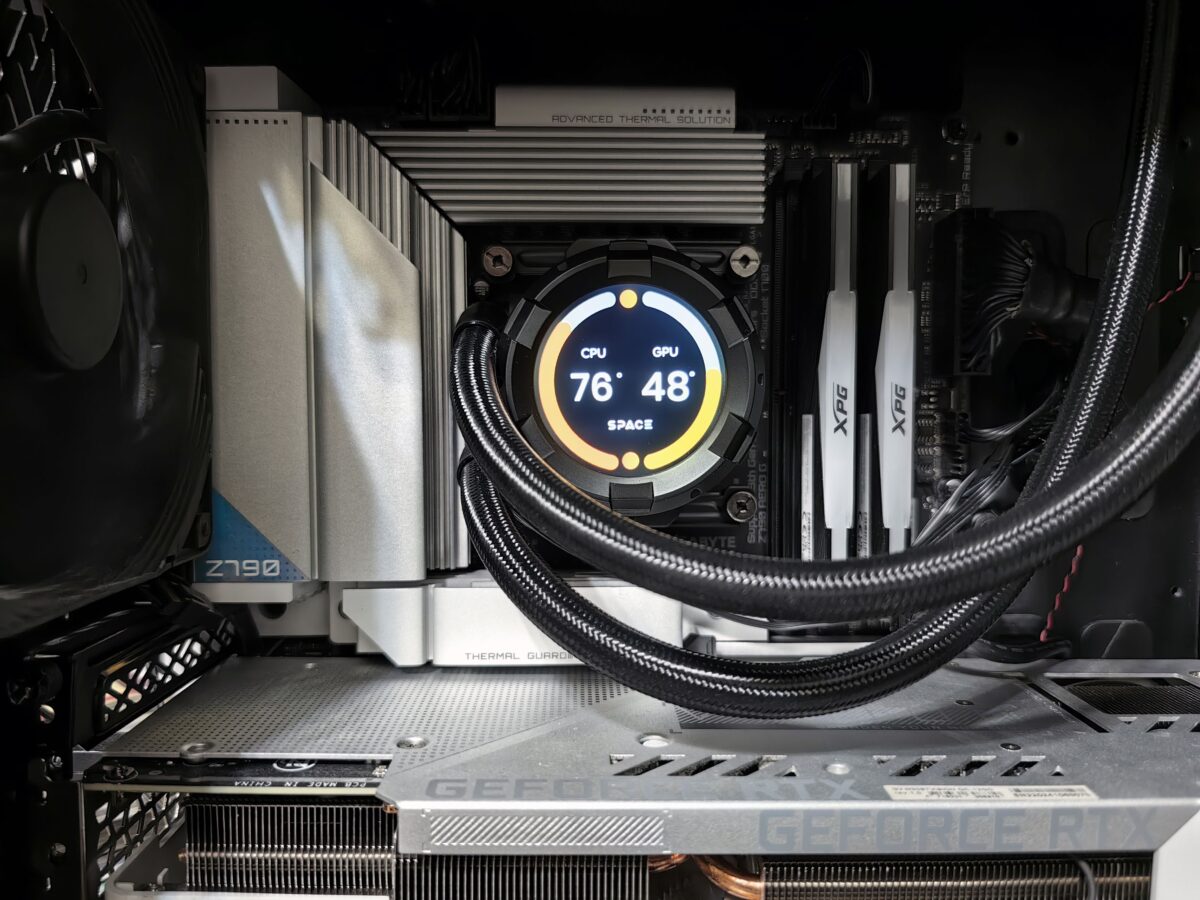
Apple’s advantage starts with its own silicon. For years, its chips have included a dedicated Neural Engine, and the latest generation goes further. The M5 chip puts a Neural Accelerator inside every GPU core, which Apple says delivers over four times the peak GPU compute performance for AI compared with M4. A faster 16-core Neural Engine and higher unified memory bandwidth complete the design. The same GPU approach first appeared in the A19 generation for iPhone, according to Beebom’s coverage.
The approach has since moved up the lineup. In March 2026, Apple introduced the M5 Pro and M5 Max with a next-generation GPU with Neural Accelerators and higher unified memory bandwidth, again aimed at a large increase in AI compute.
Unified memory is a quiet but important piece. The CPU, GPU, and Neural Engine share one pool of memory, so a model’s weights don’t need to be copied between processors. Apple’s M5 launch material notes that this, along with over 150GB/s of memory bandwidth, lets users work with large AI models on the device. This is the same design logic that drives the data center chips we covered in why Google designs its own AI hardware: bring memory and compute close together.
The software: Foundation Models and Core AI
Hardware only matters if developers can use it. At WWDC 2025, Apple introduced the Foundation Models framework, giving apps direct access to the on-device model behind Apple Intelligence. At WWDC 2026 it expanded the idea. According to Apple, the framework is now a single native Swift API that supports more powerful on-device models with image input, server models, and custom skills.
Apple also introduced Core AI, a new framework for running developers’ own models. Apple says it is built around the unified memory and Neural Engine of Apple silicon so developers can deploy full-scale LLMs locally. Callstack’s WWDC summary adds that Apple is bringing a second, more capable on-device model to higher-end iPhone, iPad, and Mac systems.
Why Apple wants AI on the device
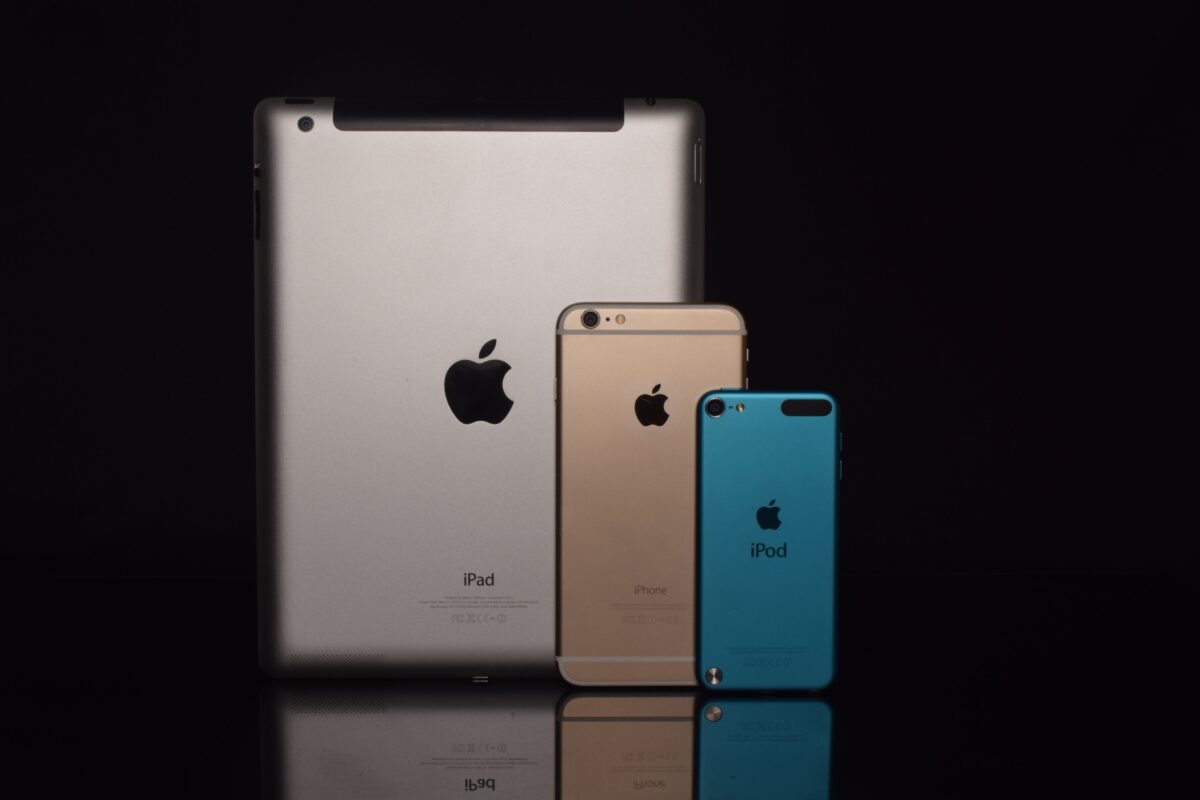
Privacy. Processing data locally means personal information doesn’t have to leave the phone. This is central to Apple’s brand and to how it describes Apple Intelligence.
Speed and availability. On-device models respond without a network round trip and can work offline. Apple’s own engineers point out that developers can use the Foundation Models API even on devices that don’t support Apple Intelligence, which widens where these features can run.
Cost. This one is analysis rather than something Apple has stated, but it follows from the economics we described in why AI data centers need much more power: every query that runs on your device is a query Apple doesn’t have to serve from an expensive server rack. Apple also benefits because the hardware cost is already paid for by the customer.
Control. Apple designs the chip, the operating system, and the frameworks together, which is the same vertical integration that Nvidia, Google, Amazon, and Microsoft pursue in their own ways.
It’s hybrid, not purely local
The limits of on-device AI are real, and Apple is open about them. In its developer sessions, Apple’s engineers contrast the two options plainly: the on-device model has a 4K context window while the Private Cloud Compute server model has 32K, and developers can switch between them with a simple change. Callstack describes the split this way: on-device models handle fast, private work with limited context, while Private Cloud Compute handles tasks that need more capacity, longer context, or heavier reasoning.
Private Cloud Compute is Apple’s own server system. According to the Wikipedia entry on Apple Intelligence, its cloud models run on Apple servers with custom silicon, and Apple states that the data centers have been powered by 100 percent renewable energy since 2018. Apple describes it as designed to preserve user privacy.
The Gemini factor
The most surprising part of 2026 is who helped build the models. Apple says its next generation of Foundation Models was custom-built in collaboration with Google and its Gemini models. Wikipedia notes that the partnership was announced in January 2026, and that the models will continue to run on Apple devices and through Private Cloud Compute. Apple also opened the framework to developers who want other models: the Foundation Models framework can now work with third-party and open source models through the same API.
It’s a notable shift. Apple is keeping the hardware and privacy architecture in-house while borrowing model technology from a rival, a pragmatic choice that also appears in the way we covered Google’s own AI hardware strategy.
The risks and limits
On-device AI has constraints that no chip can fully remove. Phones have limited memory, battery, and heat budgets, so the largest models stay in the cloud. Features depend on newer hardware, which can leave owners of older devices behind. Developers must also decide which tasks to run locally and which to send to servers. And Apple’s reliance on Gemini-derived models shows that, for the most capable systems, it still needs outside expertise.
The bigger picture
Apple is bringing more AI processing to its devices because its entire business is built on selling private, tightly integrated hardware. Every generation of its chips adds more AI capability, its frameworks make that capability easy to use, and Private Cloud Compute fills the gap when a task needs more. In an industry spending hundreds of billions on data centers, Apple’s bet is that a large share of everyday AI can run in your pocket. Follow our AI hardware coverage to see how that bet plays out against the cloud-first strategies of its rivals.
SiliconeUpdate.com is a technology news platform that publishes updates and informational content related to silicon technology, software, artificial intelligence, and emerging technologies.
All articles published on this platform are attributed to SiliconeUpdate.com instead of individual authors. Content is presented in a neutral, informational format without personal opinions.
—
Content Publishing
SiliconeUpdate.com publishes news and updates based on publicly available information, official announcements, and industry developments. The focus is on clarity, relevance, and timely reporting.
—
Editorial Control
All editorial decisions, updates, and content management are handled at the platform level. No individual human or AI identity is presented as the author of articles.
—
Contact
For editorial communication or general queries, contact:
Email: neemasharma@gmail.com