Power Usage Effectiveness (PUE) is a critical metric used to quantify the energy efficiency of a data center. It provides a ratio comparing the total energy consumed by a data center facility to the energy specifically utilized by its IT equipment. Developed by The Green Grid in 2007, PUE has become a standard benchmark for assessing operational efficiency.
Core Concept of PUE
PUE fundamentally measures how much of a data center’s total power consumption is actually dedicated to its computing infrastructure. A PUE value of 1.0 indicates perfect efficiency, meaning all power consumed by the facility directly supports IT equipment. Values greater than 1.0 signify that additional energy is used for non-IT functions, such as cooling, lighting, and power delivery systems.
Historical Context and Purpose
The introduction of PUE in 2007 addressed the growing concern over energy consumption in data centers. Its primary purpose is to provide a standardized, easily understandable metric for data center operators to track and improve their energy efficiency over time. This metric allows for consistent comparisons across different facilities and operational strategies.
How PUE is Calculated
The calculation of PUE is straightforward, involving a ratio of two primary energy measurements within a data center. Understanding these components is essential for accurate PUE determination and subsequent efficiency improvements.
The PUE Formula
PUE is calculated by dividing the total power entering the data center facility by the power consumed solely by the IT equipment. The formula is expressed as:
PUE = (Total Facility Power) / (IT Equipment Power)
Total Facility Power includes all energy consumed by the data center, encompassing IT equipment, cooling systems, power delivery infrastructure, lighting, and security. IT Equipment Power refers specifically to the energy drawn by servers, storage devices, and networking gear.
Components of Energy Consumption
To accurately calculate PUE, precise measurement of various energy loads is necessary. This includes power meters at the utility entrance for total facility power and at the rack or cabinet level for IT equipment power. Non-IT loads, often referred to as overhead, include power conversion losses, uninterruptible power supply (UPS) inefficiencies, and energy used by environmental controls.

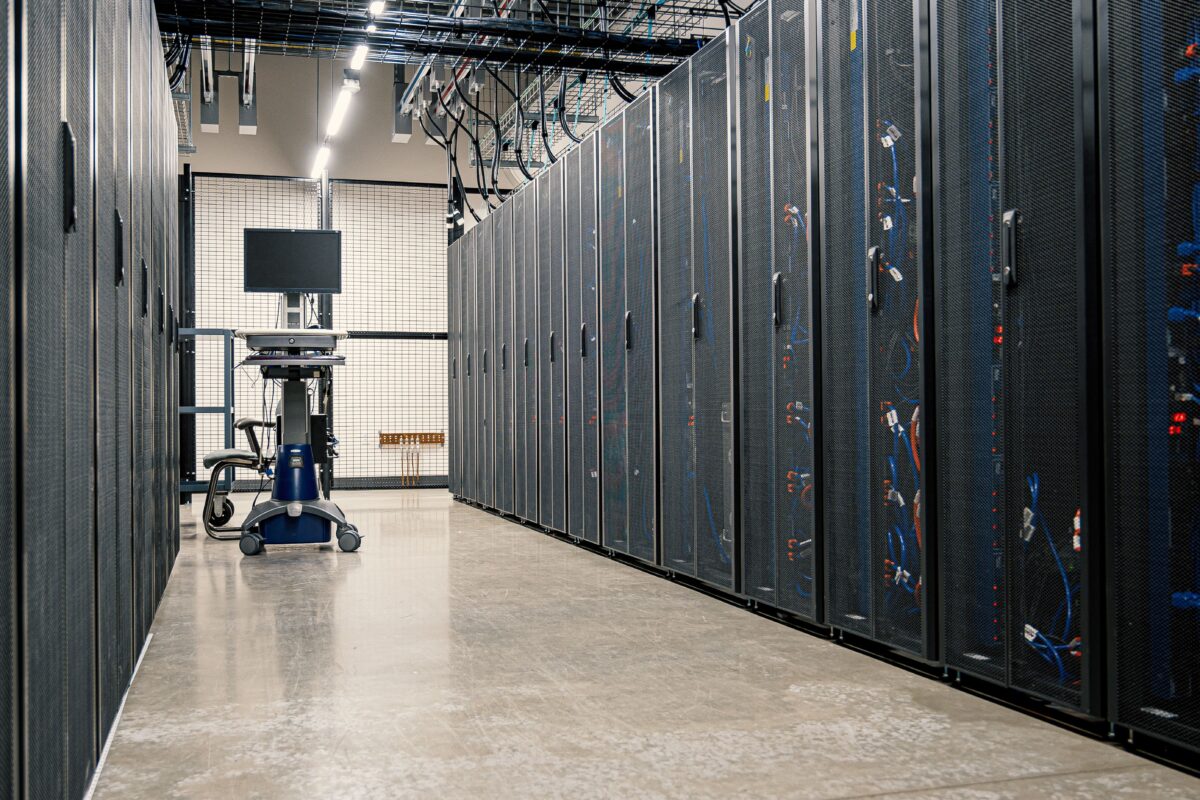
Photo by Polina Tankilevitch on Pexels
Significance and Interpretation of PUE
PUE serves as a vital indicator for data center operators, guiding decisions related to design, operation, and investment in energy-saving technologies. Its interpretation provides direct insight into operational effectiveness.
Efficiency Measurement
A lower PUE value signifies higher energy efficiency. For instance, a PUE of 1.2 means that for every 1.0 unit of power consumed by IT equipment, an additional 0.2 units are used for supporting infrastructure. This indicates that 83% of the total energy is directed to IT operations, with 17% lost to overhead.
Conversely, a PUE of 2.0 implies that an equal amount of energy is consumed by supporting infrastructure as by the IT equipment itself. This suggests significant opportunities for efficiency gains in cooling, power delivery, or other non-IT systems.
Industry Benchmarks
PUE has been tracked as an industry benchmark since 2007. In 2026, the industry-wide annual average PUE was reported at 1.52. This figure provides a reference point for data center operators to compare their facility’s performance against the broader industry. Achieving a PUE significantly below the average indicates superior energy management practices.
| PUE Value Range | Efficiency Level | Implication |
|---|---|---|
| 1.0 – 1.2 | Highly Efficient | Near-optimal energy use; minimal overhead. |
| 1.2 – 1.5 | Good Efficiency | Solid performance; some room for optimization. |
| 1.5 – 1.8 | Average Efficiency | Meets industry average; potential for improvement. |
| > 1.8 | Less Efficient | Significant overhead; substantial opportunities for energy savings. |
Limitations of PUE
While PUE is a widely adopted metric, it possesses certain limitations that prevent it from being a holistic measure of data center performance. Operators must consider these aspects for a complete understanding of efficiency.
Performance Blindness
A primary limitation of PUE is its inability to account for the actual performance or workload of the IT equipment. A data center could have an excellent PUE but be underutilized, meaning its IT systems are not performing efficiently relative to their power consumption. PUE measures facility efficiency, not IT workload efficiency.
It does not consider metrics like computations per watt or data processed per joule. This means a facility could appear efficient from a PUE perspective, but its IT infrastructure might be performing poorly for the energy it consumes.
Operational Nuances
PUE can also be influenced by external factors and operational choices that do not directly reflect inherent efficiency. For example, a data center in a colder climate might naturally achieve a lower PUE due to reduced cooling requirements, without necessarily implementing superior energy-saving technologies. Similarly, facilities with older IT equipment might have a higher PUE due to less efficient hardware, even if the facility infrastructure is optimized.

Photo by panumas nikhomkhai on Pexels
Improving PUE
Optimizing PUE involves a combination of facility design enhancements and strategic IT infrastructure management. Focusing on these areas can lead to substantial energy savings and a lower PUE.
Facility Optimization
Improving facility-level components directly impacts the “Total Facility Power” part of the PUE equation. This includes upgrading to more efficient cooling systems, such as hot aisle/cold aisle containment or liquid cooling solutions. Optimizing power delivery infrastructure, including UPS systems and power distribution units (PDUs), to minimize conversion losses also contributes significantly. Implementing energy-efficient lighting and building management systems further reduces non-IT energy consumption.
IT Infrastructure Strategies
While PUE does not measure IT performance, optimizing IT equipment itself can indirectly improve PUE by reducing the “IT Equipment Power” denominator. This involves deploying modern, energy-efficient servers and storage, virtualizing workloads to consolidate hardware, and dynamically managing IT loads to match demand. Ensuring proper airflow management within server racks prevents hot spots and reduces the need for excessive cooling, which in turn lowers the overall facility power.
Real World Example
Consider a data center facility that consumes a total of 5,000,000 kWh annually. Out of this total, the IT equipment (servers, storage, networking) directly consumes 3,000,000 kWh over the same period. Using the PUE formula, the calculation would be 5,000,000 kWh / 3,000,000 kWh = 1.67.
This PUE of 1.67 indicates that for every unit of power used by the IT equipment, an additional 0.67 units are consumed by supporting infrastructure like cooling, power conversion, and lighting. Comparing this to the 2026 industry average of 1.52, this particular data center operates slightly below the industry benchmark for efficiency. To improve, the operator might investigate upgrading cooling systems or optimizing power distribution to reduce the non-IT power consumption.
Key Takeaways
- PUE (Power Usage Effectiveness) is a ratio measuring data center energy efficiency.
- It compares total facility power to the power consumed by IT equipment.
- A PUE of 1.0 represents perfect efficiency, with lower values indicating better performance.
- The industry-wide annual average PUE was 1.52 in 2026, serving as a benchmark.
- PUE does not account for IT performance or workload, focusing solely on facility overhead.
Despite its widespread adoption, PUE’s focus solely on facility overhead means it can mask inefficiencies in IT workload performance, leading to a potentially misleading picture of overall operational effectiveness.
Frequently Asked Questions
What is a good PUE for a data center?
A PUE closer to 1.0 is considered excellent, indicating high energy efficiency. While the 2026 industry average was 1.52, many modern, optimized data centers strive for PUE values between 1.2 and 1.4.
Why is PUE important for data centers?
PUE is important because it provides a standardized metric for measuring and tracking energy efficiency, helping operators identify areas for improvement. Reducing PUE leads to lower operational costs, reduced environmental impact, and better resource utilization.
Does PUE consider IT performance?
No, PUE specifically does not consider IT performance or the efficiency of the computing workload. It focuses exclusively on the ratio of total facility power to the power delivered to the IT equipment, without evaluating how effectively that IT equipment is being utilized.
Who developed the PUE metric?
The Power Usage Effectiveness (PUE) metric was developed by The Green Grid, a global consortium dedicated to advancing energy efficiency in data centers. It was introduced in 2007 to provide a common standard for measuring data center efficiency.

SiliconeUpdate.com is a technology news platform that publishes updates and informational content related to silicon technology, software, artificial intelligence, and emerging technologies.
All articles published on this platform are attributed to SiliconeUpdate.com instead of individual authors. Content is presented in a neutral, informational format without personal opinions.
—
Content Publishing
SiliconeUpdate.com publishes news and updates based on publicly available information, official announcements, and industry developments. The focus is on clarity, relevance, and timely reporting.
—
Editorial Control
All editorial decisions, updates, and content management are handled at the platform level. No individual human or AI identity is presented as the author of articles.
—
Contact
For editorial communication or general queries, contact:
Email: neemasharma@gmail.com