
Microsoft Azure was already one of the world’s largest cloud platforms before generative AI changed the demand for computing infrastructure. But the rapid growth of large language models, AI agents, model training, and large-scale inference has created a different infrastructure challenge.
Running an AI model is not simply a matter of adding more virtual machines.
Large AI workloads require enormous amounts of compute, high-speed communication between accelerators, fast access to data, substantial power, advanced cooling, and infrastructure that can scale across large clusters.
Microsoft is responding by changing Azure at multiple layers—from custom silicon and servers to networking, storage, cooling, power, and data-center design.
Microsoft describes this approach as a silicon-to-systems strategy, where different parts of the infrastructure are designed and optimized together rather than independently. Its Azure AI infrastructure combines compute, networking, storage, security, and management services for AI workloads.
So how is Microsoft actually building Azure for the AI era?
Why Azure Needs Different Infrastructure for AI

Traditional cloud infrastructure was designed to support a huge variety of workloads.
A typical Azure environment might run:
- Websites
- Databases
- Enterprise applications
- Virtual machines
- Containers
- Storage systems
- Analytics workloads
- Business software
AI workloads introduce additional requirements.
Training and running large models can require thousands of accelerators working together while exchanging enormous amounts of data.
A simplified AI infrastructure stack looks like this:
                AI Applications
                      │
                AI Models
                      │
             ┌────────▼────────┐
             │ AI Software     │
             └────────┬────────┘
                      │
        ┌─────────────▼─────────────┐
        │     GPU / AI Accelerators │
        └─────────────┬─────────────┘
                      │
             High-Speed Network
                      │
        ┌─────────────▼─────────────┐
        │    High-Performance       │
        │         Storage            │
        └─────────────┬─────────────┘
                      │
             Power + Cooling
                      │
                Data Center
Microsoft therefore has to optimize the entire stack.
Azure’s AI Infrastructure Is Built as a System
One of the most important changes in Azure is the move toward system-level optimization.
Instead of looking at a GPU, server, network, or cooling system independently, Microsoft increasingly designs these components together.
Its silicon-to-systems infrastructure approach covers:
- Servers
- Networking
- Storage
- Power
- Cooling
- Custom silicon
- Data-center operations
Microsoft says these layers are being optimized for both cloud and AI workloads.
This matters because AI performance depends on the interaction between these components.
A faster accelerator does not automatically produce a faster AI system.
For example:
Fast GPU + slow network = communication bottleneck
Fast GPU + slow storage = data bottleneck
Power-limited rack + powerful GPU = unused compute capacity
High-density GPU + inadequate cooling = thermal limitation
Azure’s infrastructure therefore has to be designed as a complete system.
1. GPUs Are at the Center of Azure’s AI Infrastructure
The most visible change is the growing role of GPUs and other AI accelerators.
Microsoft Azure provides GPU-optimized virtual machines for AI training and inference. These machines allow customers to access accelerator hardware without owning and operating physical servers themselves.
Microsoft’s Azure AI infrastructure platform includes GPU-based virtual machines designed for workloads ranging from model training and fine-tuning to inference.
A simplified architecture looks like this:
Customer AI Workload
        │
        ▼
Azure AI Service / VM
        │
        ▼
GPU Cluster
        │
 ┌──────┼──────┐
 ▼      ▼      ▼
GPU    GPU    GPU
 │      │      │
 └──────┼──────┘
        │
        ▼
High-Speed Network
The GPUs do most of the heavy mathematical work involved in many AI workloads, while CPUs continue to handle operating-system tasks, application logic, orchestration, and other general-purpose processing.
2. Microsoft Is Also Building Its Own AI Silicon
Microsoft is not relying exclusively on third-party processors.
The company has developed its own custom silicon for Azure infrastructure.
One of the most important examples is Azure Maia, Microsoft’s family of AI accelerators.
Microsoft introduced Maia as a custom accelerator designed for AI workloads such as training and inference. Its first generation, Maia 100, was designed as part of a larger system that included silicon, software, networking, racks, and cooling.
Microsoft’s current Azure infrastructure strategy also includes newer Maia accelerators.
In Microsoft’s FY2026 fourth-quarter update, the company said Maia 200 was scaling and supporting both OpenAI and Microsoft AI models.
The reason for developing custom silicon is not simply to create another GPU.
Microsoft can optimize the accelerator for the workloads it needs to run at enormous scale.
That creates an important architectural advantage:
Traditional Approach

Application
     │
     ▼
Generic Hardware
     │
     ▼
Cloud Infrastructure


Azure AI Approach

AI Workload
     │
     ▼
Custom Silicon
     │
     ▼
Custom Systems
     │
     ▼
Custom Networking
     │
     ▼
Optimized Data Center
The goal is to improve performance, efficiency, cost, and supply flexibility.
3. Azure Is Also Developing Custom CPUs
AI infrastructure is not only about GPUs.
Large AI systems still require CPUs for many tasks surrounding the accelerators.
Microsoft has developed Azure Cobalt, a custom CPU platform designed for cloud workloads.
Microsoft’s infrastructure overview describes Cobalt alongside Maia as part of its custom silicon strategy.
The distinction is useful:
Maia → AI acceleration
Cobalt → general-purpose cloud CPU workloads
This gives Microsoft more control over the hardware underneath Azure.
Microsoft said in its FY2026 fourth-quarter update that Cobalt 200 racks were being deployed across its data centers and that Cobalt CPUs were supporting Microsoft’s own workloads as well as customer workloads.
4. Microsoft Is Building AI Networking Around Large Clusters
AI models become increasingly difficult to train as they grow larger.
A single accelerator is not enough.
Thousands of accelerators may need to work together.
That creates a major networking challenge.
GPU ───── GPU ───── GPU
 │         │         │
 │         │         │
GPU ───── GPU ───── GPU
 │         │         │
 │         │         │
GPU ───── GPU ───── GPU
These accelerators continuously exchange information during distributed workloads.
A conventional network can therefore become a bottleneck.
Azure has invested in high-bandwidth, low-latency networking designed specifically for AI workloads. Microsoft describes Azure accelerated networking as supporting high-bandwidth, low-latency communication between GPUs.
This is particularly important for distributed training.
If the network is slow, GPUs can spend more time waiting for data instead of performing computation.
5. Azure’s Global Network Is Also Important

AI infrastructure does not operate inside one isolated server.
Large cloud providers have to connect data centers, regions, storage systems, and computing clusters.
Azure operates a large global backbone network connecting its data centers and regions.
Microsoft describes the Azure global network as a high-availability backbone supporting cloud and enterprise services across its global infrastructure.
This becomes increasingly important as AI workloads grow.
A large customer may need:
- GPU compute
- Storage
- Data processing
- Model deployment
- Inference
- Networking
- Disaster recovery
across multiple regions.
The network therefore becomes part of the AI platform rather than simply an Internet connection.
6. AI Is Changing Azure’s Data Center Design
Microsoft is also changing the physical infrastructure of Azure data centers.
AI accelerators consume much more power than many conventional server configurations.
That means the data center must provide enough:
- Electrical capacity
- Cooling
- Rack space
- Network capacity
- Physical infrastructure
for high-density AI deployments.
Microsoft’s current infrastructure strategy explicitly includes power and cooling as part of its silicon-to-systems design approach.
This is an important difference from simply installing additional servers.
7. Liquid Cooling Is Becoming Important
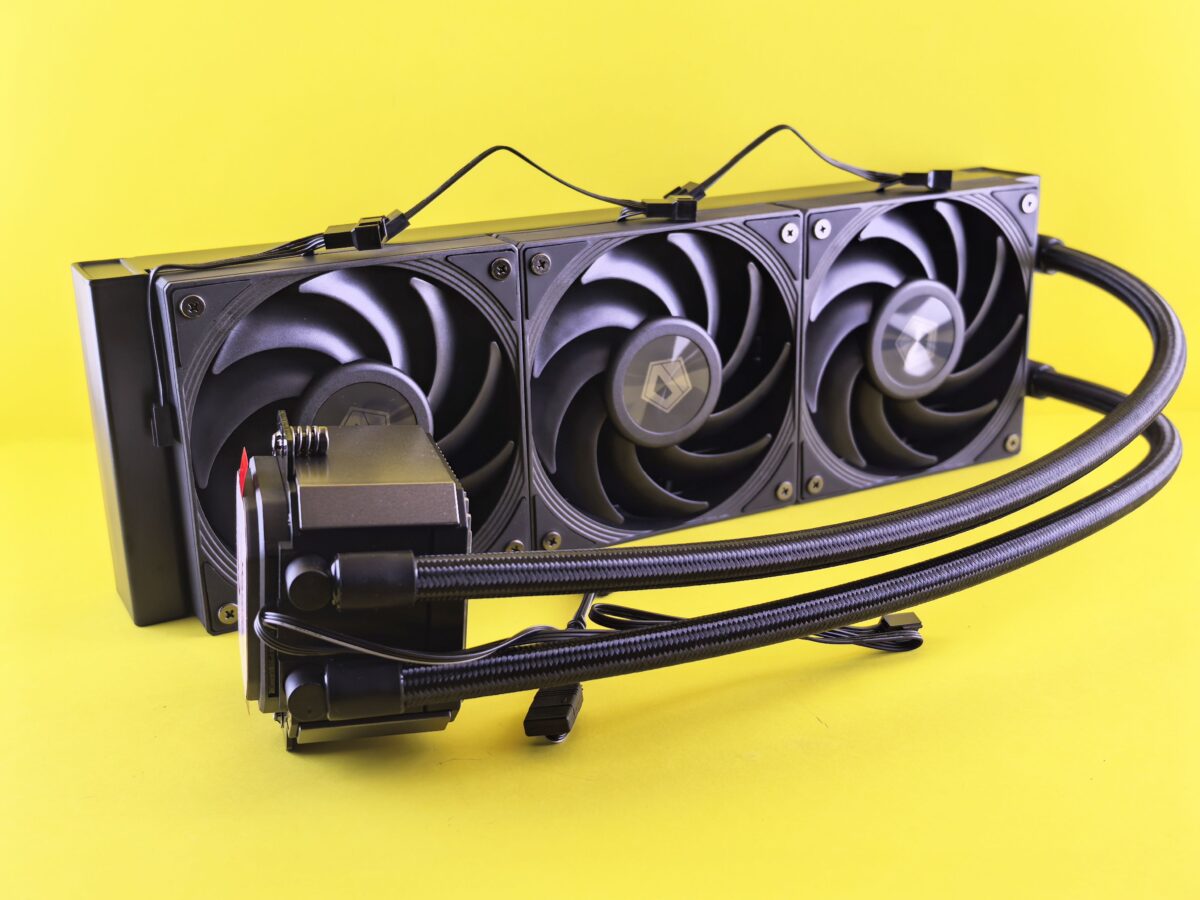
Higher compute density creates more heat.
Traditional data centers can often rely heavily on air cooling.
Large AI clusters can push rack-level heat output much higher.
That is why Microsoft has invested in liquid-cooling systems for AI infrastructure.
A simplified direct-to-chip cooling system looks like this:
       GPU
        │
        ▼
 ┌───────────────┐
 │ Cooling Plate │
 └───────┬───────┘
         │
      Coolant
         │
         ▼
    Heat Exchanger
         │
         ▼
      Cooling
Liquid cooling allows heat to be transferred directly from high-power components rather than depending entirely on air movement.
Microsoft’s Azure infrastructure materials specifically identify cooling technologies designed for high-density AI infrastructure.
This is becoming increasingly important as accelerator power requirements increase.
8. Microsoft Is Designing Data Centers Around Higher GPU Density
Microsoft has also been developing data-center designs specifically suited to large AI clusters.
One example is Fairwater, Microsoft’s AI-oriented data-center architecture.
Microsoft has described Fairwater as a design intended to support large-scale AI workloads using high GPU density and liquid cooling.
In its FY2026 second-quarter update, Microsoft said its Fairwater data centers used a two-story design and liquid cooling to support higher GPU densities for large-scale training.
The important idea is that AI can influence the building itself.
Instead of:
Building
   ↓
Standard Racks
   ↓
Servers
the architecture becomes more like:
AI Data Center
      │
      ├── High-Density Racks
      │
      ├── Liquid Cooling
      │
      ├── High-Speed Networking
      │
      ├── High-Capacity Power
      │
      └── AI Accelerators
The physical facility becomes part of the AI computing architecture.
9. Power Is Becoming a Major AI Infrastructure Constraint
Power is one of the biggest challenges facing hyperscale AI infrastructure.
AI accelerators consume large amounts of electricity, and thousands of accelerators operating together can create enormous power requirements.
Microsoft has been expanding Azure capacity while also working on power efficiency.
In its FY2026 fourth-quarter earnings update, Microsoft said it added another gigawatt of capacity during the quarter and remained on track to roughly double overall capacity in two years.
This illustrates the scale at which hyperscalers are now expanding infrastructure.
But simply adding more electricity is not the only objective.
Microsoft is also trying to get more useful AI computation from each unit of power.
10. Microsoft Is Focusing on Performance per Watt
AI infrastructure is expensive to operate.
The electricity required to run thousands of accelerators becomes a major operating cost.
This makes performance per watt increasingly important.
Microsoft has discussed optimizing its AI infrastructure around metrics such as:
Tokens per watt
and
Tokens per dollar
The idea is straightforward.
Suppose two systems produce the same number of AI tokens.
If one requires significantly less electricity or costs less to operate, it can provide better infrastructure efficiency.
Microsoft has described this kind of optimization across silicon, systems, and software.
This is why custom chips, networking, cooling, and software optimization are connected.
11. Azure AI Infrastructure Is Not Based Only on Microsoft Chips
It would be incorrect to think that Microsoft Azure is replacing all third-party accelerators with Maia.
Azure continues to use hardware from multiple vendors.
Microsoft has stated that its infrastructure fleet includes its own silicon alongside processors and accelerators from NVIDIA and AMD.
This creates a heterogeneous infrastructure environment.
For example:
Azure AI Infrastructure

        ┌─────────────┐
        │ NVIDIA GPUs │
        └─────────────┘

        ┌─────────────┐
        │ AMD GPUs    │
        └─────────────┘

        ┌─────────────┐
        │ Azure Maia  │
        └─────────────┘

        ┌─────────────┐
        │ Azure CPUs  │
        │  Cobalt     │
        └─────────────┘
Different hardware can be useful for different workloads.
This also gives Microsoft more flexibility when demand, performance requirements, availability, and cost change.
12. Azure Is Building Infrastructure for Both Training and Inference
AI infrastructure is not used only to train models.
There are two major workload categories:
Training
Training involves processing huge datasets to create or improve a model.
Dataset
   │
   ▼
GPU Cluster
   │
   ▼
Model Training
   │
   ▼
Checkpoint
Inference
Inference happens when the trained model generates an answer or prediction.
User Request
     │
     ▼
AI Model
     │
     ▼
Inference Hardware
     │
     ▼
Response
Training often requires enormous distributed compute.
Inference has different requirements, including latency, throughput, efficiency, and cost.
Azure therefore needs infrastructure capable of supporting both.
Microsoft explicitly positions its AI infrastructure for model training, distillation, fine-tuning, and inference.
13. Azure Is Optimizing Storage for AI Workloads
AI models require large amounts of data.
Training datasets can be extremely large, and models also produce checkpoints and other intermediate data.
This means storage performance becomes important.
A simplified architecture is:
       AI Dataset
           │
           ▼
     Azure Storage
           │
           ▼
    High-Speed Network
           │
           ▼
      GPU Cluster
           │
           ▼
   Model Checkpoints
Azure’s AI infrastructure includes high-performance storage designed to meet the data access and transfer requirements of AI workloads.
The objective is to keep accelerators supplied with data.
A GPU that is waiting for storage or network operations is expensive compute capacity sitting idle.
14. Azure Boost Helps Offload Infrastructure Work
Microsoft has also developed specialized infrastructure technology such as Azure Boost.
The basic idea is to move certain infrastructure tasks away from the main CPU and into dedicated hardware and software components.
This can help improve efficiency and reduce overhead for cloud workloads.
Microsoft includes Azure Boost among the technologies used to optimize Azure’s infrastructure for performance.
This follows the same overall philosophy:
Do not make the main processor perform every infrastructure task if specialized hardware can do it more efficiently.
15. Azure Is Building for Large AI Clusters
The scale of AI infrastructure is one of the biggest changes.
A traditional cloud deployment might involve:
VM 1
VM 2
VM 3
VM 4
A large AI workload may involve:
GPU  GPU  GPU  GPU
 │    │    │    │
 GPU  GPU  GPU  GPU
 │    │    │    │
 GPU  GPU  GPU  GPU
 │    │    │    │
 GPU  GPU  GPU  GPU
And this pattern can expand to thousands of accelerators.
At this scale, every part of the system has to be coordinated.
Microsoft’s Azure AI infrastructure documentation describes scalable GPU clusters, high-speed networking, storage, and checkpointing as part of the platform for large AI workloads.
16. Azure’s Infrastructure Is Designed for AI and Conventional Cloud Workloads
Microsoft still has to operate Azure as a general-purpose cloud.
Businesses use Azure for:
- Websites
- Databases
- Virtual machines
- Containers
- Analytics
- Storage
- Enterprise applications
- AI
So Microsoft cannot simply transform every Azure data center into a giant GPU cluster.
Instead, Azure increasingly has a mixture of infrastructure optimized for different workloads.
                  AZURE
                    │
       ┌────────────┼────────────┐
       │            │            │
   General IT      AI          HPC
       │            │            │
      CPU          GPU       Accelerators
       │            │            │
       └────────────┼────────────┘
                    │
              Shared Cloud
             Infrastructure
This heterogeneous approach allows Azure to support a broad customer base while expanding AI capacity.
17. Microsoft Is Expanding Azure’s Global AI Capacity
AI demand is not concentrated in one country.
Customers need AI services close to their users and data.
That creates requirements around:
- Geographic availability
- Data residency
- Network latency
- Regulatory requirements
- Disaster recovery
- Capacity planning
Microsoft’s Azure global infrastructure spans a large network of regions and data centers, and Microsoft continues expanding infrastructure for AI workloads.
The physical distribution of AI infrastructure therefore matters almost as much as the individual GPU.
A model may be powerful, but if the required compute is located far from users or regulated data, deployment can become more complicated.
18. Azure Is Expanding AI Infrastructure in India
Microsoft is also expanding AI-ready infrastructure in India.
In September 2026, Microsoft announced that its India South Central Azure region in Hyderabad had become a strategic hub for Asia and the Global South, with AI-ready infrastructure and a three-zone architecture designed for expansion.
Microsoft also said its India cloud regions were being equipped with AI-capable hardware and high-efficiency cooling systems.
This illustrates how AI infrastructure is becoming a regional infrastructure issue rather than something concentrated only in Microsoft’s largest historical data-center markets.
19. Azure’s Security Architecture Also Has to Scale With AI
AI infrastructure introduces additional security considerations.
The hardware is processing:
- Customer data
- Training datasets
- Model weights
- Inference requests
- Enterprise workloads
Azure therefore has to protect infrastructure at multiple layers.
Microsoft describes Azure AI infrastructure as including hardware-rooted security and protection for data at rest, in transit, and in use.
This matters particularly for enterprise AI.
Companies may want to use powerful models without sending sensitive information outside their controlled cloud environment.
20. Microsoft Is Moving Toward Hardware-Software Co-Design
Perhaps the most important part of Microsoft’s AI infrastructure strategy is that it is no longer treating hardware and software as completely separate layers.
The architecture increasingly looks like:
              AI Applications
                     │
              AI Frameworks
                     │
              Model Software
                     │
              Azure Services
                     │
        ┌────────────▼────────────┐
        │ Custom + Partner Silicon│
        └────────────┬────────────┘
                     │
               Networking
                     │
                Storage
                     │
              Power + Cooling
                     │
                Data Center
Microsoft describes this as a silicon-to-systems approach.
The idea is to optimize the entire stack rather than optimizing only the processor.
Microsoft’s current infrastructure materials explicitly describe optimization across silicon, systems, networking, security, power, cooling, and data-center operations.
Azure AI Infrastructure vs Traditional Cloud Infrastructure
The difference can be summarized like this:
| Area | Traditional Cloud Infrastructure | Azure AI Infrastructure |
|---|---|---|
| Compute | General-purpose CPUs | GPUs, AI accelerators and CPUs |
| Hardware | Mostly standardized | Increasingly specialized |
| Networking | General cloud networking | High-bandwidth AI networking |
| Storage | General-purpose | AI-optimized high-performance storage |
| Cooling | Primarily conventional cooling | Increasing use of liquid cooling |
| Power | General cloud requirements | Higher-density AI power requirements |
| Scaling | VM/server oriented | Large accelerator clusters |
| Silicon | Primarily third-party | Third-party + Microsoft custom silicon |
| Optimization | Service-level | Silicon-to-systems |
| Workloads | Broad cloud workloads | Training, inference, fine-tuning, AI agents and general cloud |
These categories overlap. Azure still supports conventional workloads, while AI infrastructure can use both Microsoft-designed and third-party hardware.
Why Microsoft’s AI Infrastructure Strategy Matters
Microsoft is competing in AI at several layers simultaneously.
It provides:
- Cloud infrastructure
- AI models
- AI development platforms
- AI applications
- AI accelerators
- CPUs
- Networking
- Storage
- Data centers
That gives the company the ability to optimize across the stack.
The infrastructure itself becomes part of Microsoft’s AI strategy.
For example:
             Microsoft AI Stack

        ┌──────────────────────┐
        │ AI Applications      │
        ├──────────────────────┤
        │ AI Models            │
        ├──────────────────────┤
        │ Azure AI Platform    │
        ├──────────────────────┤
        │ GPUs + Maia + CPUs   │
        ├──────────────────────┤
        │ Networking + Storage │
        ├──────────────────────┤
        │ Power + Cooling      │
        ├──────────────────────┤
        │ Azure Data Centers   │
        └──────────────────────┘
The more efficiently these layers work together, the more useful compute Microsoft can potentially deliver from a given amount of hardware, power, and capital.
The Future of Azure AI Infrastructure
The direction of Azure infrastructure is increasingly clear.
Microsoft is moving toward:
More custom silicon
Maia and Cobalt give Microsoft greater control over important parts of the infrastructure stack.
Higher-density AI systems
AI workloads require increasingly powerful accelerator clusters.
More liquid cooling
Higher power densities make advanced cooling increasingly important.
Faster networking
Large distributed models require fast communication between accelerators.
Greater infrastructure efficiency
Performance per watt and performance per dollar are becoming important measures of AI infrastructure efficiency.
Larger AI clusters
Training and serving increasingly capable models requires infrastructure that can coordinate very large numbers of accelerators.
More regional AI capacity
AI infrastructure is expanding closer to customers and regional data requirements.
Final Takeaway
Microsoft Azure is not simply adding GPUs to its existing cloud infrastructure.
The company is redesigning parts of the cloud around the requirements of AI.
That includes custom accelerators such as Azure Maia, custom CPUs such as Cobalt, high-speed networking, AI-optimized storage, liquid cooling, higher-density data centers, power management, and software designed to coordinate the entire system.
The larger strategy is a shift from individual hardware components toward system-level optimization.
A modern Azure AI environment can therefore be viewed as:
AI models + accelerators + networking + storage + power + cooling + software + data centers
all working together.
That is the real infrastructure challenge behind large-scale AI.
The future of cloud computing is not just about having more servers.
It is about building systems in which silicon, software, networking, power, cooling, and data-center architecture are designed to work together efficiently at massive scale.

SiliconeUpdate.com is a technology news platform that publishes updates and informational content related to silicon technology, software, artificial intelligence, and emerging technologies.
All articles published on this platform are attributed to SiliconeUpdate.com instead of individual authors. Content is presented in a neutral, informational format without personal opinions.
—
Content Publishing
SiliconeUpdate.com publishes news and updates based on publicly available information, official announcements, and industry developments. The focus is on clarity, relevance, and timely reporting.
—
Editorial Control
All editorial decisions, updates, and content management are handled at the platform level. No individual human or AI identity is presented as the author of articles.
—
Contact
For editorial communication or general queries, contact:
Email: neemasharma@gmail.com