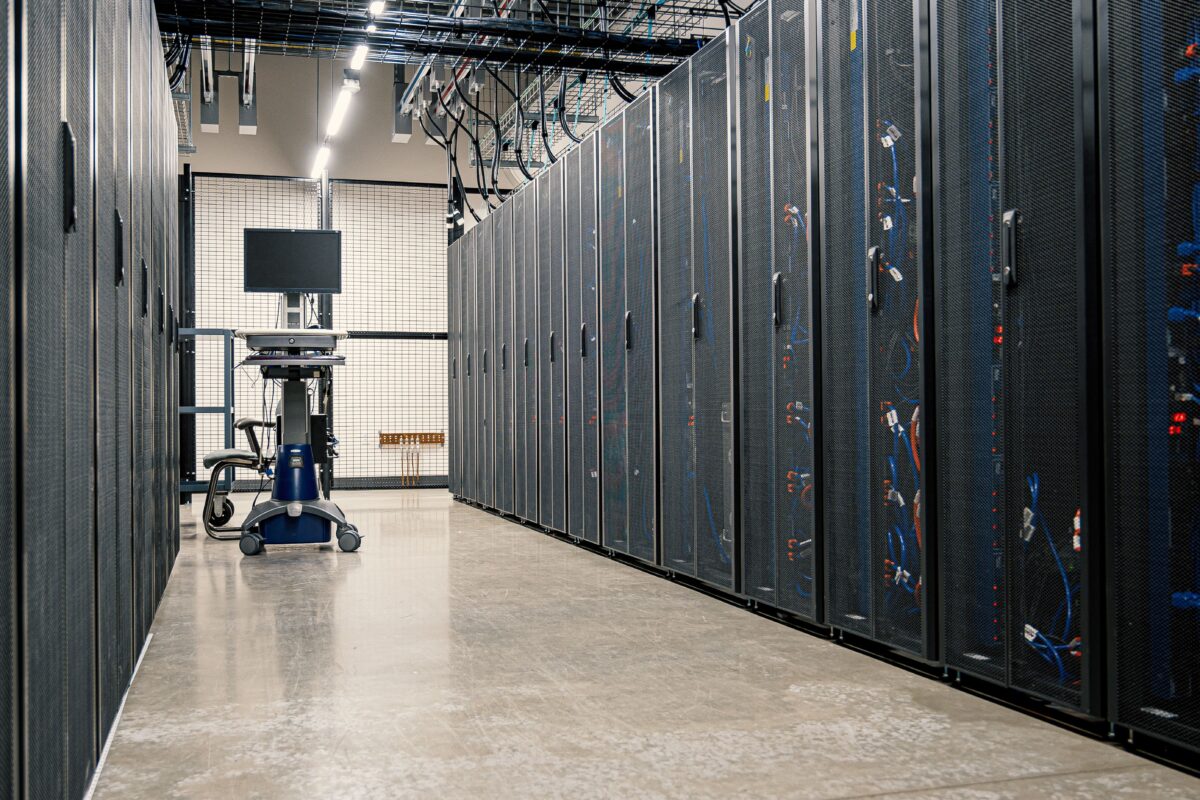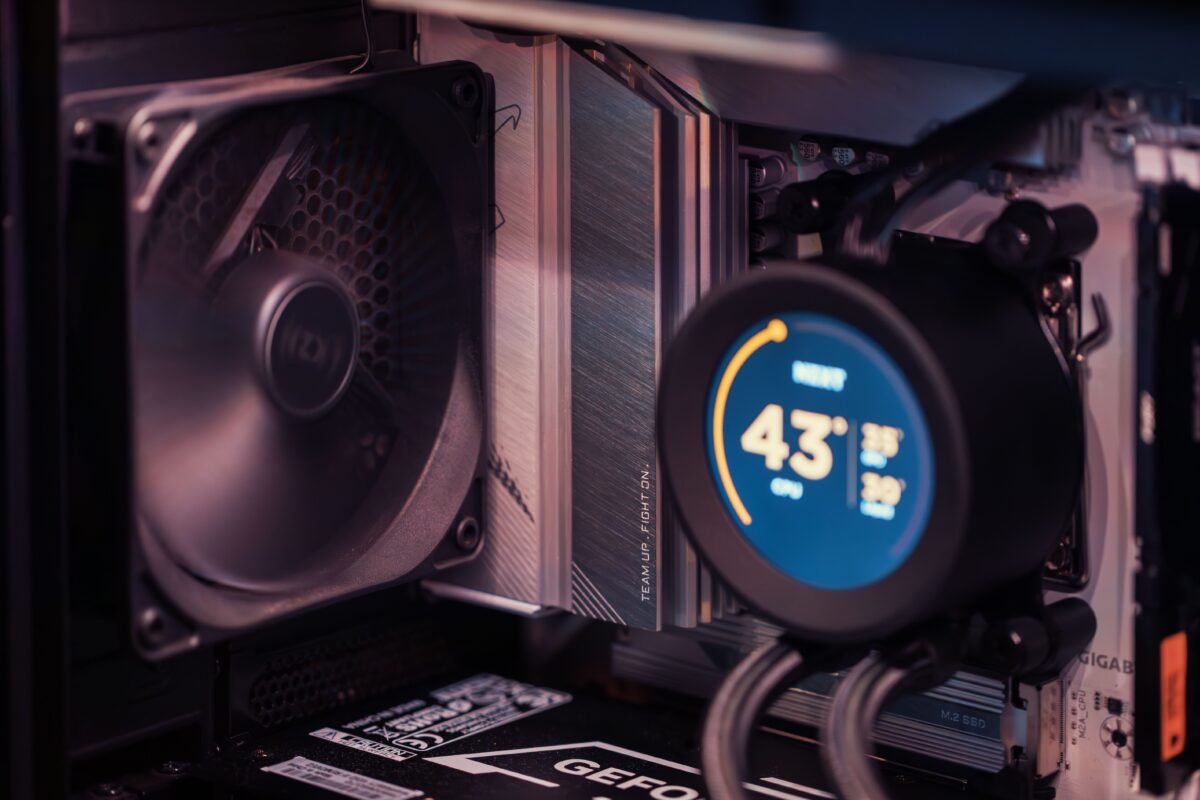
AI clusters, comprising thousands of Graphics Processing Units (GPUs), form the backbone of modern artificial intelligence development. These clusters create computing environments capable of handling the intensive demands of training next-generation AI models. The ability to scale these systems to tens or even hundreds of thousands of GPUs is paramount for advancing AI capabilities, particularly for models with billions of parameters.
The Imperative for Large-Scale GPU Clusters
Modern AI models, especially large language models and complex neural networks, require immense computational power for training. A single NVIDIA H100 GPU, for instance, contains over 16,000 cores, yet even this is insufficient for the largest models.
Computational Demands of Modern AI
Training AI models with billions of parameters necessitates parallel processing across numerous GPUs. This distributed approach accelerates the iterative learning process, allowing models to converge faster and achieve higher accuracy. Data center operators leverage these clusters to meet the escalating computational demands of AI research and deployment.
Scaling Beyond Single-Node Limitations
Individual servers, even those equipped with multiple high-end GPUs, cannot provide the aggregate compute power or memory required for state-of-the-art AI. Connecting thousands of GPUs into a single, cohesive cluster overcomes these limitations, enabling the processing of vast datasets and the training of increasingly complex models.
Core Networking Technologies
The efficiency of an AI cluster hinges on its networking infrastructure. Large GPU clusters generate massive east-west traffic during distributed training, demanding ultra-high bandwidth and low-latency interconnects to ensure seamless communication between GPUs.
High-Bandwidth Interconnects
Networking technologies like InfiniBand and high-speed Ethernet are critical for connecting GPUs. These interconnects facilitate the rapid exchange of data, model updates, and gradients across the cluster. The bandwidth requirements for AI training clusters often reach terabit-per-second speeds.
Addressing East-West Traffic
East-west traffic refers to data moving between servers within the same data center, as opposed to north-south traffic which moves in and out. In AI clusters, this internal GPU-to-GPU communication is dominant and bandwidth-intensive. Efficient handling of this traffic is essential to prevent bottlenecks and maintain high training throughput.
The Role of Optical Interconnects
The terabit-per-second bandwidth requirements of AI training clusters consume significant optical interconnect capacity. Optical fibers and transceivers provide the necessary speed and reach for connecting thousands of GPUs across racks and rows within a data center, minimizing signal degradation over distance.
Cluster Architecture and Components
An AI cluster is a sophisticated system integrating specialized hardware and software. Its architecture is designed to maximize parallel processing and minimize communication overhead.
GPU Nodes and Their Capabilities
Each node in an AI cluster typically houses multiple GPUs, such as NVIDIA H100 units, along with dedicated memory and local storage. These nodes are optimized for high-performance computing tasks, providing the raw processing power for tensor operations and matrix multiplications fundamental to AI workloads.
Network Fabric Design
The network fabric connects all GPU nodes, forming a high-speed mesh or fat-tree topology. This design ensures that any GPU can communicate with any other GPU with minimal hops and maximum bandwidth. Specialized switches and routers manage the immense data flow, prioritizing AI training traffic.
Software Orchestration
Software orchestration layers, including distributed training frameworks like PyTorch or TensorFlow, manage the parallel execution of AI workloads across the cluster. These frameworks handle data distribution, model synchronization, and fault tolerance, abstracting the underlying hardware complexity from developers.
Performance Bottlenecks and Solutions
As AI clusters scale to hundreds of thousands of GPUs, the primary bottleneck shifts from raw compute power to the network connecting them. Addressing this requires continuous innovation in networking standards and hardware.
Network as the Primary Bottleneck
When an artificial intelligence cluster scales significantly, the sheer volume of inter-GPU communication can overwhelm even advanced network infrastructures. This network bottleneck can lead to idle GPUs, reducing the overall efficiency and throughput of the cluster, despite ample computational resources.
Next-Generation Networking Standards
To alleviate east-west traffic pressure and improve overall performance, next-generation networking standards are being adopted. For GPU clusters with tens of thousands or even hundreds of thousands of GPUs, 1.6T networking is becoming a core component, offering significantly higher bandwidth than previous generations. This advancement is critical for maintaining scalability and efficiency.
Comparison of AI Cluster Networking Technologies (2025)
| Feature | InfiniBand | Ethernet (High-Speed) |
|---|---|---|
| Primary Use Case in AI | High-performance, low-latency interconnect for tightly coupled GPU clusters. | General-purpose networking, increasingly adopted for AI with specialized features. |
| Typical Bandwidth (per port) | Up to 400 Gbps (HDR, NDR) | Up to 800 Gbps (with 1.6T in development/early adoption) |
| Latency Characteristics | Extremely low (sub-microsecond) | Low, but generally higher than InfiniBand without specific optimizations. |
| Congestion Management | Hardware-based, highly efficient. | Software-defined, requires careful configuration (e.g., RoCE). |
| Scalability for Large Clusters | Excellent, designed for HPC and AI. | Improving rapidly with 1.6T and specialized switches. |
Key Takeaways
- AI clusters connect thousands of GPUs to handle intensive computational demands for training large AI models.
- Modern AI models with billions of parameters necessitate distributed training across numerous GPUs.
- Ultra-high bandwidth and low-latency networking, including optical interconnects, are essential for managing massive east-west traffic.
- The network fabric, often using InfiniBand or high-speed Ethernet, becomes the primary performance bottleneck as clusters scale.
- Next-generation 1.6T networking is crucial for alleviating network pressure and improving the efficiency of large GPU clusters.
The shift in bottleneck from raw compute power to network infrastructure highlights the critical role of interconnect technology in scaling AI capabilities. This emphasizes that simply adding more GPUs is insufficient without a commensurate increase in network performance.
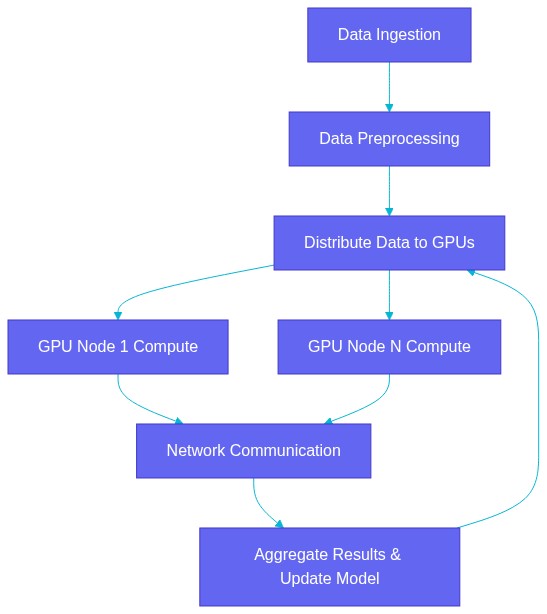

Photo by Nana Dua on Pexels
Real World Example
Consider a scenario where a research institution is training a large language model with hundreds of billions of parameters. This task cannot be completed on a single server or even a small cluster. The institution deploys an AI cluster comprising several thousand NVIDIA H100 GPUs.
Each GPU node processes a subset of the training data and computes gradients. These gradients, representing adjustments to the model’s parameters, must be rapidly exchanged across the entire cluster. A high-speed network fabric, potentially leveraging 1.6T InfiniBand, ensures that these updates are synchronized efficiently, preventing any single GPU from waiting excessively for data from others. This coordinated effort allows the model to learn from the vast dataset within a feasible timeframe, enabling breakthroughs in natural language understanding.
Frequently Asked Questions
What is east-west traffic in AI clusters?
East-west traffic refers to data communication between different GPU nodes within the same AI cluster. This internal traffic is massive during distributed training, requiring ultra-high bandwidth and low latency to ensure efficient model synchronization and data exchange.
Why is 1.6T networking important for AI clusters?
1.6T networking provides significantly higher bandwidth, alleviating the immense east-west traffic pressure in GPU clusters with tens or hundreds of thousands of GPUs. This improvement is critical for preventing network bottlenecks and enhancing the overall performance and scalability of AI training.
What is the primary bottleneck in large AI clusters?
As AI clusters scale to hundreds of thousands of GPUs, the primary bottleneck shifts from the raw computational power of the GPUs themselves to the network infrastructure connecting them. Efficient data transfer and communication become the limiting factor for performance.
How do optical interconnects contribute to AI clusters?
Optical interconnects provide the necessary terabit-per-second bandwidth and long-distance capabilities required for connecting thousands of GPUs across large data centers. They minimize signal degradation and enable the high-speed data flow essential for intensive AI training workloads.
SiliconeUpdate.com is a technology news platform that publishes updates and informational content related to silicon technology, software, artificial intelligence, and emerging technologies.
All articles published on this platform are attributed to SiliconeUpdate.com instead of individual authors. Content is presented in a neutral, informational format without personal opinions.
—
Content Publishing
SiliconeUpdate.com publishes news and updates based on publicly available information, official announcements, and industry developments. The focus is on clarity, relevance, and timely reporting.
—
Editorial Control
All editorial decisions, updates, and content management are handled at the platform level. No individual human or AI identity is presented as the author of articles.
—
Contact
For editorial communication or general queries, contact:
Email: neemasharma@gmail.com