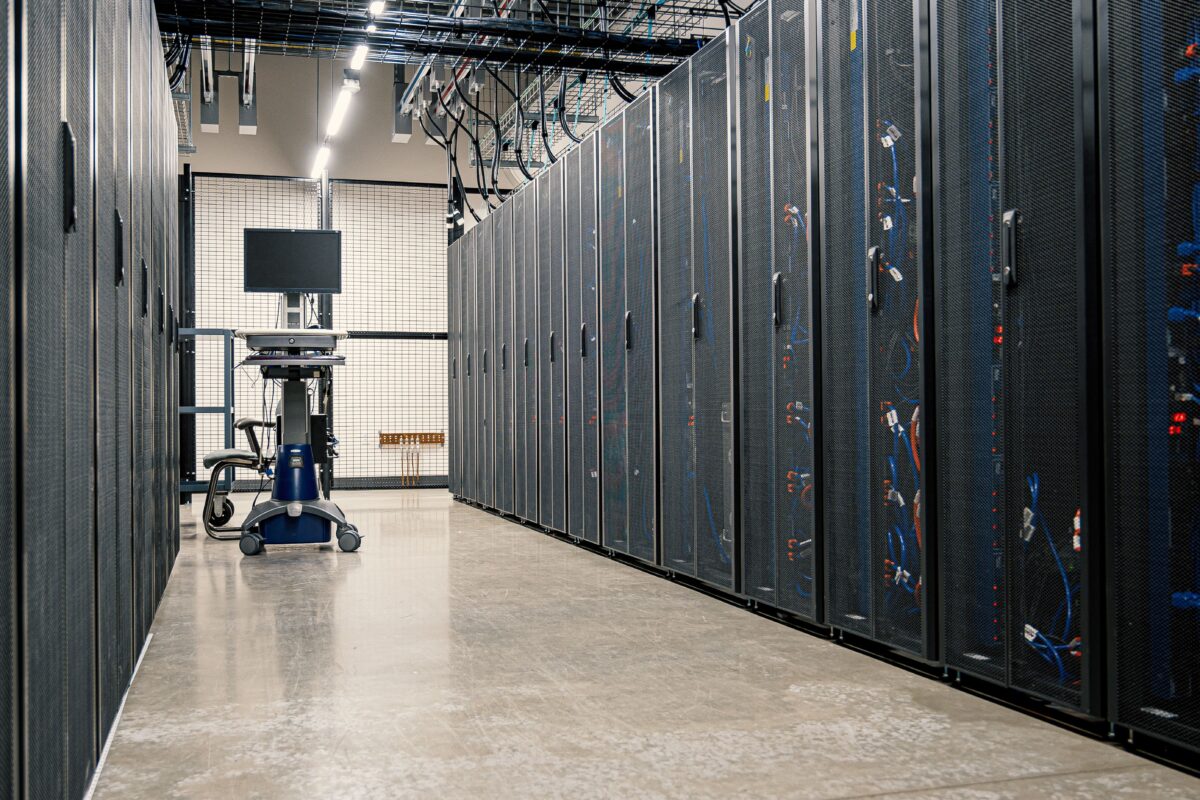
Artificial intelligence systems perform human-like tasks such as perceiving, reasoning, learning, and problem-solving. An AI system achieves these capabilities through a process called AI training, which involves feeding vast datasets to complex models. This intensive computational process places unique and stringent demands on the underlying data center infrastructure, particularly its networking components.
An AI data center is a facility purpose-built to handle the intensive compute, power, and cooling demands of these artificial intelligence workloads. The network within such a data center is not merely a conduit; it is a critical enabler, directly impacting the speed, efficiency, and scalability of AI model development.
Defining AI Training Workloads
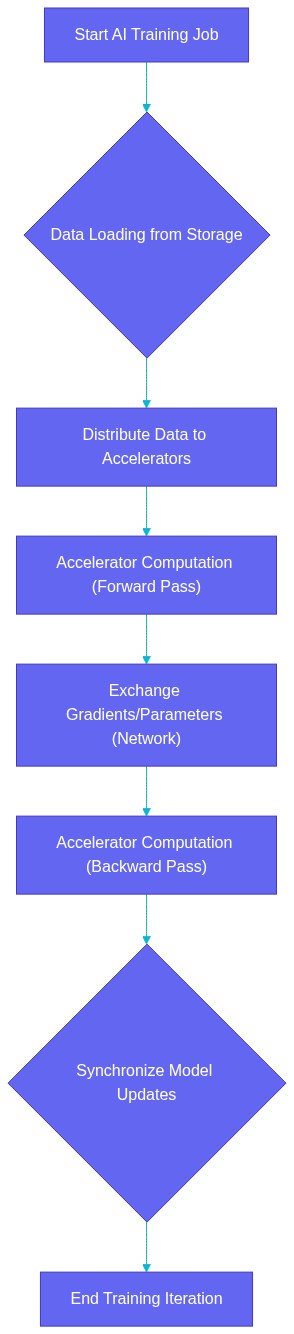
AI training workloads are characterized by their distributed nature and immense data movement requirements. Large AI models, such as those used for natural language processing or computer vision, often consist of billions of parameters and require processing petabytes of data.
This training process typically involves hundreds or thousands of specialized accelerators, like GPUs or TPUs, working in parallel. Efficient communication between these accelerators, as well as between accelerators and storage systems, is paramount to prevent bottlenecks and maximize utilization.
The Role of Data Centers in AI
Data centers serve as the foundational infrastructure for AI development, hosting the file servers and networking equipment necessary to store, process, and analyze diverse information sources like text, images, and code. For AI training, these facilities must provide not only raw compute power but also a highly optimized environment for data exchange.
The distinction between AI training data centers and AI inference data centers is significant. Training centers are optimized for high-throughput, low-latency communication among many nodes, whereas inference centers prioritize rapid response times for individual requests. This article focuses specifically on the networking requirements for the training phase.
Architectural Demands of AI Training Networks
The unique characteristics of AI training necessitate a network architecture fundamentally different from traditional enterprise or even high-performance computing (HPC) networks. The primary drivers are the need for extreme bandwidth, minimal latency, and robust scalability.
High-Bandwidth Interconnects
AI training involves frequent exchanges of model parameters, gradients, and activation data among interconnected accelerators. This collective communication generates massive amounts of east-west traffic within the data center. Networks must provide multi-terabit per second aggregate bandwidth to prevent these data transfers from becoming the limiting factor in training speed.
Insufficient bandwidth leads to accelerators waiting for data, resulting in underutilization and extended training times. The network must support sustained, high-volume data flows across numerous nodes simultaneously.
Low-Latency Communication
Latency, the delay in data transmission, significantly impacts the synchronization of distributed AI training jobs. In algorithms like synchronous stochastic gradient descent, all accelerators must exchange updates before proceeding to the next iteration.
Even microsecond delays can accumulate across thousands of iterations, substantially prolonging training. A low-latency network fabric ensures that these synchronization points are met quickly, allowing accelerators to operate efficiently.
Scalability and Flexibility
AI models are continuously growing in complexity and size, demanding more computational resources and larger datasets. The data center network must be inherently scalable, allowing for the seamless addition of hundreds or thousands of new accelerators without re-architecting the entire fabric.
Furthermore, the network needs flexibility to adapt to varying workload patterns and topologies. AI algorithms can dynamically alter network settings to optimize traffic, minimize latency, and boost overall efficiency, requiring a programmable and responsive network infrastructure.

Photo by Google DeepMind on Pexels
Key Networking Technologies for AI
To meet the stringent demands of AI training, specialized networking technologies and protocols have emerged as industry standards. These technologies focus on reducing overhead and maximizing data throughput.
RDMA and InfiniBand
Remote Direct Memory Access (RDMA) is a technology that allows network adapters to transfer data directly to or from application memory without involving the CPU. This bypasses the operating system kernel, significantly reducing latency and CPU overhead.
InfiniBand is a high-performance networking technology specifically designed for HPC and AI workloads, leveraging RDMA natively. It offers extremely low latency and high bandwidth, making it a preferred choice for tightly coupled AI training clusters where accelerators need to communicate with minimal delay.
Ethernet with RoCE
While InfiniBand offers superior performance, Ethernet remains the ubiquitous networking standard. RDMA over Converged Ethernet (RoCE) extends RDMA capabilities to standard Ethernet networks. RoCE allows for direct memory access transfers over a lossless Ethernet fabric, providing a cost-effective alternative to InfiniBand while still delivering significant performance benefits for AI training.
Implementing RoCE requires careful configuration of the Ethernet network to ensure a lossless environment, often through technologies like Priority Flow Control (PFC) and Enhanced Transmission Selection (ETS).
Network Fabric Design
The physical and logical design of the network fabric is critical for AI training. A Clos topology, or fat-tree architecture, is commonly employed to provide high bisectional bandwidth, ensuring that any node can communicate with any other node at full line rate. This design minimizes congestion and supports the all-to-all communication patterns prevalent in distributed AI training.
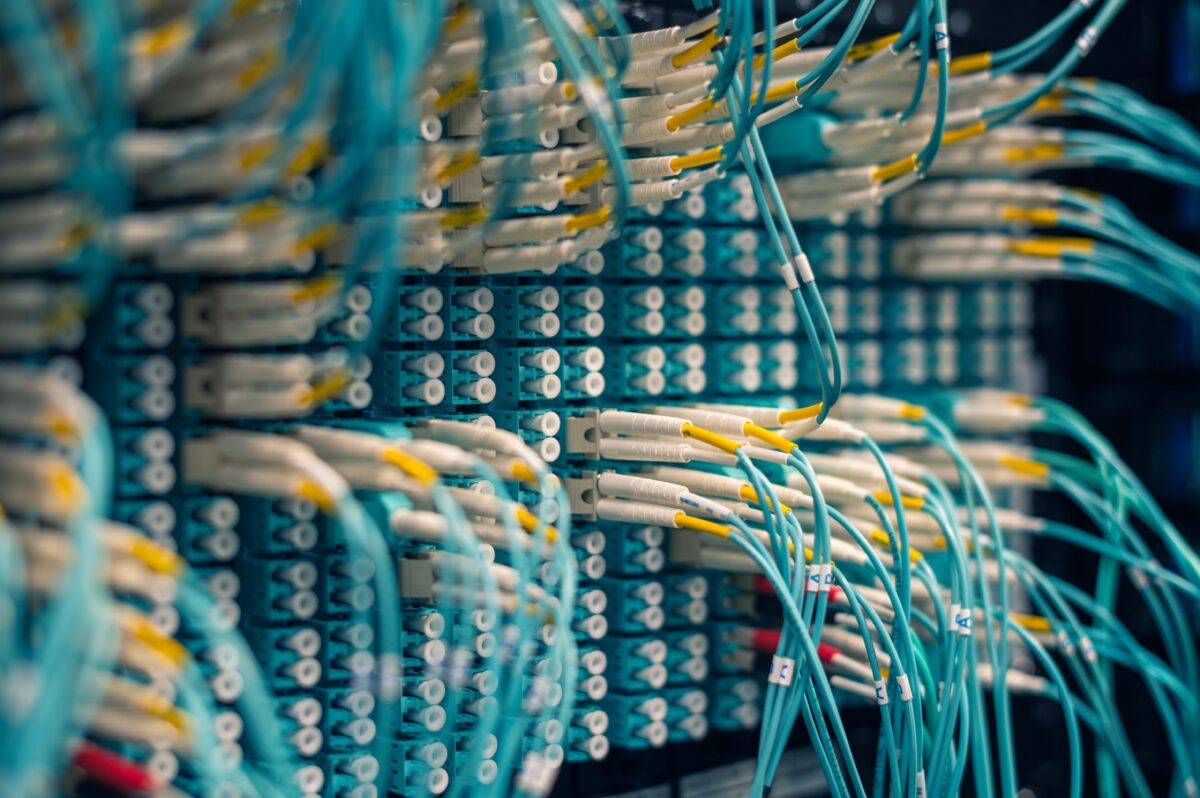
The choice of switches, cabling, and optical transceivers must align with the required bandwidth and distance specifications. For example, 400GbE or 800GbE interfaces are becoming standard in modern AI data centers to handle the immense data volumes.
Optimizing Network Performance for AI Training
Beyond selecting the right hardware and topology, continuous optimization of network performance is essential for maximizing the efficiency of AI training workloads. This involves dynamic adjustments and proactive management.
Dynamic Network Configuration
AI training workloads are dynamic, with communication patterns shifting based on the model, dataset, and training phase. Advanced network management systems can leverage AI algorithms themselves to dynamically alter network settings. This optimization includes adjusting routing paths, prioritizing traffic, and reallocating bandwidth to minimize latency and boost overall efficiency in real-time.
Such intelligent network orchestration ensures that resources are optimally utilized, adapting to the fluctuating demands of complex training jobs.
Congestion Management
Despite high-bandwidth fabrics, congestion can still occur, especially during collective communication operations involving many nodes. Effective congestion management techniques are vital to prevent performance degradation.
Mechanisms like Explicit Congestion Notification (ECN), Quality of Service (QoS) policies, and intelligent load balancing help to mitigate congestion. These techniques ensure that critical AI training traffic receives priority and is not delayed by other data flows.
Network Telemetry and Monitoring
Visibility into network performance is indispensable for identifying and resolving bottlenecks. Network telemetry provides real-time, granular data on traffic patterns, latency, and packet drops across the entire fabric. This data allows administrators to proactively detect issues before they impact training jobs.
Advanced monitoring tools can integrate with AI workload schedulers to correlate network events with application performance, enabling rapid diagnosis and optimization.
| Feature | InfiniBand | Ethernet with RoCE |
|---|---|---|
| Primary Use Case | High-Performance Computing (HPC), tightly coupled AI clusters | General-purpose data centers, AI clusters requiring cost-efficiency |
| Latency | Extremely Low (sub-microsecond) | Very Low (low microsecond), slightly higher than InfiniBand |
| Bandwidth | Very High (e.g., 400Gb/s, 800Gb/s per port) | High (e.g., 400Gb/s, 800Gb/s per port) |
| CPU Overhead | Very Low (native RDMA) | Low (RDMA offload, but still some host processing) |
| Lossless Fabric | Native hardware support | Requires careful configuration (PFC, ECN) |
| Ecosystem & Cost | Specialized, higher cost per port | Wider adoption, generally lower cost per port |

Photo by Tara Winstead on Pexels
Challenges and Future Directions
As AI models continue to grow in scale and complexity, the demands on data center networking will only intensify. Addressing these evolving challenges requires continuous innovation in both hardware and software.
Power and Cooling Integration
The high-density compute and networking equipment required for AI training generates significant heat and consumes substantial power. An AI data center must integrate advanced power delivery and cooling systems directly with the network infrastructure. This ensures that high-performance components can operate reliably without thermal throttling, which would negate networking benefits.
Efficient power distribution and liquid cooling solutions are becoming standard for supporting next-generation AI network fabrics.
Network Security Considerations
The vast amounts of sensitive data processed during AI training, combined with the distributed nature of the workloads, present significant security challenges. Securing the network fabric against unauthorized access, data breaches, and denial-of-service attacks is paramount.
Implementing granular access controls, network segmentation, encryption for data in transit, and continuous threat monitoring are essential. The network must provide a secure foundation for intellectual property and proprietary models.
Key Takeaways
- AI training workloads demand specialized data center networking due to their distributed nature and intensive data movement.
- High-bandwidth interconnects and low-latency communication are critical to prevent bottlenecks and maximize accelerator utilization.
- Technologies like InfiniBand and Ethernet with RoCE leverage RDMA to significantly reduce CPU overhead and improve data transfer efficiency.
- Network fabric designs, such as Clos topologies, are essential for providing the high bisectional bandwidth required for all-to-all communication.
- Dynamic network configuration, congestion management, and comprehensive telemetry are vital for optimizing and maintaining peak network performance for AI training.
The dynamic nature of AI training workloads means that static network configurations are increasingly inefficient; intelligent, AI-driven network orchestration is becoming a necessity to achieve optimal performance.
Estimated Growth of AI Data Center Network Bandwidth Demand (2025)
Intra-Cluster Traffic: 120Terabits/second | Inter-Cluster Traffic: 40Terabits/second | Storage Access: 80Terabits/second — Source: Industry Projections (Approximate)
Real World Example
Consider a large language model (LLM) being trained on a cluster of 1,024 NVIDIA H100 GPUs. Each GPU needs to communicate with hundreds of others to exchange model parameters and gradients during each training step. If the network latency between any two GPUs is even slightly elevated, or if bandwidth is insufficient, the entire cluster will stall, waiting for the slowest link.
A network designed with 400Gb/s InfiniBand or RoCE-enabled Ethernet, configured in a Clos topology, ensures that these GPUs can exchange data with sub-microsecond latency and massive throughput. This allows the training job to complete in days or weeks, rather than months, directly impacting the time-to-market for new AI capabilities. Without this optimized networking, the multi-million dollar investment in GPUs would be severely underutilized, making the training process economically unfeasible.
Frequently Asked Questions
Why can’t standard data center networks handle AI training?
Standard networks are typically optimized for north-south traffic (client-server) and may lack the extreme bandwidth and ultra-low latency required for the intense east-west (server-to-server) communication patterns prevalent in distributed AI training workloads.
What is RDMA and why is it important for AI?
RDMA (Remote Direct Memory Access) allows network adapters to transfer data directly to or from application memory without CPU involvement. This significantly reduces latency and CPU overhead, making it critical for the rapid data exchange needed in AI training.
How does network congestion affect AI training?
Network congestion causes delays in data transfer, leading to accelerators waiting for data or synchronization points. This underutilizes expensive compute resources, prolongs training times, and can even lead to unstable model convergence.
What is the difference between InfiniBand and RoCE for AI networking?
InfiniBand is a specialized, high-performance networking technology with native RDMA, offering the lowest latency. RoCE (RDMA over Converged Ethernet) brings RDMA capabilities to standard Ethernet, providing a more cost-effective solution, though it requires careful configuration to ensure a lossless fabric.
SiliconeUpdate.com is a technology news platform that publishes updates and informational content related to silicon technology, software, artificial intelligence, and emerging technologies.
All articles published on this platform are attributed to SiliconeUpdate.com instead of individual authors. Content is presented in a neutral, informational format without personal opinions.
—
Content Publishing
SiliconeUpdate.com publishes news and updates based on publicly available information, official announcements, and industry developments. The focus is on clarity, relevance, and timely reporting.
—
Editorial Control
All editorial decisions, updates, and content management are handled at the platform level. No individual human or AI identity is presented as the author of articles.
—
Contact
For editorial communication or general queries, contact:
Email: neemasharma@gmail.com