Overview
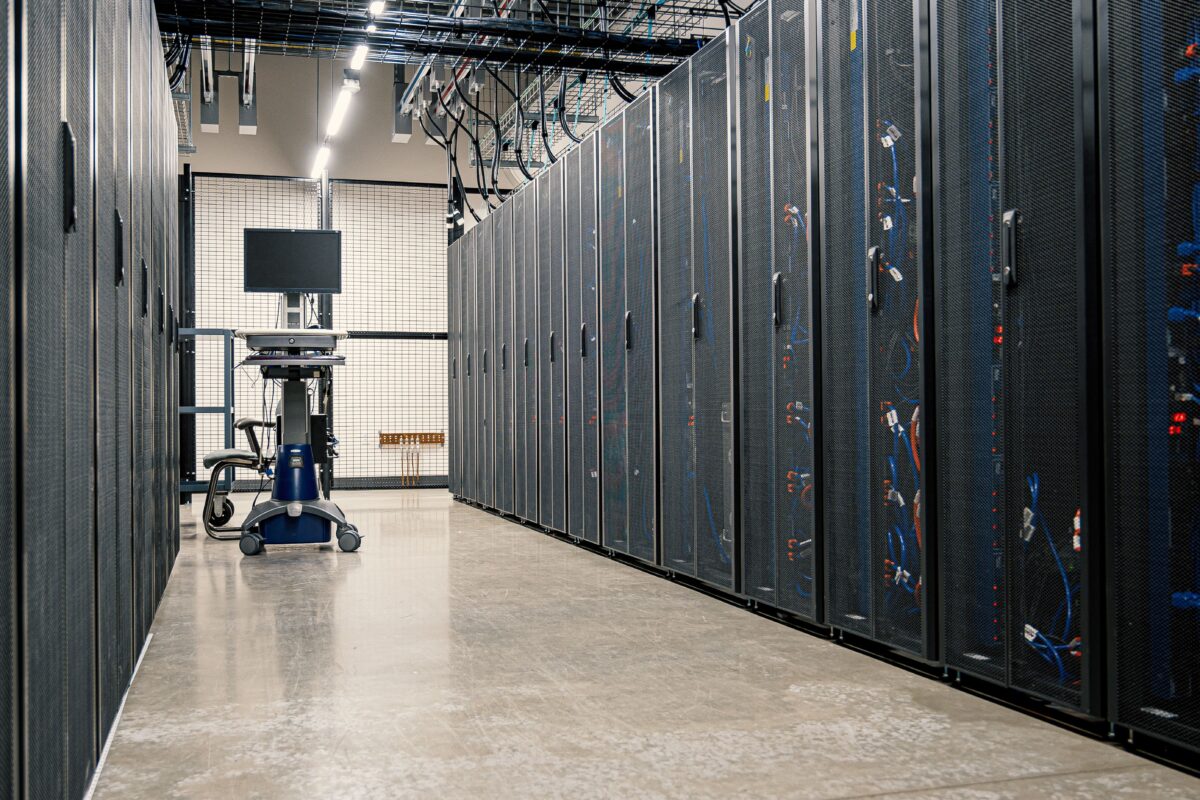
The escalating demands of artificial intelligence (AI) workloads are fundamentally reshaping server architecture, driven primarily by the integration of High Bandwidth Memory (HBM) and advanced Graphics Processing Units (GPUs). This shift addresses the critical need for accelerated data processing and efficient memory access, moving beyond traditional server designs to unlock unprecedented computational power for complex AI models.

Photo by panumas nikhomkhai on Pexels
Background & Context
Traditional server architectures often encounter a “memory wall,” where the processor’s speed is bottlenecked by the slower data transfer rates of conventional memory. This limitation becomes particularly acute with the rise of AI, where training models with billions of parameters requires immense data throughput and low-latency memory access. NVIDIA’s GPUs and Google’s TPUs, essential for these demanding AI tasks, depend heavily on specialized memory solutions to operate at their full potential.
Core Details
The Role of High Bandwidth Memory (HBM)
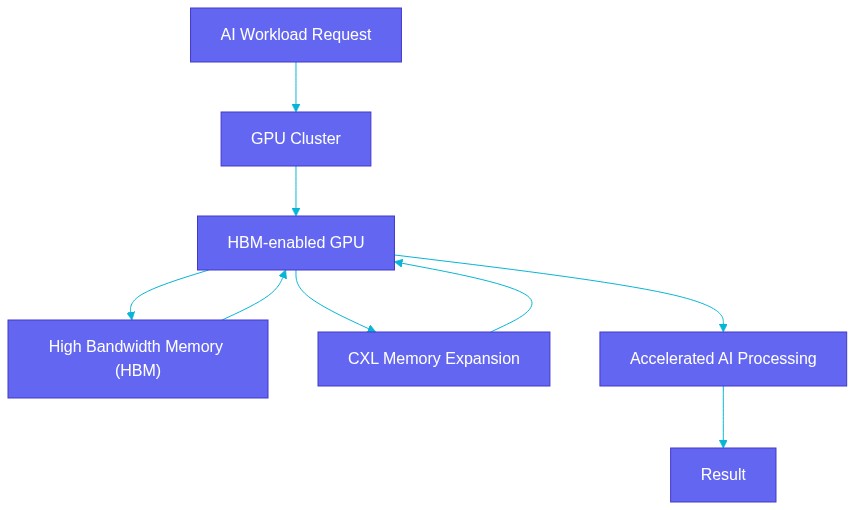
High Bandwidth Memory (HBM) is a specialized form of DRAM that delivers massive throughput, exceptional power efficiency, and scalability. It achieves this through advanced 2.5D and 3D architectures, stacking multiple DRAM dies vertically and connecting them with a high-speed interface. This design provides a wide bandwidth and low-latency memory solution, enabling GPUs to be fully utilized during both AI model training and inference.
GPU Acceleration and Memory Demands
Modern GPUs are designed for parallel processing, making them ideal for the matrix multiplications and tensor operations inherent in AI workloads. However, their effectiveness is directly tied to the speed at which they can access data. HBM provides the necessary memory bandwidth to feed these powerful processors, preventing computational units from idling while waiting for data. This synergy between GPUs and HBM is critical for handling the very large data pools and computational intensity demanded by contemporary AI systems.
Emerging Interconnects: CXL
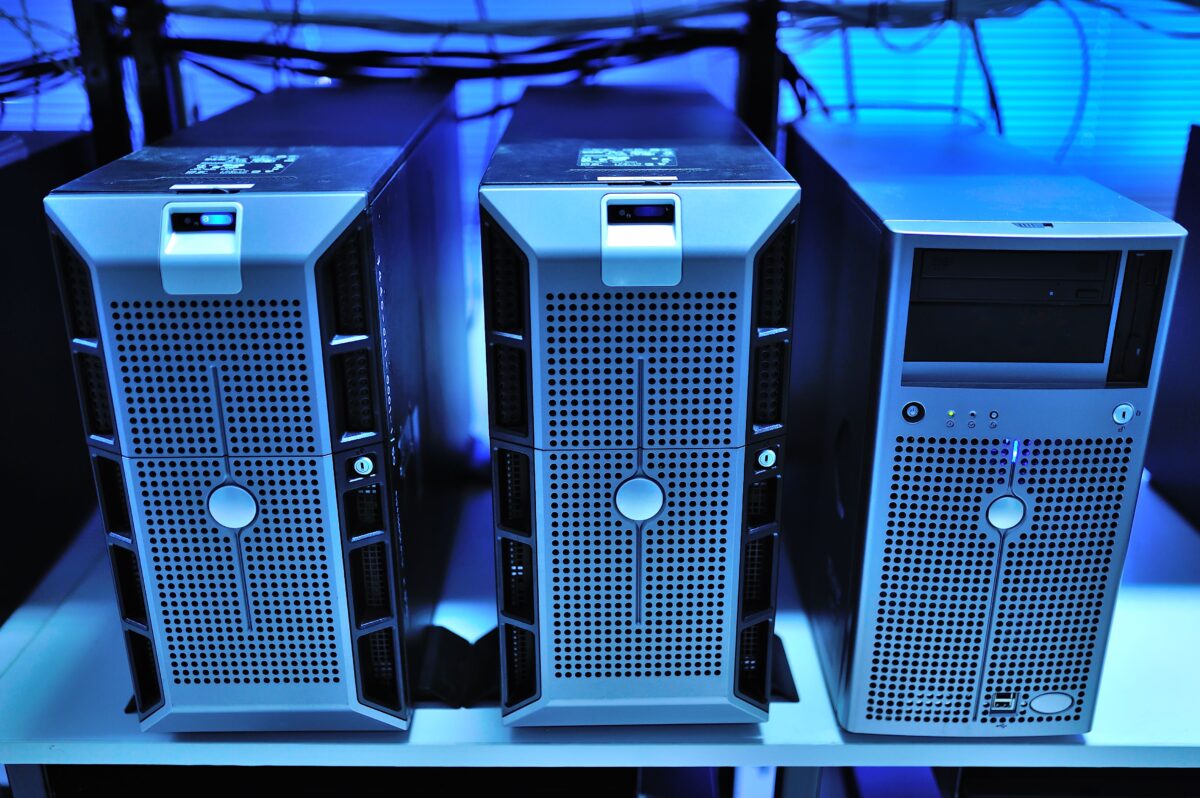
Beyond HBM, new interconnect technologies like Compute Express Link (CXL) are further evolving server memory architectures. CXL enables memory expansion and pooling, allowing GPUs to access larger, shared memory resources with lower latency and higher throughput. At GTC 2026, Penguin announced a CXL-based MemoryAI KV cache server, specifically designed to enhance performance for GPU clusters by optimizing memory access patterns. This innovation complements HBM by providing additional avenues for memory scaling and efficiency.

Photo by panumas nikhomkhai on Pexels
Data & Evidence
The rapid adoption of AI has created an insatiable demand for specialized hardware, leading to significant supply chain pressures. By 2026, AI hardware shortages are extending beyond GPUs to encompass a range of critical components. Building new HBM manufacturing capacity, for instance, requires over three years, highlighting the strategic importance of securing supply chains.
| Component | Impact on AI Systems |
|---|---|
| High Bandwidth Memory (HBM) | Directly limits GPU utilization and AI model performance. |
| DDR5 | Affects overall server memory capacity and speed. |
| SSDs | Constrains data storage and retrieval speeds for large datasets. |
| MLCCs (Multi-Layer Ceramic Capacitors) | Essential for power delivery and signal integrity in high-performance chips. |
| Optics | Impacts high-speed data transfer within and between data centers. |
| Packaging | Critical for integrating complex chips like HBM and GPUs. |
| Power Components | Limits the ability to power high-density AI racks. |
| Connectors | Affects inter-component communication and system scalability. |
The strategic capture of HBM manufacturing capacity is a significant competitive advantage, as building new fabrication facilities takes over three years, making rapid expansion nearly impossible.
AI Hardware Shortage Impact by Component (2026)
HBM: 95Relative Impact Score | GPUs: 90Relative Impact Score | DDR5: 70Relative Impact Score | SSDs: 60Relative Impact Score | MLCCs: 55Relative Impact Score | Optics: 50Relative Impact Score | Packaging: 45Relative Impact Score | Power Components: 40Relative Impact Score | Connectors: 35Relative Impact Score — Source: MicrochipUSA 2026 (Approximate)
Real World Example
Consider an AI data center tasked with training a large language model (LLM) containing hundreds of billions of parameters. This task requires immense computational power and rapid access to vast datasets. Servers equipped with NVIDIA GPUs leveraging HBM3 memory are deployed. The HBM’s wide memory channels and low latency allow the GPUs to continuously process data without waiting, maximizing their utilization. This architecture enables the model to be trained in a fraction of the time compared to systems relying on conventional memory, directly impacting the speed of AI development and deployment. The reliance of companies like NVIDIA and Google on HBM for their AI accelerators underscores its indispensable role in modern AI infrastructure.
Implications
The integration of HBM and GPUs is driving a fundamental redesign of data center infrastructure. Server racks are becoming denser, requiring advanced cooling and power delivery systems to support the high-performance components. The memory market itself is now largely dictated by the demands of AI data centers, shifting focus towards high-bandwidth, low-latency solutions. This transformation also intensifies the competition for HBM supply, making strategic partnerships and manufacturing capacity crucial for hardware providers. The evolution of server architecture is not just about faster processing; it is about enabling the next generation of AI capabilities.
Key Takeaways
- HBM and GPUs are essential for overcoming the memory wall in AI workloads, providing the necessary bandwidth and processing power.
- HBM’s 2.5D and 3D architectures deliver massive throughput and power efficiency, critical for fully utilizing modern GPUs.
- AI data centers are now the primary drivers of memory market trends, prioritizing high-bandwidth, low-latency solutions.
- The demand for HBM and other AI hardware components is creating significant supply chain pressures, with long lead times for new manufacturing capacity.
- Emerging technologies like CXL complement HBM by enabling flexible memory expansion and pooling for GPU clusters, further optimizing performance.
Frequently Asked Questions
What is the “memory wall” in server architecture?
The “memory wall” refers to the performance bottleneck where the processor’s speed is limited by the slower data transfer rates of conventional memory. This disparity prevents the CPU or GPU from operating at its full potential, especially with data-intensive tasks.
How does HBM improve GPU performance?
HBM improves GPU performance by providing significantly higher memory bandwidth and lower latency compared to traditional DRAM. This allows the GPU to access and process data much faster, keeping its computational units fully utilized during complex AI training and inference tasks.
Why are AI hardware shortages spreading beyond GPUs?
The insatiable demand for AI processing power has created a ripple effect across the entire hardware ecosystem. Components like HBM, DDR5, SSDs, and specialized packaging are all critical for building high-performance AI systems, leading to widespread shortages as demand outstrips supply.
What role does CXL play in this evolving server architecture?
CXL (Compute Express Link) enhances server architecture by enabling memory expansion and pooling, allowing GPUs to access larger, shared memory resources with improved latency and throughput. It complements HBM by providing additional flexibility and scalability for memory management in AI clusters.

SiliconeUpdate.com is a technology news platform that publishes updates and informational content related to silicon technology, software, artificial intelligence, and emerging technologies.
All articles published on this platform are attributed to SiliconeUpdate.com instead of individual authors. Content is presented in a neutral, informational format without personal opinions.
—
Content Publishing
SiliconeUpdate.com publishes news and updates based on publicly available information, official announcements, and industry developments. The focus is on clarity, relevance, and timely reporting.
—
Editorial Control
All editorial decisions, updates, and content management are handled at the platform level. No individual human or AI identity is presented as the author of articles.
—
Contact
For editorial communication or general queries, contact:
Email: neemasharma@gmail.com