Overview
The proliferation of Artificial Intelligence (AI) workloads is fundamentally reshaping data center architecture. This transformation moves beyond incremental upgrades, demanding a complete re-evaluation of design principles, power infrastructure, and cooling strategies. AI’s unique computational requirements are driving a shift from traditional, rigid data center designs to highly specialized, flexible, and energy-efficient infrastructures.
Background & Context
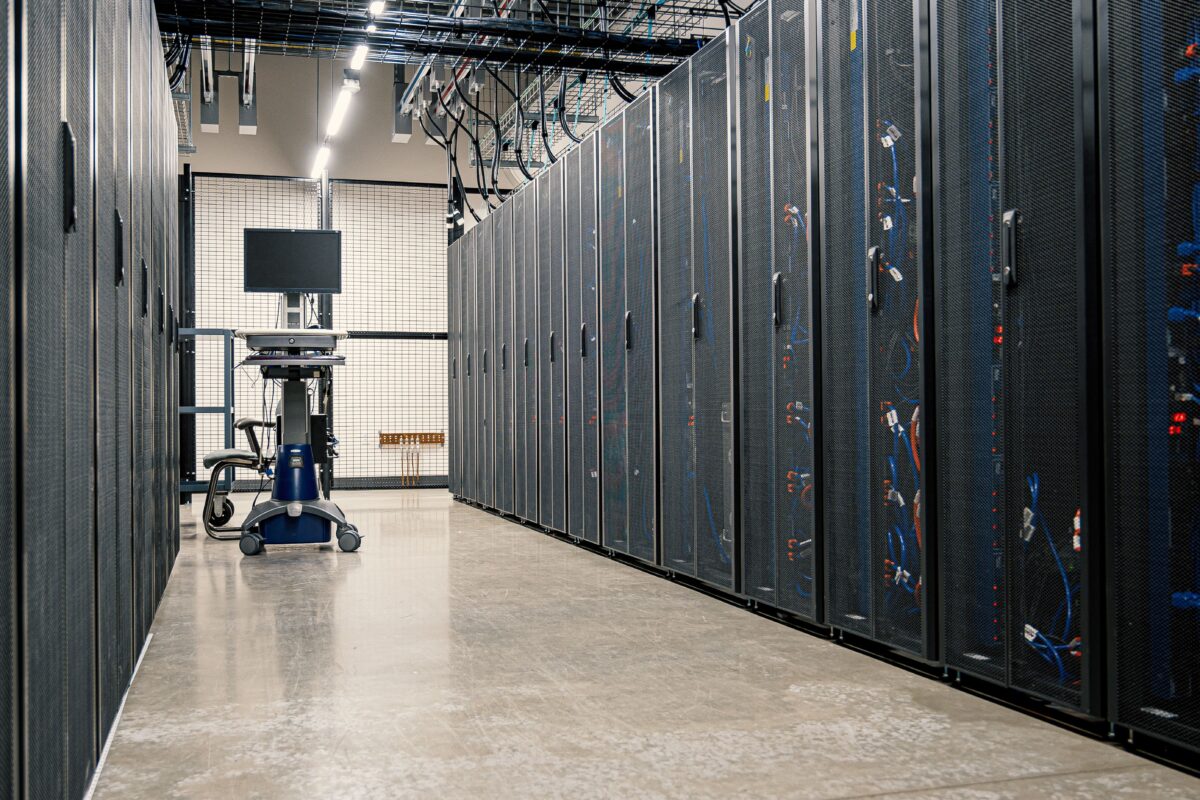
The AI revolution is not merely changing how we interact with technology; it is profoundly altering the physical infrastructure that supports it. Traditional data centers, designed for general-purpose computing and high redundancy, are proving inadequate for the intense, specialized demands of AI. AI workloads, particularly those involving large-scale model training and inference, require unprecedented levels of computational density, power delivery, and thermal management, necessitating a paradigm shift in data center design.

Photo by Pachon in Motion on Pexels
Core Details
From Rigid Redundancy to Tailored Flexibility
AI workloads are redefining data center design, moving away from the traditional emphasis on rigid redundancy towards tailored flexibility. This means designing infrastructure specifically optimized for the unique power, cooling, and interconnectivity needs of AI clusters, rather than a one-size-fits-all approach.
Why AI Companies Are Building Massive GPU Clusters
How GPU Clusters Are Built for AI Workloads
Power Infrastructure as a Primary Constraint
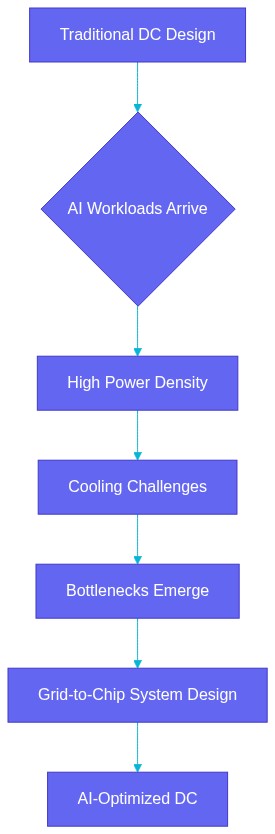
The power infrastructure behind AI is now the biggest constraint on AI growth. Data center power is shifting from a facility-level grid connection to a more granular grid-to-chip system design. This approach optimizes power delivery directly to the processing units, addressing the immense power demands of AI accelerators.
Dense AI Clusters and Linked Bottlenecks
Modern AI data centers are characterized by dense AI clusters, which create linked bottlenecks across several critical areas. These include challenges in power conversion, where electricity must be efficiently transformed for specialized hardware, and cooling resilience, as high-density compute generates significant heat that traditional cooling systems struggle to dissipate effectively.
Strategic, Large, and Diverse Data Centers
AI data centers are evolving to become strategic, large, and diverse. This diversity extends to their physical locations, with concepts ranging from underwater data centers to even in-orbit facilities. The primary drivers for these varied deployments are the efficiency of data movement and optimized energy use, which are emerging as key performance indicators.
Shift from Training to Inference Workloads
The nature of AI workloads themselves is changing, with a notable shift from intensive training workloads to more frequent and distributed inference workloads. While training demands immense, sustained computational power, inference requires rapid, low-latency processing, influencing the design of network architectures and edge computing capabilities within data centers.
Data & Evidence
The impact of AI workloads on data center architecture is evident in projected power consumption and design shifts.
| Metric | Current (2026 Context) | Projection (2027) | Source |
|---|---|---|---|
| AI Share of Global Data Center Power | Approximately 14% | Up to 27% | avidsolutionsinc.com (Jan 2026) |
| Data Center Design Philosophy | Rigid Redundancy | Tailored Flexibility | datacenterknowledge.com (Apr 2026) |
| Primary Constraint on AI Growth | N/A | AI Power Infrastructure | blog.se.com (Jul 2026) |
Projected AI Share of Global Data Center Power (2026-2027)
2026 (Approx.): 14% | 2027 (Projected): 27% — Source: avidsolutionsinc.com (Jan 2026)
The rapid increase in AI’s share of global data center power, nearly doubling in just one year, underscores the urgency for architectural changes focused on energy efficiency and optimized power delivery.

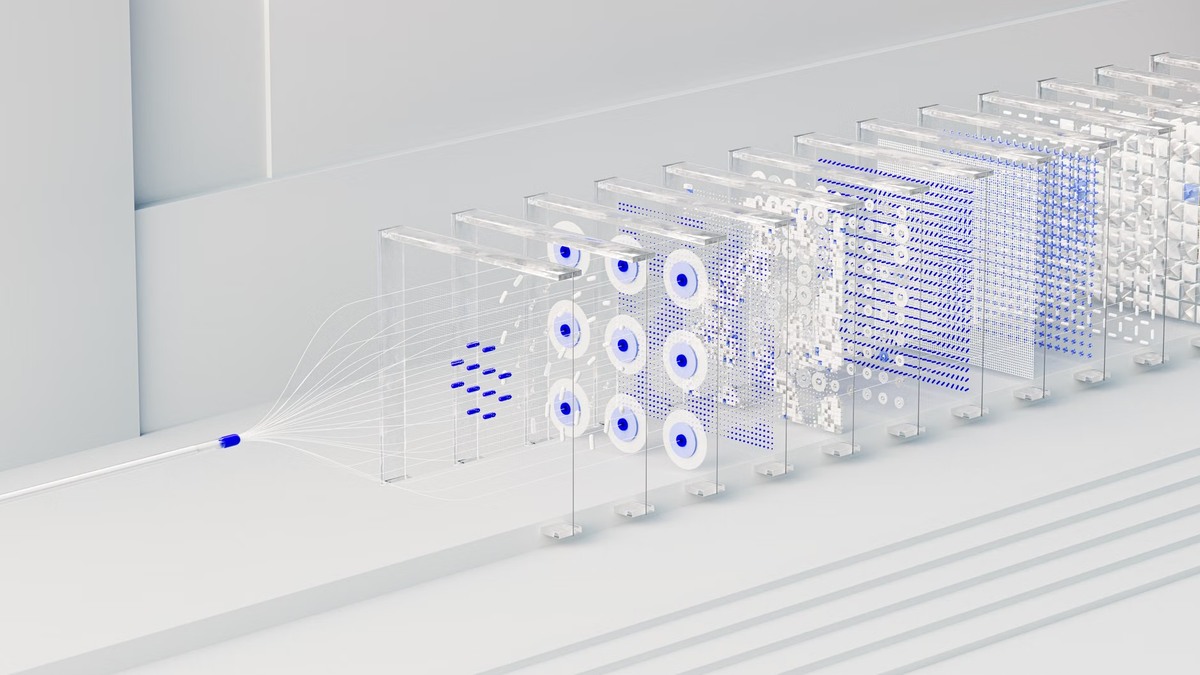
Photo by Google DeepMind on Pexels
Real World Example
Consider a hyperscale cloud provider deploying a new AI supercluster for large language model training. A traditional data center would struggle immensely. Its power distribution units (PDUs) and uninterruptible power supplies (UPS) are designed for general-purpose servers, not racks consuming tens of kilowatts each. The existing cooling infrastructure, typically air-based, would be overwhelmed by the concentrated heat from hundreds of GPUs. Instead, an AI-optimized data center implements a grid-to-chip system design, featuring direct liquid cooling for GPU racks, high-voltage direct current (HVDC) power distribution to minimize conversion losses, and specialized interconnects like NVLink or InfiniBand for high-speed data movement between accelerators. This tailored approach ensures efficient power delivery and thermal management, preventing the bottlenecks that would cripple a conventional setup.
Implications
The shift in AI workloads has profound implications for data center operators and designers. It necessitates significant capital investment in new infrastructure capable of supporting extreme power densities and advanced cooling solutions. Furthermore, it drives innovation in power management, thermal engineering, and network fabric design. The strategic importance of data centers is elevated, as their architecture directly impacts the performance and scalability of AI initiatives, making them a competitive differentiator.
Key Takeaways
- AI workloads demand a fundamental shift from rigid data center redundancy to tailored flexibility.
- Power infrastructure has become the primary constraint on AI growth, driving a move to grid-to-chip system design.
- Dense AI clusters create linked bottlenecks in power conversion and cooling resilience.
- Data centers are becoming strategic, large, and diverse, with a focus on data movement and energy efficiency.
- The evolving nature of AI workloads, from training to inference, influences network and edge computing design.
Frequently Asked Questions
What is grid-to-chip system design?
Grid-to-chip system design refers to optimizing the entire power delivery chain from the utility grid connection down to the individual processing chip. This approach minimizes energy loss and ensures stable, high-density power delivery directly to AI accelerators, which have immense power requirements.
Why are AI data centers becoming diverse in location?
AI data centers are diversifying their locations, including concepts like underwater or in-orbit, primarily to optimize for energy efficiency and strategic data movement. These unconventional locations can offer natural cooling benefits or proximity to data sources, reducing latency and operational costs.
What is the difference between AI training and inference workloads?
AI training workloads involve feeding vast datasets to a model to learn patterns, requiring sustained, high computational power. AI inference workloads involve using a pre-trained model to make predictions or decisions on new data, typically requiring lower latency and often distributed processing.
How does AI impact data center cooling?
AI workloads generate significantly more heat per square foot than traditional computing, necessitating advanced cooling solutions. This often involves a shift from air-based cooling to more efficient methods like direct liquid cooling, where coolant directly contacts heat-generating components, improving cooling resilience.
SiliconeUpdate.com is a technology news platform that publishes updates and informational content related to silicon technology, software, artificial intelligence, and emerging technologies.
All articles published on this platform are attributed to SiliconeUpdate.com instead of individual authors. Content is presented in a neutral, informational format without personal opinions.
—
Content Publishing
SiliconeUpdate.com publishes news and updates based on publicly available information, official announcements, and industry developments. The focus is on clarity, relevance, and timely reporting.
—
Editorial Control
All editorial decisions, updates, and content management are handled at the platform level. No individual human or AI identity is presented as the author of articles.
—
Contact
For editorial communication or general queries, contact:
Email: neemasharma@gmail.com