
Amazon embeds artificial intelligence throughout its operations, transforming how customers interact with products and how the company manages its vast supply chain. This integration extends from personalized shopping experiences to sophisticated logistical optimizations, making AI a fundamental component of Amazon’s business model.
The Pervasive Role of AI
AI is not a peripheral technology for Amazon; it is deeply woven into nearly every aspect of its enterprise. From the moment a customer begins searching for a product to its final delivery, AI systems are at work. These systems aim to enhance efficiency, improve customer satisfaction, and streamline complex processes.
Evolution of AI at Amazon
Amazon has steadily advanced its AI capabilities, moving from basic recommendation engines to sophisticated generative and agentic AI. This evolution supports customers in finding, discovering, and evaluating products from Amazon’s extensive selection. A notable development occurred on May 13, 2026, when the AI shopping assistant Rufus was renamed Alexa for a broader application.
AI in Customer Experience and Shopping
Amazon leverages AI to create highly personalized and efficient shopping journeys for its users. This involves understanding individual preferences and proactively assisting with product discovery and purchase decisions.
Personalized Discovery and Evaluation
AI-powered innovations help customers navigate Amazon’s broad product selection. These systems analyze user behavior and preferences to suggest relevant items, making the shopping experience more intuitive. Customers can efficiently find and evaluate products tailored to their needs.
Agentic AI for Shopping Assistance
Amazon employs agentic AI to assist users with product comparisons and to facilitate purchases or reorders on their behalf. This technology, exemplified by the AI shopping assistant now known as Alexa, simplifies complex shopping tasks. As of May 27, 2026, Amazon began selling this homegrown AI shopping technology to other businesses, demonstrating its external applicability.
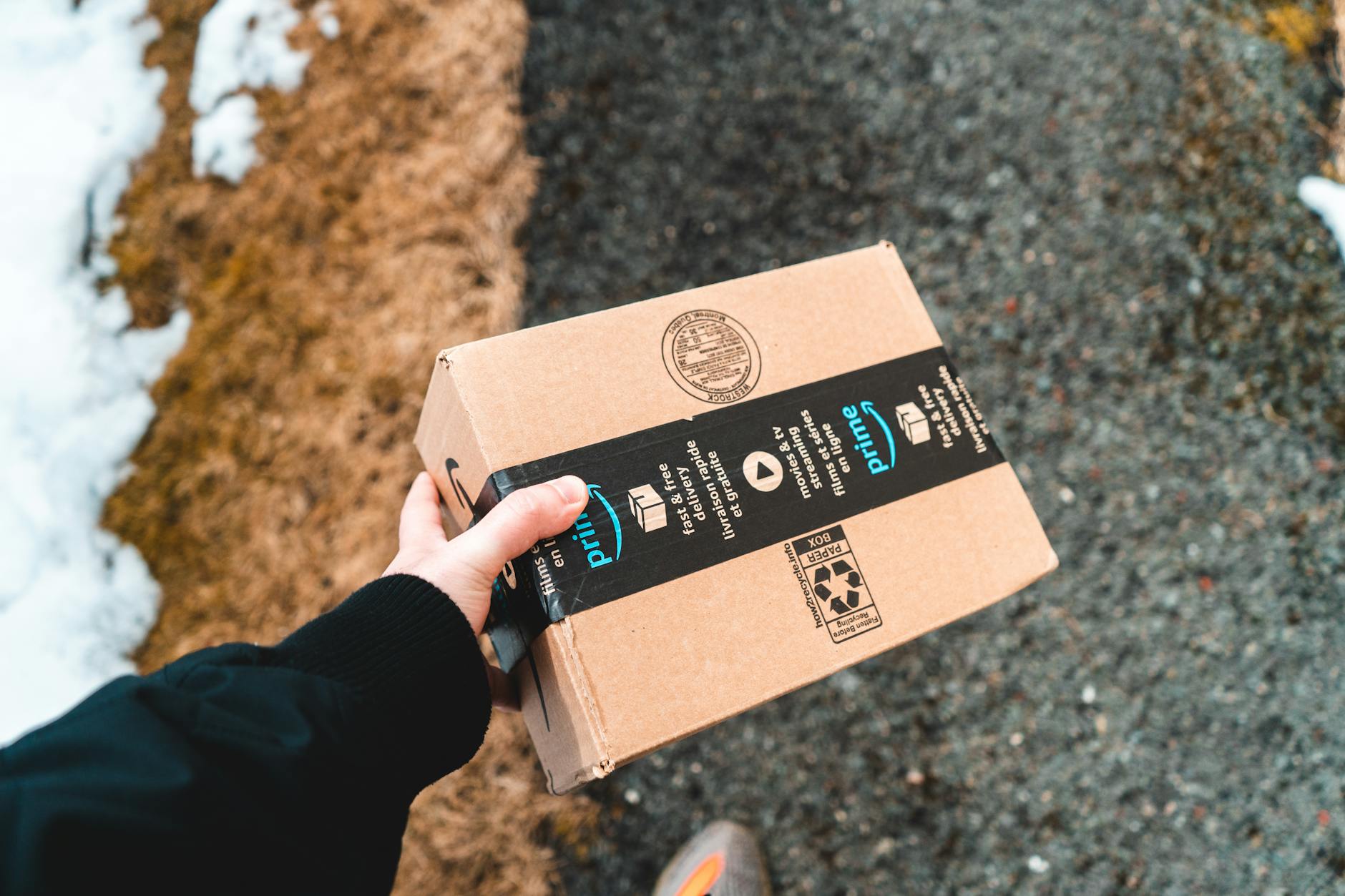
Photo by Erik Mclean on Pexels
AI-Driven Supply Chain Optimization
AI is embedded across Amazon’s entire supply chain, from vendor tools to warehouse robotics and delivery optimization. This integration aims to enhance efficiency and responsiveness across all logistical stages.
Forecasting and Inventory Management
Amazon utilizes AI to forecast demand for millions of products. This involves analyzing extensive data points, including sales history, regional trends, weather patterns, and seasonal shifts. Accurate demand forecasting is critical for optimizing inventory levels and reducing waste.
AI also plays a role in automating offer reviews and managing inventory efficiently. This ensures products are available when customers need them, minimizing stockouts and overstocking.
Warehouse Robotics and Delivery
Within Amazon’s warehouses, AI integrates with robotics to manage and move inventory. This automation improves operational speed and accuracy. For delivery, AI optimizes routes and schedules, ensuring timely and cost-effective transportation of goods.
Supplier Resilience and Sourcing
AI supports supplier resilience and responsible sourcing practices. By analyzing supplier performance and potential risks, Amazon can maintain a robust and ethical supply chain. This helps in identifying reliable partners and mitigating disruptions.
AI in Business Operations and Services
Beyond customer-facing applications and supply chain logistics, Amazon uses AI internally and offers its AI capabilities as services to other businesses.
Internal Tooling and Efficiency
AI is integrated into various internal vendor tools to streamline operations and enhance efficiency. These tools help manage complex business processes and data. Amazon also implements Business Solutions Agreement updates, effective March 4, 2026, which include restrictions on using Amazon materials or services for AI development, with enhanced protection against reverse engineering, safeguarding its proprietary AI assets.
Selling AI Technology to Others
Amazon has begun offering its AI shopping technology to other companies. This allows external businesses to leverage Amazon’s advanced AI capabilities for their own customer experiences. This move expands the reach of Amazon’s AI innovations beyond its own retail platform.
| AI Application Area | Primary Purpose | Key Benefits |
|---|---|---|
| Customer Shopping Experience | Product discovery, evaluation, purchase assistance | Personalized recommendations, simplified buying, agentic support (Alexa) |
| Demand Forecasting | Predicting product sales | Optimized inventory, reduced waste, improved product availability |
| Supply Chain Logistics | Warehouse operations, delivery routing | Increased efficiency, faster fulfillment, lower operational costs |
| Supplier Management | Evaluating and sourcing suppliers | Enhanced supplier resilience, responsible sourcing, risk mitigation |
| External AI Services | Offering AI shopping tech to other businesses | New revenue streams, broader industry impact, extended ecosystem |

Photo by Anete Lusina on Pexels
Key Takeaways
- Amazon integrates AI extensively across its business, from customer interactions to supply chain management.
- AI enhances the customer shopping experience through personalized recommendations and agentic assistants like Alexa.
- Sophisticated AI models forecast demand, optimize inventory, and manage warehouse robotics for efficient logistics.
- AI contributes to supplier resilience and responsible sourcing, strengthening the overall supply chain.
- Amazon not only uses AI internally but also sells its AI shopping technology to other businesses.
Amazon’s strategic decision to sell its proprietary AI shopping technology to other companies marks a significant shift, transforming its internal innovation into an external business solution. This move positions Amazon as a key AI provider beyond its core retail operations.
Real World Example
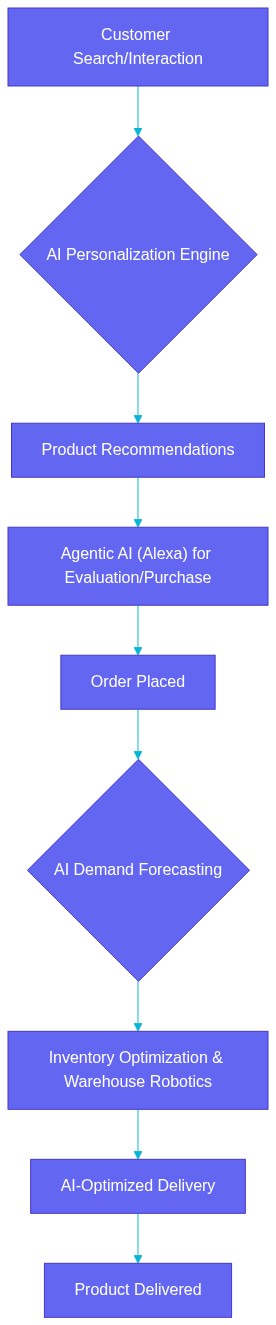
Consider a customer searching for a new coffee maker on Amazon in mid-2026. The AI personalization engine immediately analyzes their past purchases, browsing history, and similar user behavior to present a curated selection of coffee makers. This includes models that align with their likely preferences for brand, features, and price point.
If the customer is unsure, they might engage with the AI shopping assistant, Alexa. They could ask, “Alexa, compare the features of this espresso machine with that drip coffee maker,” or “Alexa, find me a highly-rated coffee maker under $100 that brews quickly.” Alexa would then provide concise comparisons or suggest specific models, potentially even completing the purchase if authorized, streamlining the entire process.
Frequently Asked Questions
What is agentic AI in the context of Amazon?
Agentic AI refers to systems that can act on a user’s behalf to complete tasks, such as comparing products or making purchases. Amazon’s AI shopping assistant, now known as Alexa, exemplifies this by helping customers evaluate items and facilitate transactions.
How does Amazon use AI for demand forecasting?
Amazon employs AI to predict future product demand by analyzing vast datasets. These datasets include historical sales, regional trends, current weather patterns, and seasonal variations, enabling precise inventory management.
Can other businesses use Amazon’s AI technology?
Yes, as of May 27, 2026, Amazon began selling its homegrown AI shopping technology to other companies. This allows external businesses to integrate Amazon’s advanced AI capabilities into their own platforms.
What role does AI play in Amazon’s supply chain beyond forecasting?
Beyond forecasting, AI is integrated into warehouse robotics for efficient inventory movement and optimizes delivery routes for timely and cost-effective shipping. It also aids in evaluating supplier resilience and promoting responsible sourcing practices.

SiliconeUpdate.com is a technology news platform that publishes updates and informational content related to silicon technology, software, artificial intelligence, and emerging technologies.
All articles published on this platform are attributed to SiliconeUpdate.com instead of individual authors. Content is presented in a neutral, informational format without personal opinions.
—
Content Publishing
SiliconeUpdate.com publishes news and updates based on publicly available information, official announcements, and industry developments. The focus is on clarity, relevance, and timely reporting.
—
Editorial Control
All editorial decisions, updates, and content management are handled at the platform level. No individual human or AI identity is presented as the author of articles.
—
Contact
For editorial communication or general queries, contact:
Email: neemasharma@gmail.com