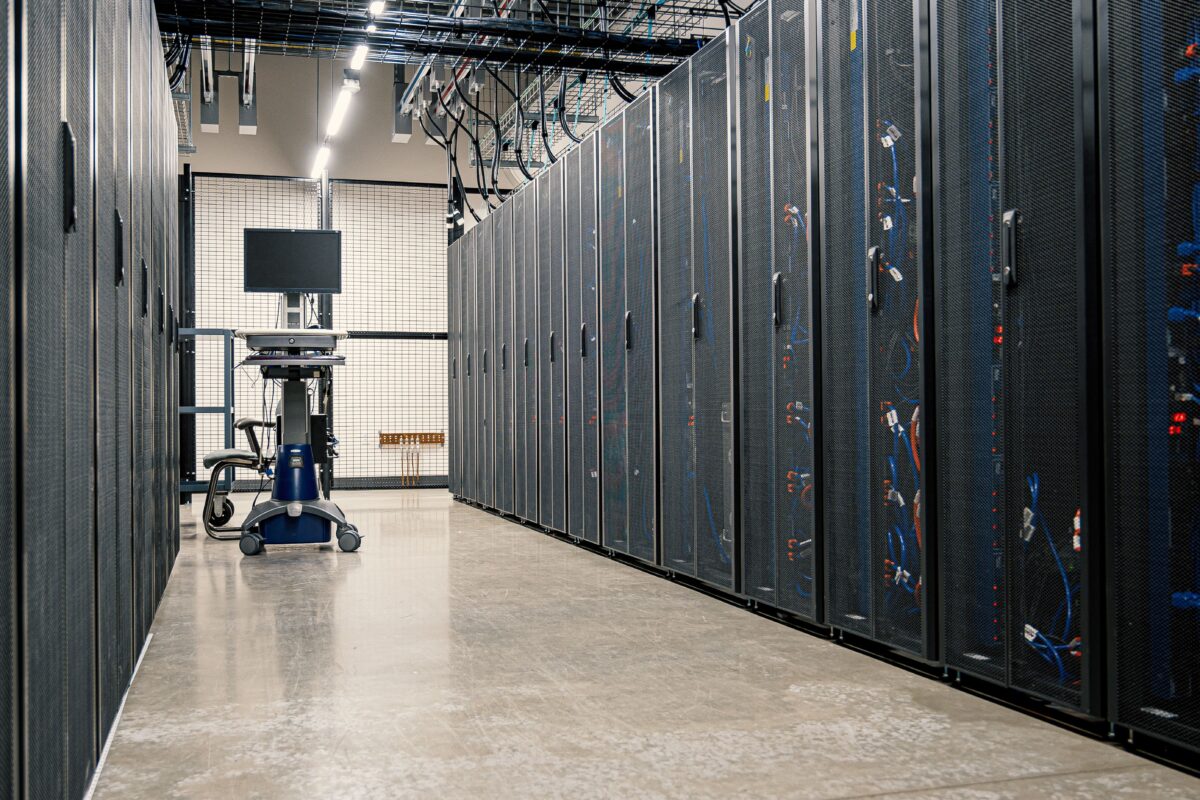
A GPU cluster represents a sophisticated network of interconnected graphics processing units (GPUs) designed to operate in unison. This architecture enables the collective processing power of multiple GPUs to tackle computationally intensive tasks far beyond the capabilities of a single machine.
These clusters are specifically engineered for massive parallelism, making them indispensable for workloads that benefit from simultaneous execution across many processing cores. The core function is to aggregate specialized chips, including GPUs and sometimes TPUs, into a cohesive system for high computational performance.
Defining the GPU Cluster
At its foundation, a GPU cluster is a collection of specialized processing units, primarily GPUs, organized to collaborate efficiently. This setup allows multiple servers, each potentially housing one or more GPUs, to train or run complex models in parallel.
The interconnected nature of these units facilitates the distribution of large computational problems into smaller, manageable segments. This distributed approach is fundamental to achieving the scale and speed required for advanced applications.
Purpose of Parallelism
The primary purpose of a GPU cluster is to leverage parallelism for accelerated computation. GPUs excel at performing many simple calculations simultaneously, a characteristic known as data parallelism.
This capability is particularly beneficial for tasks that involve processing vast datasets or executing repetitive operations across numerous data points. By distributing these tasks across multiple GPUs, a cluster significantly reduces processing times for complex workloads.
Architecture of a GPU Cluster
The architecture of a GPU cluster involves several integrated components working together to form a powerful computational engine. These components include compute nodes, high-speed interconnects, and robust storage systems, all managed by specialized software.
Each element plays a vital role in ensuring efficient data flow and coordinated processing across the entire cluster. The design prioritizes maximizing throughput and minimizing latency for demanding applications.
Compute Nodes and Interconnects
A GPU cluster consists of multiple compute nodes, with each node typically housing one or more GPUs, along with a CPU and system memory. These nodes are the individual workhorses of the cluster, performing the actual computations.
The nodes exchange data over a high-speed interconnect network, which is critical for maintaining efficient communication and data synchronization. This network ensures that data can move rapidly between GPUs and nodes, preventing bottlenecks that would otherwise hinder performance.
Storage and Management
Effective storage infrastructure is essential for GPU clusters, as they frequently handle massive datasets for training and inference. This storage must provide high bandwidth and low latency to feed data to the GPUs without interruption.
Additionally, cluster management software orchestrates the allocation of resources, scheduling of tasks, and monitoring of the entire system. This software ensures optimal utilization of the expensive GPU hardware and streamlines the execution of parallel workloads.

Photo by Matheus Bertelli on Pexels
How GPU Clusters Process Workloads
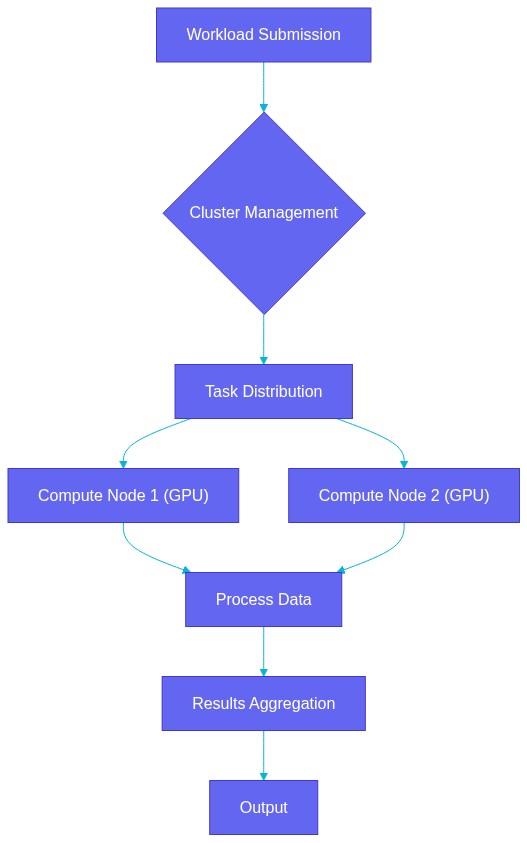
GPU clusters process workloads by distributing computational tasks across their interconnected GPUs, leveraging principles of distributed computing. This approach allows for the simultaneous execution of operations, drastically reducing the time required for complex computations.
The efficiency of this processing hinges on how tasks are broken down and assigned, often employing strategies like data parallelism and model parallelism.
Distributed Computing Principles
Workloads on a GPU cluster are broken down into smaller, independent tasks that can be executed concurrently across different GPUs or nodes. This adheres to the principles of distributed computing, where a single problem is solved by multiple computers working together.
The cluster’s management system handles the distribution of these tasks, ensuring that each GPU receives its portion of the work and that results are aggregated correctly. This coordination is vital for maintaining data consistency and overall system integrity.
Data Parallelism and Model Parallelism
Two primary strategies for parallel processing in GPU clusters are data parallelism and model parallelism. In data parallelism, the same model or algorithm is run on different subsets of a large dataset across multiple GPUs.
Conversely, model parallelism involves splitting a single, large model across several GPUs, with each GPU processing a different part of the model. Both approaches are used depending on the specific requirements of the workload, such as the size of the dataset or the complexity of the model.
Key Components and Infrastructure
Building and operating a GPU cluster requires more than just GPUs; it necessitates a robust infrastructure encompassing specialized hardware and high-performance networking. These components are interdependent, with each contributing to the cluster’s overall efficiency and capability.
The selection and configuration of these elements directly impact the cluster’s ability to handle demanding computational tasks effectively.
Specialized Hardware
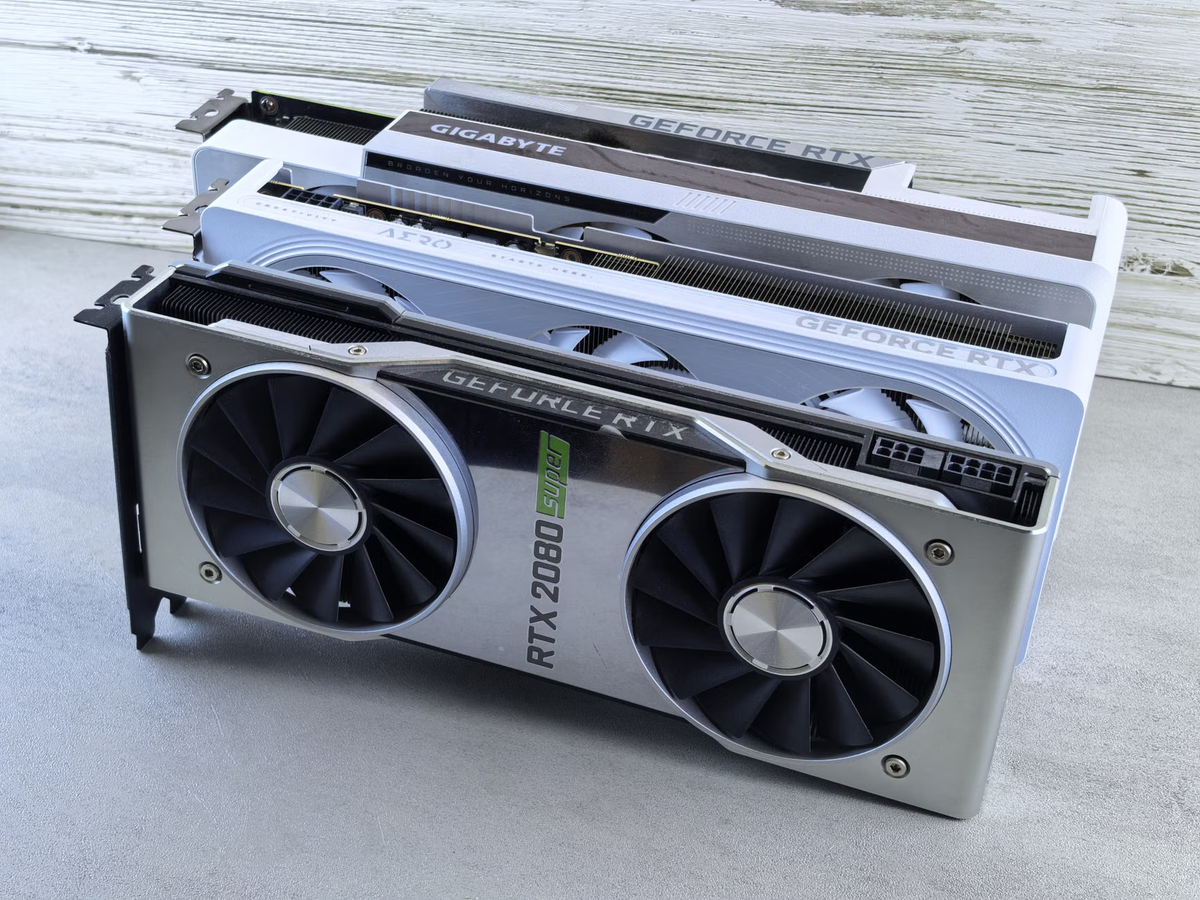
The core of any GPU cluster is the graphics processing unit itself. Modern GPUs, such as the Blackwell series, are incredibly powerful but also exceptionally expensive, with a single unit costing more than an average car as of 2026.
Beyond GPUs, the cluster relies on high-performance CPUs, ample RAM within each compute node, and specialized accelerators like TPUs for specific AI workloads. These components are selected for their ability to handle intensive parallel processing and data throughput.
Networking Requirements
High-speed, low-latency networking is a non-negotiable requirement for GPU clusters. The interconnect fabric must support rapid data exchange between nodes and GPUs to prevent bottlenecks during parallel computations.
Technologies like InfiniBand or high-bandwidth Ethernet are commonly employed to facilitate this communication. Adequate networking ensures that GPUs are continuously fed with data, maximizing their utilization and computational output.

Photo by Elias Gamez on Pexels
Applications of GPU Clusters
GPU clusters are pivotal in fields requiring immense computational power, particularly those involving complex algorithms and large datasets. Their ability to perform massive parallel computations makes them ideal for accelerating discovery and innovation.
These clusters are transforming industries by enabling breakthroughs in areas previously limited by computational constraints.
Artificial Intelligence and Machine Learning
The most prominent application of GPU clusters is in artificial intelligence (AI) and machine learning (ML). They are essential for training deep neural networks, which require processing vast amounts of data and performing billions of calculations.
GPU clusters enable researchers and developers to train larger, more complex AI models faster, leading to advancements in areas like natural language processing, computer vision, and autonomous systems.
Scientific Simulation and Data Visualization
Beyond AI, GPU clusters are critical for scientific simulation and data visualization. They accelerate complex simulations in physics, chemistry, and biology, allowing scientists to model intricate systems and predict behaviors.
For data visualization, clusters render high-resolution graphics and complex datasets in real-time, providing insights that would be impossible with conventional computing resources. This includes applications in medical imaging, climate modeling, and engineering design.
Challenges in GPU Cluster Deployment
Deploying and managing GPU clusters presents significant challenges, primarily related to their substantial cost, energy consumption, and inherent complexity. These factors require careful planning and considerable investment.
Addressing these challenges is essential for organizations looking to leverage the power of GPU clusters effectively.
Cost and Energy Consumption
The financial outlay for GPU clusters is substantial. A single modern GPU can cost more than an average car, making the acquisition of multiple units for a cluster a major capital expenditure. This high cost extends to the specialized networking and storage infrastructure required.
Furthermore, GPU clusters are energy-intensive. A single Blackwell GPU, for instance, uses more energy than a single-family home, leading to significant operational costs and demanding robust cooling solutions.
Complexity and Scalability
Building and managing GPU clusters is a complex undertaking. It involves integrating diverse hardware components, configuring high-performance networks, and deploying sophisticated cluster management software.
Scaling these clusters efficiently also poses challenges, as adding more nodes requires careful consideration of network bandwidth, power delivery, and cooling capacity. Ensuring optimal performance and resource utilization across a large, distributed system demands expert knowledge.
| Component | Function | Significance |
|---|---|---|
| GPUs | Perform parallel computations | Core computational power for AI/ML |
| Compute Nodes | Host GPUs, CPU, RAM | Individual processing units within the cluster |
| Interconnect Network | Facilitate high-speed data exchange | Enables efficient communication between nodes |
| Storage System | Provide persistent data access | Handles large-scale datasets for workloads |
| Cluster Management Software | Orchestrate resources and tasks | Ensures efficient operation and utilization |
Key Takeaways
- A GPU cluster is an interconnected network of GPUs designed for massive parallel processing.
- These clusters are essential for accelerating computationally intensive workloads like AI, machine learning, and scientific simulations.
- Key architectural components include compute nodes, high-speed interconnects, and robust storage systems.
- GPU clusters leverage data parallelism and model parallelism to distribute and process tasks efficiently.
- Deployment challenges include high acquisition costs, significant energy consumption, and complex management requirements.
Modern GPUs, such as the Blackwell series, are not only incredibly powerful but also remarkably expensive, with a single unit costing more than an average car and consuming more energy than a single-family home. This highlights the extreme investment and operational costs associated with high-performance computing.
Relative Cost of a Single Modern GPU (2026)
Average Car Cost: 40000USD (Approx.) | Single Blackwell GPU Cost: 50000USD (Approx.) — Source: SemiAnalysis 2026 (Comparative Estimate)
Real World Example
Consider a large pharmaceutical company developing new drugs using AI. This process involves training complex machine learning models on vast datasets of molecular structures and biological interactions. A single server with a few GPUs would take weeks or months to complete the necessary training.
By deploying a GPU cluster, the company can distribute the training workload across hundreds of GPUs simultaneously. This allows them to iterate through different model architectures and datasets much faster, reducing training times from months to days. The accelerated research directly translates to quicker drug discovery and development cycles, providing a significant competitive advantage in a time-sensitive industry.
Frequently Asked Questions
What is the primary advantage of a GPU cluster over a single powerful GPU?
A GPU cluster offers massive parallelism, allowing it to distribute and process tasks across multiple GPUs simultaneously. This significantly reduces computation time for large-scale workloads that a single GPU, no matter how powerful, cannot handle as efficiently.
What kind of infrastructure is necessary to build a GPU cluster?
Building a GPU cluster requires specialized infrastructure including multiple compute nodes equipped with GPUs, high-speed interconnect networks (e.g., InfiniBand), robust storage systems, and sophisticated cluster management software for orchestration and resource allocation.
Are GPU clusters only used for AI and machine learning?
While AI and machine learning are prominent applications, GPU clusters are also widely used in other computationally intensive fields. These include scientific simulations, data visualization, high-performance computing (HPC), and complex data analytics.
What are the main challenges in maintaining a GPU cluster?
Maintaining a GPU cluster involves managing high operational costs due to significant energy consumption and cooling requirements. It also demands expertise in distributed systems, network management, and software optimization to ensure continuous high performance and reliability.

SiliconeUpdate.com is a technology news platform that publishes updates and informational content related to silicon technology, software, artificial intelligence, and emerging technologies.
All articles published on this platform are attributed to SiliconeUpdate.com instead of individual authors. Content is presented in a neutral, informational format without personal opinions.
—
Content Publishing
SiliconeUpdate.com publishes news and updates based on publicly available information, official announcements, and industry developments. The focus is on clarity, relevance, and timely reporting.
—
Editorial Control
All editorial decisions, updates, and content management are handled at the platform level. No individual human or AI identity is presented as the author of articles.
—
Contact
For editorial communication or general queries, contact:
Email: neemasharma@gmail.com