Artificial intelligence is becoming an important technology in space exploration, satellite operations and scientific research.
Space missions produce enormous amounts of data, operate far away from Earth and often face communication delays. AI can help spacecraft analyze information, make decisions and complete tasks with less direct control from people on Earth.
From Mars rovers to Earth-observing satellites, artificial intelligence is helping scientists and engineers make space missions more efficient, autonomous and capable.
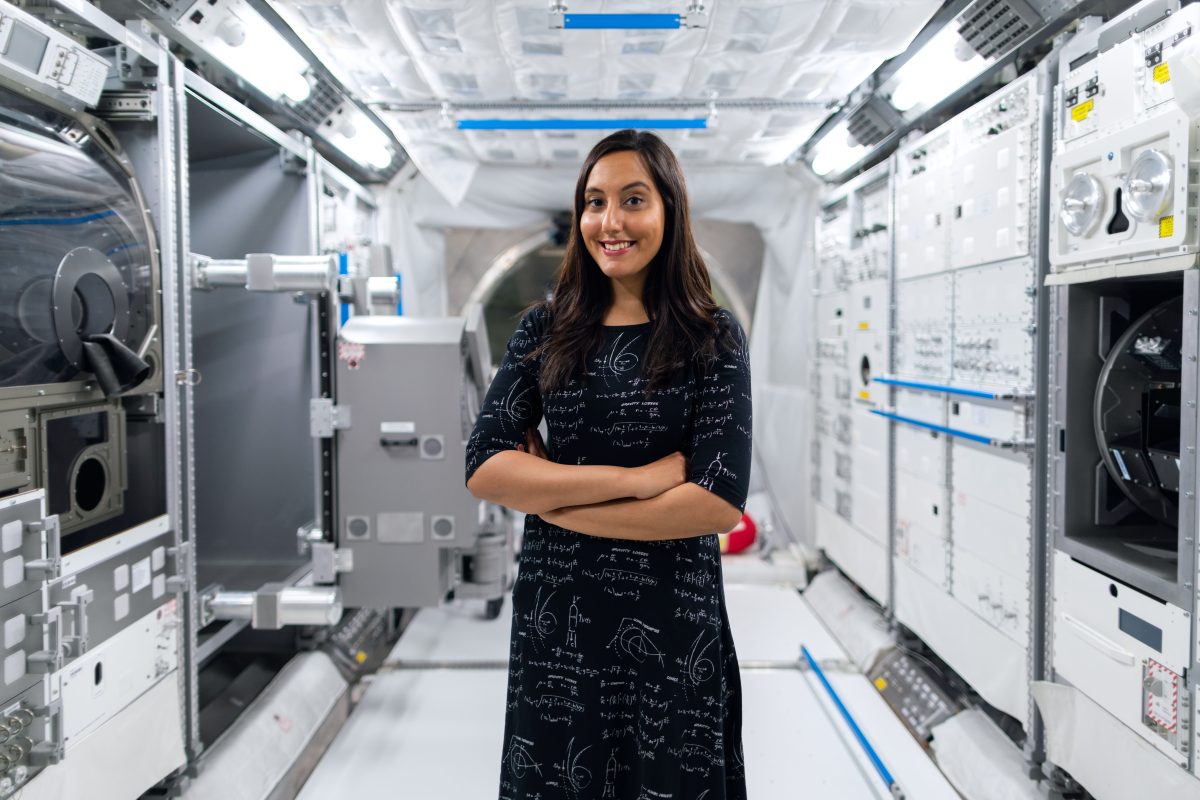
An artificial intelligence system helping control a spacecraft in space.
What Is Artificial Intelligence in Space?
Artificial intelligence in space refers to computer systems that can analyze information, recognize patterns, make predictions or support decisions during a space mission.
Some AI systems operate on Earth and help scientists study data received from spacecraft. Other systems operate directly on satellites, rovers or spacecraft.
AI can be used to:
- Analyze images and scientific measurements.
- Control spacecraft movement.
- Detect equipment problems.
- Plan routes across planetary surfaces.
- Identify important objects or locations.
- Process satellite data.
- Support astronauts and mission controllers.
Using AI directly in space is especially useful because spacecraft cannot always wait for instructions from Earth.
A satellite using onboard AI to analyze data before sending it to Earth.
AI in Mars Rover Missions
Mars is very far from Earth, and communication between Earth and Mars can take several minutes in one direction. Because of this delay, rover operators cannot control every movement instantly.
AI can help a rover understand its surroundings, identify obstacles and select safer routes across the Martian surface.
NASA’s Perseverance rover uses intelligent systems to support scientific observations. Its AEGIS system can help identify and select rock targets for study without waiting for a new instruction from Earth.
NASA has also reported that Perseverance completed drives on Mars planned with the help of artificial intelligence. The system used information from rover cameras to help create safe routes across the surface.
AI does not completely replace human mission planners. Instead, it supports them by handling certain tasks and helping the rover operate more independently.
The Perseverance rover using AI to navigate and study the surface of Mars.
AI for Spacecraft Navigation
Spacecraft must navigate through complex environments. They may need to travel near planets, moons, asteroids or other objects while using limited fuel.
AI can help spacecraft calculate routes, recognize nearby objects and adjust their movement.
The European Space Agency has explored autonomous spacecraft systems that can help missions operate with less direct control from Earth. ESA has also described the use of AI for missions such as asteroid exploration and planetary defense.
AI-supported navigation can be useful when:
- A spacecraft is far from Earth.
- Communication delays are significant.
- The spacecraft encounters an unexpected situation.
- Many navigation options must be evaluated quickly.
- Human operators cannot respond immediately.
Autonomous navigation can help spacecraft make decisions faster, but these systems must be carefully tested because an incorrect decision could place an entire mission at risk.

An autonomous spacecraft navigating near an asteroid.
AI for Earth Observation
Satellites collect images and measurements of Earth every day. These observations can be used to study weather, agriculture, forests, oceans, cities and natural disasters.
The amount of satellite data is too large for people to examine manually. AI can help process this information and identify important changes.
AI can support the detection of:
- Flooded areas.
- Wildfires.
- Deforestation.
- Changes in crop health.
- Storm development.
- Urban growth.
- Pollution and environmental damage.
- Changes in ice and snow coverage.
NASA explains that artificial intelligence can help researchers search through large Earth observation data sets and identify relationships that may be difficult to find manually.
AI can also allow satellites to process some information while still in orbit instead of sending every raw image to Earth.
An Earth observation satellite using AI to study forests, oceans and weather patterns.
AI Onboard Satellites
Traditionally, satellites collect information and send it to ground stations for processing. This can take time and requires large amounts of communication bandwidth.
With onboard AI, a satellite can examine data in space and decide which information is most important to send to Earth.
For example, an Earth-observing satellite may use AI to detect a wildfire, a storm or another important event. Instead of sending every image, it can prioritize the most relevant information.
On May 7, 2026, NASA reported that its Prithvi geospatial AI foundation model had been deployed to a platform aboard the International Space Station. This demonstrated how AI models can support Earth observation from orbit.
Onboard AI may help satellites:
- Reduce unnecessary data transmission.
- Respond more quickly to important events.
- Save communication bandwidth.
- Continue operating when contact with Earth is limited.
- Analyze images before sending them to ground teams.
An AI model processing Earth observation images aboard a space station.
AI for Space Weather Prediction
Space weather includes changes in the Sun and the space environment around Earth. Solar storms can affect satellites, communications, navigation systems, aircraft and electrical networks.
AI can study large collections of solar and space weather data to identify patterns and improve predictions.
Researchers can use AI to help analyze:
- Solar flares.
- Coronal mass ejections.
- Solar wind.
- Radiation levels.
- Magnetic storms.
- Changes in Earth’s upper atmosphere.
Better space weather predictions can help satellite operators prepare for dangerous conditions and protect sensitive equipment.
Artificial intelligence analyzing solar activity and space weather patterns.
AI for Satellite Maintenance
Satellites and spacecraft must operate in difficult environments. Repairs are usually impossible, so engineers need to detect problems as early as possible.
AI can monitor spacecraft systems and look for unusual changes in temperature, power use, vibration or communication signals.
An AI system may help identify:
- Battery problems.
- Overheating equipment.
- Communication failures.
- Power system changes.
- Unusual sensor readings.
- Possible hardware damage.
Early warnings can help mission controllers respond before a small problem becomes a serious failure.
AI can also compare current spacecraft performance with historical data. This may help engineers identify problems that are difficult to detect using simple rules.
A mission control team monitoring the health of a satellite with AI software.
AI Supporting Astronauts
Artificial intelligence can also support astronauts in space. Astronauts have limited time, and they may need help finding information, diagnosing equipment or managing daily tasks.
AI assistants could help astronauts:
- Search technical instructions.
- Answer questions about spacecraft systems.
- Monitor schedules and tasks.
- Recognize equipment problems.
- Support scientific experiments.
- Provide reminders and checklists.
In future missions to the Moon or Mars, communication delays may make onboard AI even more useful. Astronauts may need local assistance without waiting for an answer from mission control.
However, AI systems used by astronauts must be reliable, understandable and carefully tested. A system that provides incorrect information could create serious safety risks.
An astronaut using an AI assistant inside a spacecraft or lunar habitat.
AI in Space Science
Space telescopes and scientific instruments collect enormous amounts of information. AI can help scientists find useful patterns in this data.
AI can assist with the study of:
- Stars and galaxies.
- Planets and moons.
- Asteroids and comets.
- Black holes.
- Gravitational waves.
- Cosmic radiation.
- Possible signs of planetary activity.
Scientists can train machine learning models to identify objects or events in large collections of telescope images. This can help researchers focus their time on the most interesting discoveries.
AI does not replace scientific judgment. It helps researchers organize information, identify possible patterns and decide which observations require closer study.
AI helping scientists analyze images from a space telescope.
Benefits of Using AI in Space
Artificial intelligence can provide several important benefits for space missions.
- Faster decision-making: AI can analyze information quickly.
- Greater autonomy: Spacecraft can complete some tasks without waiting for instructions.
- Better use of data: AI can identify important information in massive data sets.
- Lower communication demands: Spacecraft may send only the most useful data to Earth.
- Improved safety: AI can identify hazards and equipment problems.
- Longer mission capability: Autonomous systems may support missions far from Earth.
These benefits become especially important as missions travel farther from Earth and involve more complex operations.
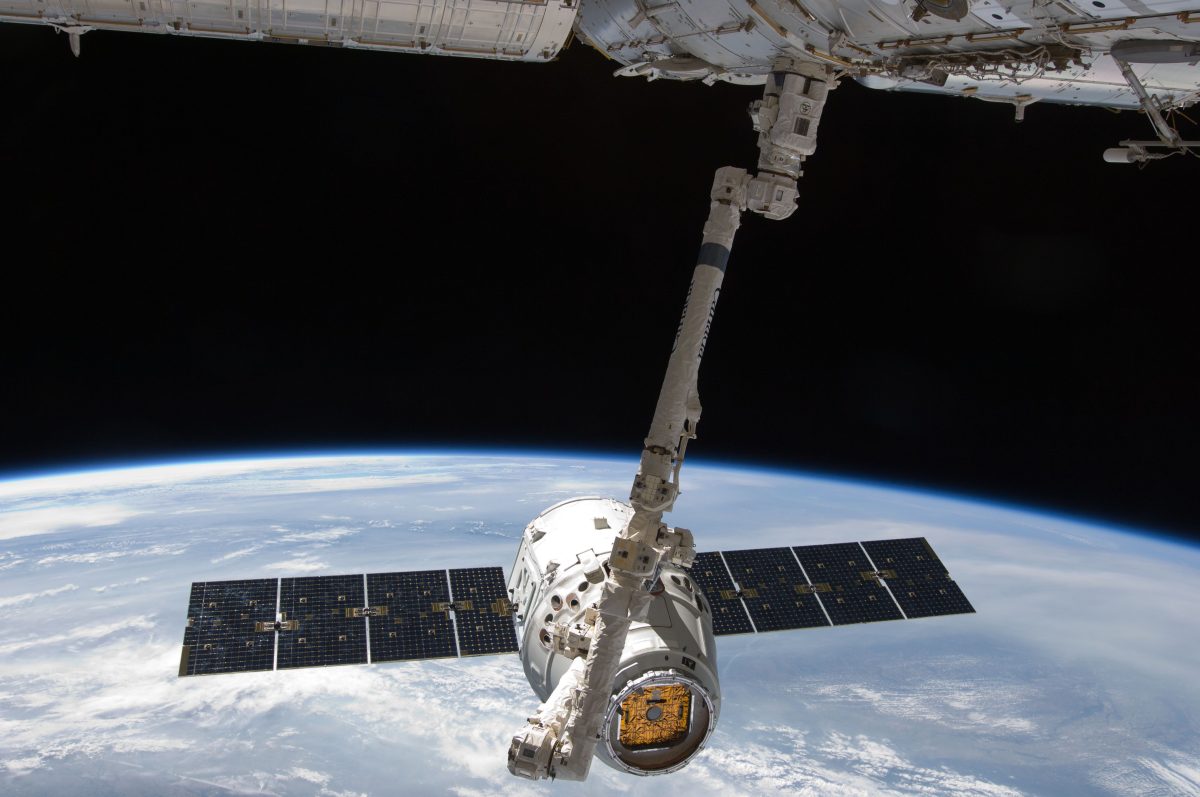
A futuristic space mission using AI for navigation, science and communication.
Challenges of Using AI in Space
Although AI offers many benefits, using it in space also creates serious challenges.
Limited Computing Power
Spacecraft often use less powerful computers than those available on Earth. Space hardware must use limited electricity and operate reliably for long periods.
Communication Delays
AI systems may need to make decisions independently because communication with Earth can take time.
Radiation
Radiation in space can damage electronic components and affect computer systems. Space-qualified AI hardware must be carefully designed and tested.
Limited Training Data
AI systems need useful data for training. Some space environments are unfamiliar, which can make it difficult to prepare an AI system for every possible situation.
Safety and Reliability
A wrong AI decision could damage equipment or threaten a mission. For this reason, AI systems must be tested extensively and used with appropriate human oversight.
Engineers testing reliable and radiation-resistant AI hardware for space missions.
The Future of AI in Space
AI is likely to become more important as space missions become more independent and ambitious.
Future spacecraft may analyze scientific data, plan routes, manage equipment and coordinate with other spacecraft with less direct control from Earth.
AI may also support missions to the Moon, Mars, asteroids and other distant destinations. Autonomous robots could search for resources, build structures and prepare landing areas before astronauts arrive.
AI-powered satellites may provide faster information about weather, disasters, agriculture and environmental change on Earth.
The goal is not to remove humans from space missions. The goal is to give astronauts, scientists and mission controllers better tools for making decisions and exploring difficult environments.
Future AI-powered robots exploring the Moon or Mars.
Conclusion
Artificial intelligence is changing the way space missions are designed, operated and understood.
AI helps spacecraft navigate, rovers explore planetary surfaces, satellites process Earth observation data and scientists study the universe.
It can make missions faster, more autonomous and more efficient. However, AI systems must be carefully tested because space missions face extreme conditions, limited communication and serious safety risks.
As technology improves, artificial intelligence will become an increasingly important partner for astronauts, engineers and scientists. The future of space exploration will likely combine human creativity with the speed and analytical power of AI.
Sources
- NASA: How AI Is Changing Mars Rover Science
- NASA JPL: Perseverance Completes First AI-Planned Drive
- NASA: Prithvi AI Foundation Model in Orbit
- NASA Earthdata: AI and Earth Observation
- European Space Agency: Artificial Intelligence in Space
Neema Sharma is a former software engineer and technology writer at SiliconUpdate. She covers technology news, artificial intelligence, software development, cybersecurity, cloud computing, and emerging innovations in the tech industry. Drawing on her software engineering background, she focuses on explaining complex technical concepts, reporting on technology developments, and creating informative content that helps readers understand the latest trends in computing and digital technology. Her work aims to make technology accessible to developers, IT professionals, and tech enthusiasts.
Explore her technical articles: Neema Sharma on DEV Community
Email: neemasharma@gmail.com