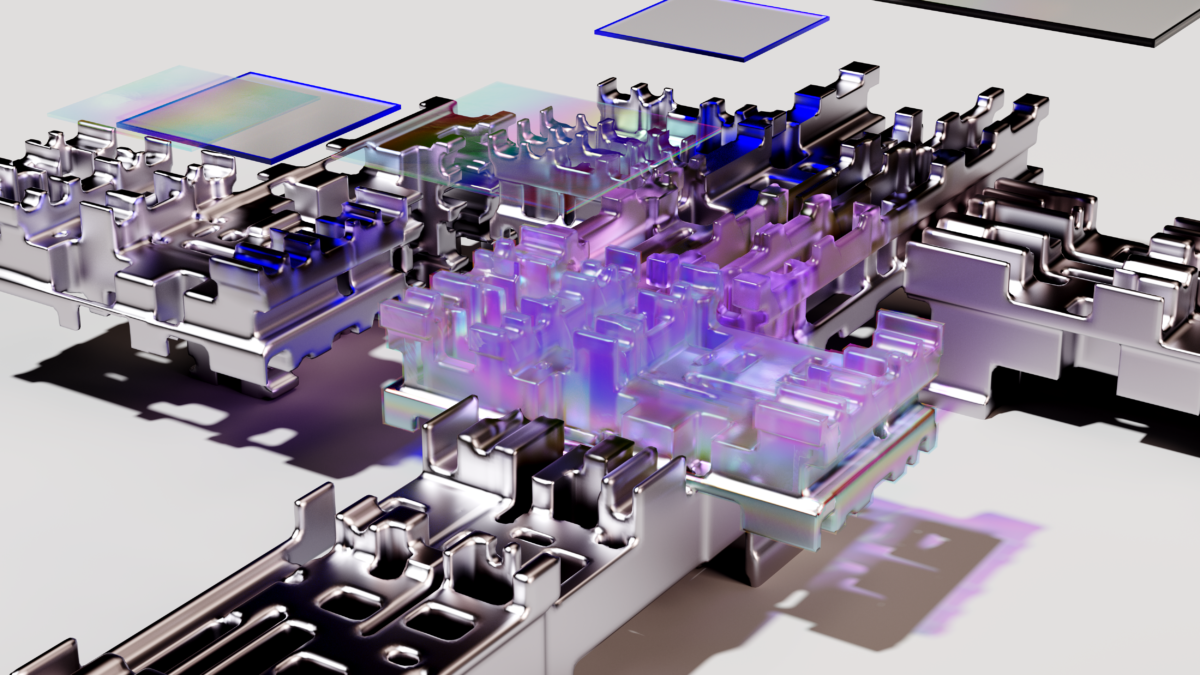
Most companies buy their computing power. Google decided more than a decade ago to build it. Its Tensor Processing Units, or TPUs, are custom chips made for one job, the matrix math at the core of neural networks, and they now sit at the center of Google’s AI strategy. For more on how the AI chip race is reshaping the industry, see our semiconductor and AI chip coverage.

It started with a math problem
The TPU began as a capacity-planning scare. According to one 2026 TPU guide, Google calculated that just three minutes of daily voice search per Android user would have required doubling its entire datacenter capacity. Instead of buying that much general-purpose hardware, Google built its first TPU in about 15 months.
The design choice was the key. A TPU is built around a systolic array, a grid of multiply-accumulate units that pass data directly to each other. This avoids the repeated memory trips that burn most of the energy on general-purpose chips. The same guide says the first TPU delivered 15 to 30 times the speed and 30 to 80 times the power efficiency of contemporary hardware, and it powered AlphaGo’s 2016 win over Lee Sedol.
Cost and efficiency at Google’s scale
Google runs AI in Search, YouTube, Gmail, Gemini, and Cloud, all at once. At that volume, the economics are simple: a chip designed for your exact workloads wastes less silicon and less electricity than a general-purpose one. Google’s own engineers describe TPUs as ASICs built for one purpose, accelerating large-scale AI workloads, and say Ironwood delivers twice the performance per watt of its predecessor, Trillium.
Owning the design also means Google isn’t paying a third party’s margin on every accelerator, and it isn’t queuing behind everyone else for supply. When GPU demand spikes, hyperscalers without their own silicon feel it first. One industry analysis puts custom silicon’s total-cost-of-ownership advantage over conventional GPUs at up to 65 percent for inference at production scale, which explains why so many hyperscalers are pursuing it. Our piece on why Microsoft is building its own AI chips covers the same economics from the Azure side.
Co-design: chips, models, and networks together
The deepest advantage is that Google builds the chip, the network, and the models together. Google describes Ironwood as the result of a loop where researchers influence hardware design and hardware accelerates research. When Google DeepMind needs a specific architectural advancement, the hardware team can build it in, while competitors rely on external vendors.
That co-design shows up in the scale. Ironwood links up to 9,216 chips in a single pod. Its successor, the TPU 8t, takes that to 9,600 chips per pod, reaching 121 exaflops of FP4 compute according to Futurum’s analysis. A company that only buys chips can’t tune its network fabric to its own training runs this way.
Training vs. inference: splitting the chip in two
Google’s newest move shows how specialized its thinking has become. On April 22, 2026, it announced two eighth-generation chips instead of one: the TPU 8t for training and the TPU 8i for inference. Google’s own announcement, “Two chips for the agentic era”, explains the reasoning.
Training and inference stress hardware differently. Training wants massive parallel scale and reliability across tens of thousands of chips. Inference wants low latency and low cost per query. According to CNBC, Google says the training chip delivers 2.8 times the performance of Ironwood for the same price, while the inference chip is 80 percent better. The TPU 8i also triples on-chip SRAM to 384MB and raises HBM to 288GB, per Futurum. A buyer of off-the-shelf GPUs gets one design that has to serve both jobs, while Google can tune each side separately.
The Nvidia question
Google isn’t trying to wipe out Nvidia. Nvidia’s Blackwell generation still leads in places; one comparison notes that Ironwood is still one precision level behind where Blackwell already operates. CNBC also notes that none of the tech giants are displacing Nvidia yet. But TPUs give Google leverage: a credible alternative in negotiations, and a way to guarantee capacity for its own products. We track this shift in our AI hardware and data center news.
TPUs have also become a product. According to that same 2026 TPU guide, Anthropic is the anchor external customer, committed to up to one million TPU chips and over a gigawatt of capacity in 2026. Google has also reportedly talked with neoclouds such as Crusoe and CoreWeave about deploying TPUs in their data centers. That turns internal silicon into a Google Cloud revenue stream and a real alternative to Nvidia-based clouds.
The bigger picture
Google isn’t alone. Amazon, Microsoft, and Meta all design their own accelerators now, and a May 2026 industry roundup notes that every major hyperscaler designs its own AI silicon. But Google started first and has the most mature program.
Google designs its own AI hardware for the same reasons it designs its own data centers and networks: at its scale, general-purpose parts are too expensive, too slow to evolve, and too dependent on someone else’s roadmap. A decade after the first TPU, custom silicon is one of Google’s biggest structural advantages in the AI race.
SiliconeUpdate.com is a technology news platform that publishes updates and informational content related to silicon technology, software, artificial intelligence, and emerging technologies.
All articles published on this platform are attributed to SiliconeUpdate.com instead of individual authors. Content is presented in a neutral, informational format without personal opinions.
—
Content Publishing
SiliconeUpdate.com publishes news and updates based on publicly available information, official announcements, and industry developments. The focus is on clarity, relevance, and timely reporting.
—
Editorial Control
All editorial decisions, updates, and content management are handled at the platform level. No individual human or AI identity is presented as the author of articles.
—
Contact
For editorial communication or general queries, contact:
Email: neemasharma@gmail.com