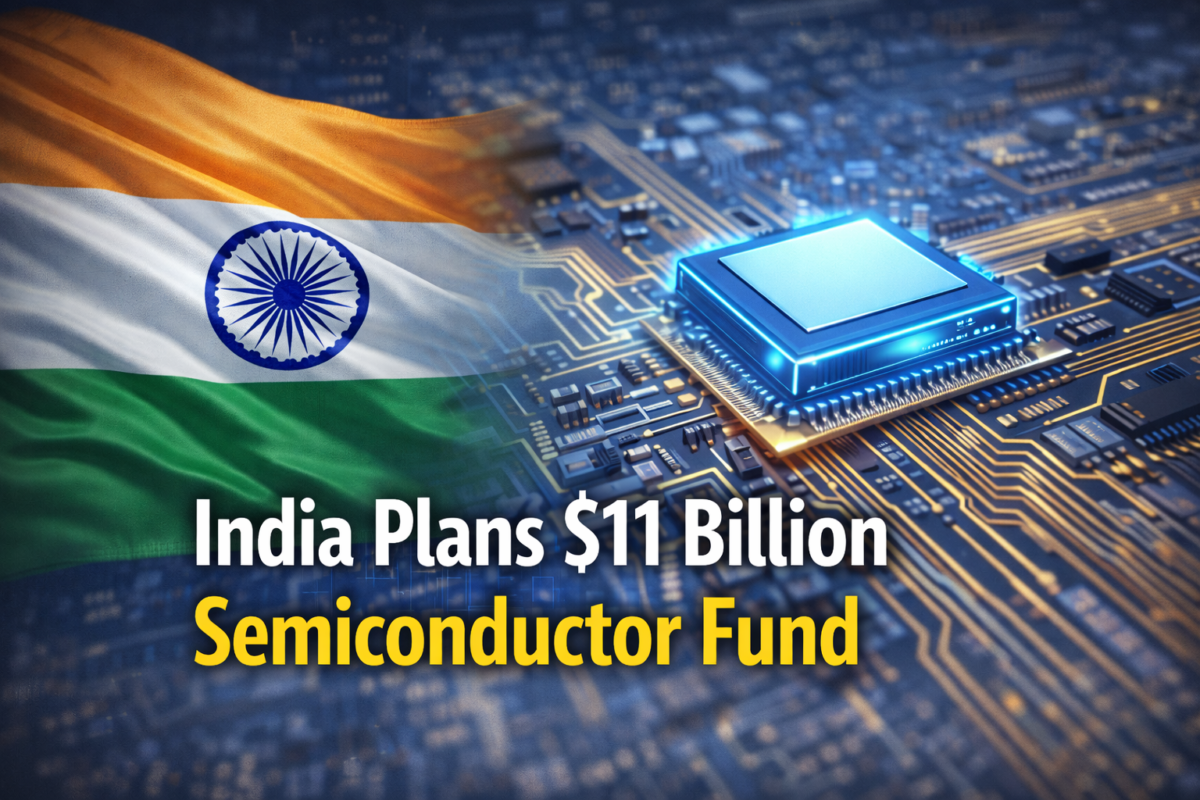
India has officially approved India Semiconductor Mission (ISM) 2.0, a major initiative backed by a ₹1.27 lakh crore investment to accelerate the country’s semiconductor manufacturing ambitions. The new mission expands India’s long-term strategy to build a complete semiconductor ecosystem, covering chip fabrication, advanced packaging, design, research, equipment manufacturing, and workforce development.
The announcement comes as countries around the world race to strengthen domestic semiconductor production amid soaring demand driven by artificial intelligence (AI), electric vehicles, cloud computing, consumer electronics, and defense technologies.
With ISM 2.0, the Indian government hopes to attract more global chipmakers while reducing the country’s dependence on imported semiconductors and positioning India as a key player in the global supply chain.
What Is India Semiconductor Mission (ISM) 2.0?
India Semiconductor Mission (ISM) 2.0 is the second phase of the government’s semiconductor development program. While the original mission focused on attracting initial investments into semiconductor manufacturing, the new phase significantly expands its scope.
The mission supports the entire semiconductor value chain, including fabrication plants (fabs), Assembly, Testing, Marking and Packaging (ATMP), Outsourced Semiconductor Assembly and Test (OSAT), chip design, research and development, semiconductor equipment, materials, and talent development.
Rather than focusing only on manufacturing, ISM 2.0 aims to create a complete ecosystem capable of supporting India’s growing electronics and AI industries.
Why ISM 2.0 Matters
Semiconductors have become one of the world’s most strategic technologies. Nearly every modern electronic device—from smartphones and laptops to AI servers, electric vehicles, medical equipment, and defense systems—depends on advanced chips.
India currently imports a significant portion of the semiconductors used by its electronics industry. Global chip shortages over the past few years exposed how vulnerable supply chains can become when manufacturing is concentrated in only a few countries.
By investing heavily in domestic semiconductor production, India hopes to improve supply chain resilience while creating new opportunities for manufacturing, innovation, exports, and employment.
₹1.27 Lakh Crore Investment
The Union Cabinet has approved ₹1.27 lakh crore for ISM 2.0, making it one of India’s largest technology manufacturing initiatives.
The funding is expected to support new semiconductor fabrication facilities, advanced packaging plants, research institutions, chip design companies, and infrastructure required to strengthen the country’s semiconductor ecosystem.
The government also expects the initiative to attract substantial private-sector investments from both Indian and international technology companies.
Key Focus Areas of ISM 2.0
The expanded semiconductor mission includes several strategic priorities:
- Semiconductor fabrication plants (fabs)
- Assembly, Testing, Marking and Packaging (ATMP)
- Outsourced Semiconductor Assembly and Test (OSAT)
- Semiconductor design and intellectual property development
- Advanced packaging technologies
- Semiconductor materials and manufacturing equipment
- Research and innovation
- Workforce training and skill development
Together, these initiatives aim to reduce India’s dependence on imported chips while strengthening domestic manufacturing capabilities.
Building on the First Semiconductor Mission
ISM 2.0 builds on the progress achieved under the original India Semiconductor Mission.
The first phase helped attract major investments from companies such as Micron Technology and Tata Electronics, while multiple semiconductor manufacturing and packaging projects received government approval.
The second phase is designed to accelerate this momentum by expanding incentives and encouraging additional investments across the semiconductor value chain.
Benefits for India’s Technology Industry
The expanded semiconductor mission could deliver several long-term benefits.
Stronger Domestic Manufacturing
Increasing local chip production could reduce India’s reliance on imported semiconductors and improve supply chain security.
More High-Skilled Jobs
The semiconductor industry requires engineers, researchers, technicians, software developers, and manufacturing specialists. ISM 2.0 is expected to generate thousands of high-skilled employment opportunities.
Boost for AI and Electronics
Artificial intelligence, cloud computing, electric vehicles, telecommunications, and consumer electronics all depend on advanced semiconductor technology. A stronger domestic chip ecosystem could support growth across these industries.
Increased Foreign Investment
Government incentives may encourage global semiconductor companies to establish manufacturing and research facilities in India, bringing additional investment and technology transfer.
Growth for Indian Startups
The mission also creates opportunities for semiconductor design startups, equipment manufacturers, research institutions, and universities working on next-generation chip technologies.
Challenges Ahead
Despite the significant investment, building a globally competitive semiconductor ecosystem remains a long-term challenge.
Semiconductor fabrication requires massive capital investment, advanced manufacturing expertise, reliable infrastructure, and highly skilled talent. Competing with established manufacturing hubs such as Taiwan, South Korea, and the United States will require sustained investment over many years.
In addition, global semiconductor manufacturing depends on complex international supply chains involving specialized equipment, materials, and intellectual property.
What This Means for India’s Future
The approval of ISM 2.0 signals that India intends to play a much larger role in the global semiconductor industry.
As demand for AI processors, automotive chips, cloud infrastructure, and advanced computing continues to rise, countries with strong semiconductor capabilities will gain significant strategic and economic advantages.
By investing across the entire semiconductor ecosystem instead of focusing only on manufacturing, India aims to build long-term capabilities that support innovation, exports, and technology leadership.
Final Thoughts
India’s approval of India Semiconductor Mission (ISM) 2.0 represents one of the country’s most ambitious technology initiatives to date. Backed by ₹1.27 lakh crore, the mission aims to transform India into a global semiconductor manufacturing hub while strengthening domestic capabilities in chip design, fabrication, packaging, research, and workforce development.
Although building a globally competitive semiconductor industry will take years, ISM 2.0 lays the foundation for reducing import dependence, attracting global investment, and supporting the rapid growth of AI, cloud computing, electronics manufacturing, and next-generation digital technologies in India.
External Sources:
- Reuters: https://www.reuters.com/world/india/india-approves-133-billion-fresh-semiconductor-push-2026-07-15/
- India Semiconductor Mission: https://ism.gov.in/
- The Economic Times: https://economictimes.indiatimes.com/industry/cons-products/electronics/cabinet-approves-india-semiconductor-mission-2-0-earmarks-rs-1-27-lakh-crore-for-the-project/articleshow/132412149.cms

SiliconeUpdate.com is a technology news platform that publishes updates and informational content related to silicon technology, software, artificial intelligence, and emerging technologies.
All articles published on this platform are attributed to SiliconeUpdate.com instead of individual authors. Content is presented in a neutral, informational format without personal opinions.
—
Content Publishing
SiliconeUpdate.com publishes news and updates based on publicly available information, official announcements, and industry developments. The focus is on clarity, relevance, and timely reporting.
—
Editorial Control
All editorial decisions, updates, and content management are handled at the platform level. No individual human or AI identity is presented as the author of articles.
—
Contact
For editorial communication or general queries, contact:
Email: neemasharma@gmail.com