Overview
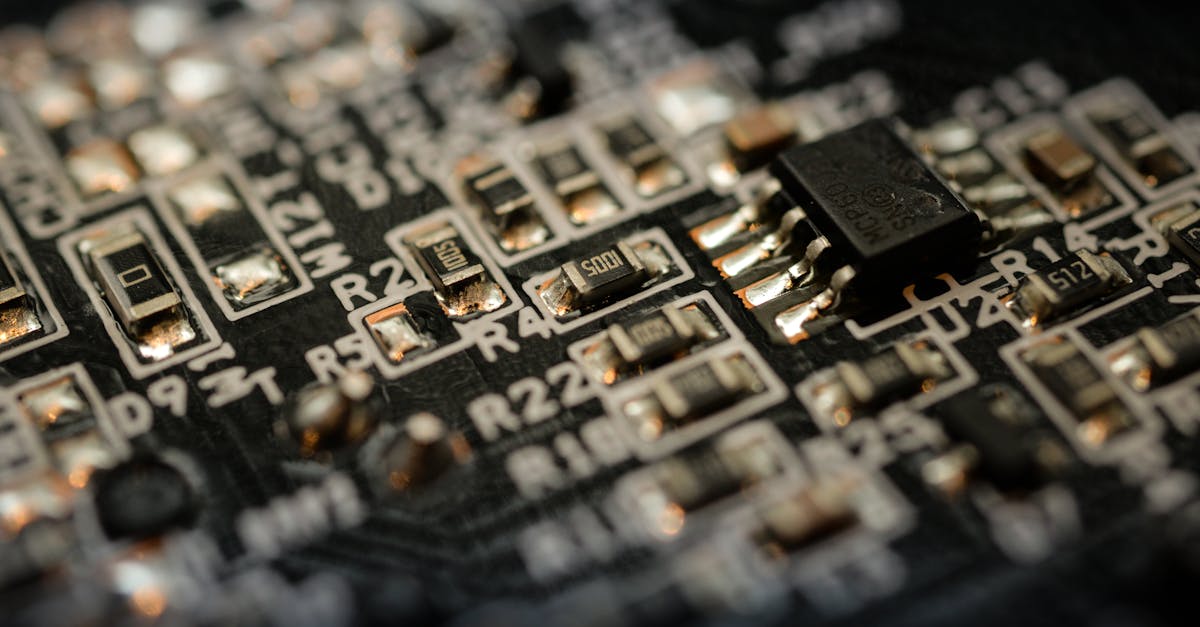
Semiconductors are the backbone of modern electronics. Every smartphone, server, AI system, and car depends on tiny chips built using highly controlled manufacturing processes.
To understand modern computing, you first need to understand what a semiconductor is and how it is produced.
What is a Semiconductor?
A semiconductor is a material (usually silicon) whose electrical conductivity sits between a conductor and an insulator. This controlled conductivity allows precise management of electrical signals.
Semiconductors are used to build transistors, which are the fundamental units of integrated circuits (ICs).
Raw Material: Silicon
Most chips are made from silicon, extracted from sand (silicon dioxide).
Production flow:
- Sand purification
- Conversion to metallurgical-grade silicon
- Refinement into electronic-grade silicon (ultra-high purity)
Purity is critical because even tiny impurities can break chip functionality.
Step-by-Step Semiconductor Manufacturing
1. Crystal Growth (Ingot Formation)
A single-crystal silicon ingot is grown using the Czochralski process.
- A seed crystal is dipped into molten silicon
- Slowly pulled upward under controlled conditions
- Forms a uniform cylindrical crystal
2. Wafer Production
The ingot is sliced into thin wafers.
- Thickness: ~0.5 mm
- Surface is polished to a mirror finish
These wafers act as the base layer for chip fabrication.
3. Photolithography (Core Step)
Photolithography defines circuit patterns on the wafer.
- A light-sensitive layer (photoresist) is applied
- Ultraviolet light transfers patterns using masks
- Determines transistor layout at nanometer scale
This is the most critical and precision-heavy stage.
4. Etching
Unwanted material is removed to form circuit structures.
Types:
- Wet etching (chemical)
- Dry etching (plasma-based)
5. Doping (Ion Implantation)
Controlled impurities are added to modify electrical behavior.
- Creates p-type and n-type regions
- Enables transistor switching
6. Deposition
Thin material layers are deposited on the wafer.
Common methods:
- Chemical Vapor Deposition (CVD)
- Physical Vapor Deposition (PVD)
7. Metallization
Metal layers connect transistors into circuits.
- Copper or aluminum interconnects
- Multi-layer wiring for complex chip designs
8. Testing and Packaging
Final steps:
- Wafer testing for defects
- Chip cutting (dicing)
- Packaging for integration into devices
Key Technologies in Modern Chip Production
EUV Lithography
Extreme Ultraviolet lithography enables very small nodes like 5nm and 3nm.
- Allows higher transistor density
- Critical for modern CPUs and AI chips
FinFET and GAAFET
Advanced transistor architectures:
- FinFET: 3D structure for improved control and reduced leakage
- GAAFET: Next-generation design for better efficiency and scaling
Major Semiconductor Manufacturers
- Intel
- TSMC
- Samsung
These companies operate advanced fabrication plants (fabs) and lead global chip production.
Challenges in Semiconductor Production
- Extremely high cost (billions of dollars per fab)
- Nanometer-scale precision requirements
- Complex global supply chains
- Geopolitical dependencies
Conclusion
Semiconductor production is one of the most advanced manufacturing processes in the world. It combines physics, chemistry, and precision engineering to create billions of transistors on a single chip.
Understanding this pipeline provides a strong foundation for modern hardware, AI systems, and future computing technologies.
SiliconeUpdate.com is a technology news platform that publishes updates and informational content related to silicon technology, software, artificial intelligence, and emerging technologies.
All articles published on this platform are attributed to SiliconeUpdate.com instead of individual authors. Content is presented in a neutral, informational format without personal opinions.
—
Content Publishing
SiliconeUpdate.com publishes news and updates based on publicly available information, official announcements, and industry developments. The focus is on clarity, relevance, and timely reporting.
—
Editorial Control
All editorial decisions, updates, and content management are handled at the platform level. No individual human or AI identity is presented as the author of articles.
—
Contact
For editorial communication or general queries, contact:
Email: neemasharma@gmail.com